

Schedule a Call

Tag: amazon fba

FBA vs FBM in 2026: The Strategic Founder’s Guide to Amazon Fulfillment

What if the very platform that built your brand is now the biggest threat to your 2026 bottom line? You know the drill. You’re likely fighting shrinking margins from the new 3.5% logistics surcharge while dodging aged inventory fees that now kick in at just 181 days. It feels like you’re paying more for less control every single day. Mastering the choice between FBA vs FBM is no longer just an operational task; it’s a strategic necessity to protect your profit. We’ll show you how to win the Buy Box, lower your fulfillment costs, and sync your Amazon orders with Shopify and TikTok Shop through a high-performance 3PL partner. It’s time to stop ghosting inventory and start scaling with a frictionless strategy that puts your growth first.

Key Takeaways

  • Master the fundamental trade-offs between FBA vs FBM to balance effortless Prime reach with the high-level control of merchant-managed logistics.
  • Optimize your margins by deploying FBA for high-velocity items while shifting heavy or bulky products to FBM to avoid aggressive surcharge tiers.
  • Leverage a high-performance 3PL as a strategic ally to manage professional FBA prep and FBM fulfillment under one unified system.
  • Scale your brand across Shopify and TikTok Shop using a frictionless hybrid model that maintains Prime status while eliminating excessive Amazon storage fees.

FBA vs. FBM in 2026: Decoding the Core Differences for Growth

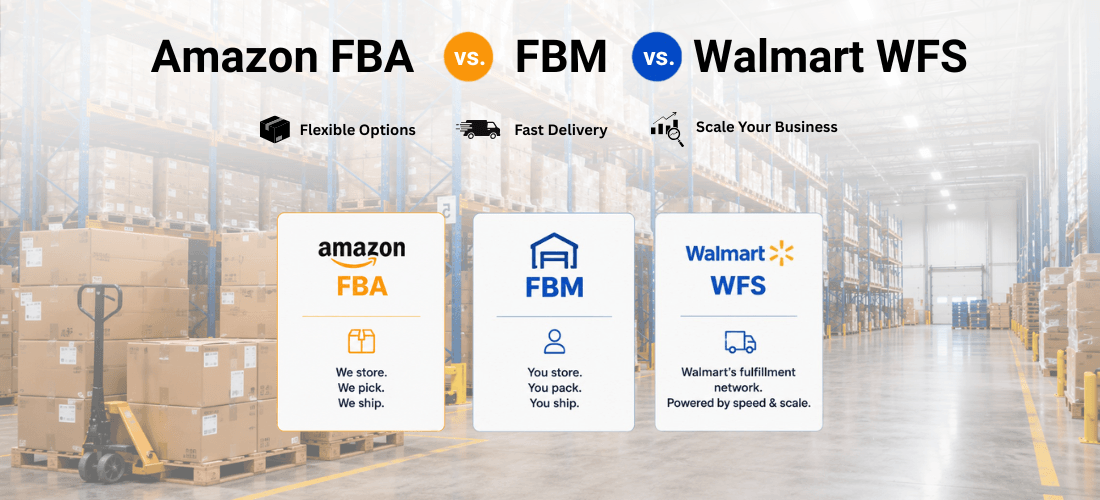
Choosing between FBA vs FBM used to be a simple decision about convenience. In 2026, it’s a high-stakes calculation of your brand’s survival. FBA (Fulfillment by Amazon) remains the convenience-first model, offering immediate access to the Prime badge and Amazon’s massive logistics network. This reach is powerful; data from eFulfillment Service in April 2026 shows Prime listings still convert 20-30% better than others. However, Amazon’s 2026 fee structure is increasingly aggressive. Between the 3.5% fuel and logistics surcharge and inbound placement fees that can reach $6.50 per unit for bulky items, FBA is now a punishing environment for anything but small, high-velocity products.

FBM (Fulfillment by Merchant) offers a control-first alternative. You manage the entire logistics chain, either in-house or through a strategic ally. While many founders fear losing the Buy Box, the “Prime Badge myth” is fading. Amazon’s 2026 algorithms prioritize delivery speed and reliability over the warehouse location. If your fulfillment metrics are elite, you can win the Buy Box and maintain your reputation without surrendering your margins to Amazon’s complex fee tiers.

FBA Fees vs. FBM Control: The Trade-off Every Founder Faces

FBA is no longer a set it and forget it solution. You now face a minefield of hidden costs, including low-inventory level fees and aged inventory surcharges that trigger at just 181 days. These fees drain your capital and force you into rigid inventory cycles. In contrast, leveraging professional 3PL warehouse services provides the transparency you need to scale profitably. You gain clear, predictable costs and the flexibility to pivot as market demands shift. Winning the Buy Box in 2026 is less about being in an Amazon warehouse and more about meeting rigorous shipping speed requirements that high-performance logistics partners now match with ease.

Strategic Selection: When to Deploy FBA vs. FBM for Maximum Margin

Profitability in 2026 requires a surgical approach to your catalog. You can’t afford a one size fits all fulfillment strategy. The High-Velocity Rule dictates that FBA remains superior for small, lightweight items with high margins that benefit from the Prime badge’s conversion lift. If your product is under 1 lb and sells daily, the convenience of Amazon’s network often outweighs the fees. However, the math shifts quickly for everything else. You should deploy FBM for heavy and bulky items to bypass Amazon’s aggressive oversized surcharge tiers and the inbound placement fees that now reach up to $6.50 per unit.

Seasonality also demands agility. Storing off-season stock in Amazon’s warehouses is a margin killer, especially with Q4 storage fees spiking to $2.40 per cubic foot. Transitioning these SKUs to FBM prevents aged inventory surcharges and low-inventory level fees. For a deeper dive into managing these shifts, read our guide on Mastering 3PL Warehouse Services for strategic inventory placement.

The Breakpoint Analysis: Weight, Dimensions, and Sales Velocity

Your 2026 framework for FBA vs FBM selection should center on a clear breakpoint: if an item weighs over 2 lbs or carries a low Inventory Health score, FBM is your winner. High-performance pick and pack fulfillment at a dedicated 3PL offers the precision needed to maintain Prime-like speeds without Amazon’s rigid storage constraints. This setup allows you to scale across TikTok Shop and Shopify seamlessly. Partnering with a tech-forward ecommerce logistics provider ensures you maintain control over your brand identity while keeping your overhead lean and predictable.

Optimizing Your Hybrid Strategy: How a 3PL Scales FBA and FBM

The smartest founders in 2026 don’t view FBA vs FBM as a binary choice. They integrate both into a single, high-performance engine. This hybrid model resolves the FBA vs FBM dilemma by giving you the best of both worlds. Using a professional Amazon FBA prep center allows you to maintain a lean FBA presence while running a robust FBM operation for your heavier or slower-moving stock. This strategy hinges on the concept of buffer stock. Store your bulk inventory at a 3PL and drip-feed small, precise batches into Amazon warehouses. You’ll minimize storage fees and dodge low-inventory penalties with surgical precision.

Agility is your greatest asset. While Amazon often ignores quality control on returns, a strategic ally handles these complexities with care. They inspect every returned unit, restock what’s sellable, and protect your brand reputation from damaged goods. A strategic Fulfillment Center USA provides the backbone for this national distribution, ensuring your inventory is always where it needs to be.

Seamless Multi-Channel Operations: Integrating TikTok Shop and Shopify

Boost3PL acts as your central hub for multichannel fulfillment services. The “Single Pool” inventory advantage is a game changer for digital-native brands. One warehouse serves Amazon, Shopify, and TikTok Shop simultaneously. You never overstock one channel while stock-outs plague another. This creates a frictionless experience for your customers and a streamlined workflow for your team. Scale your brand across every platform without the logistical chaos.

Future-Proof Your Fulfillment Strategy

The landscape of Amazon logistics has shifted permanently. You now have the strategic tools to reclaim your margins by balancing FBA vs FBM with surgical precision. Success in 2026 isn’t about choosing one path; it’s about building a hybrid engine that leverages FBA for speed and FBM for total operational control. You’ve learned how to dodge punishing storage fees and maintain Prime status through high-performance logistics that scale with your ambitions.

It’s time to transform your supply chain into a competitive weapon. Partner with a strategic ally that offers expert Amazon FBA Prep, high-speed FBM fulfillment, and national multichannel support. Accelerate your Amazon growth with Boost3PL’s expert fulfillment services today! Your brand’s reputation and bottom line deserve a frictionless partner that moves as fast as you do. Let’s build your ecommerce legacy together.

Frequently Asked Questions

Is FBM better than FBA in 2026?

FBM often outperforms FBA for brands selling heavy, bulky, or low-velocity items. In 2026, Amazon’s aggressive storage fees and surcharges make FBA expensive for inventory that doesn’t turn quickly. By switching to FBM, you maintain higher margins and avoid the 181-day aged inventory surcharge. This approach gives you total control over your customer experience while keeping your overhead predictable and lean.

Can I use both FBA and FBM on the same listing?

You can absolutely utilize both fulfillment methods on a single listing. This hybrid strategy acts as a safety net for your brand. If your FBA stock sells out or gets caught in warehouse delays, your FBM offer automatically keeps the listing active. It ensures you never lose sales momentum or search ranking while optimizing your overall FBA vs FBM balance for long-term profitability.

Does FBM affect my chances of winning the Buy Box?

FBM won’t hurt your Buy Box chances if you maintain elite performance metrics. Amazon’s 2026 algorithm prioritizes delivery speed and reliability above all else. When you partner with a high-performance 3PL, you can achieve shipping speeds that rival Prime. Consistently meeting these strict requirements proves your reliability to Amazon, allowing your FBM offers to compete aggressively for the top spot.

What is an FBA Prep Center and why do I need one?

An FBA Prep Center is a specialized facility that prepares your products for Amazon’s warehouses. You need one to ensure every unit meets strict labeling, packaging, and safety regulations. This prevents costly inbound defect fees, which in 2026 can reach up to $8.25 per unit for bulky items. Professional prep ensures a frictionless check-in process and protects your seller account health from unexpected penalties.
FBA Product Bundling Services: The 2026 Guide to Scaling Your Amazon Brand

What if your most profitable growth strategy is currently your biggest operational bottleneck? You know that unique kits are the fastest way to win the Buy Box and protect your margins. However, the reality of strict Amazon requirements and high labor costs often feels like a drain on your resources. Scaling with professional fba product bundling services is the only way to turn this logistical hurdle into a high-performance engine. Boost3PL acts as your strategic ally, transforming complex prep into a streamlined growth lever.

Managing multiple SKUs doesn’t have to be chaotic. We know your success depends on precision and speed. In this guide, you’ll discover how specialized kitting can skyrocket your average order value while simplifying your FBA workflow. We’ll preview 2026 compliance standards and show you how to maintain a frictionless supply chain that keeps your brand moving forward at light speed.

Key Takeaways

  • Eliminate competition and secure your Buy Box by transforming individual items into unique, high-value ASINs.
  • Automate complex logistics and maintain total compliance through professional fba product bundling services that handle the heavy lifting of kitting.
  • Scale your brand across Shopify and TikTok Shop by leveraging multichannel synchronization for your most profitable product sets.
  • Optimize your supply chain velocity with a strategic ally that manages replenishment rhythms and inventory complexity for you.

Strategic FBA Product Bundling: Policy, ASIN Value, and Profit

Success on Amazon requires more than just a great product; it demands a structural advantage. FBA bundling is the strategic creation of a unique ASIN by combining multiple separate components into a single offer. By utilizing professional fba product bundling services, you move beyond selling commodity items. You create a proprietary offer that acts as a moat against “me-too” competitors and aggressive price wars. When others can’t replicate your specific kit, they can’t hijack your Buy Box.

Adhering to strict Amazon policies is non-negotiable for long-term growth. The platform requires that all bundled items be highly complementary in nature. You must also avoid restricted categories; for instance, you cannot include BMVD products in a bundle. Additionally, any manufacturer warranties for individual items must remain valid within the set. Mastering these rules ensures your brand remains in good standing while you scale. Our team monitors these shifts, including 2026 title length limits, to keep your listings optimized and compliant.

Physical vs. Virtual Bundles: Choosing the Right Path

While Amazon offers “Virtual Bundles” through its interface, high-growth brands prioritize physical kits for their superior impact on brand identity. Physical Bundling is the process of pre-assembling items into single units before they reach the FBA warehouse. This approach allows for custom packaging and a cohesive aesthetic that software-based bundles simply cannot match. Utilizing expert fba product bundling services provides the professional presentation digital-native brands need. A strong product bundling strategy ensures every shipment reflects your quality standards and delights your customers upon arrival.

Executing the Kit: How FBA Product Bundling Services Work

Strategic intent meets operational precision here. While research on the Dynamic Effects of Bundling highlights the market advantages of combined offers, the physical execution determines your ultimate profitability. High-performance fba product bundling services transform raw inventory into market-ready assets. This process requires more than just tape and boxes. It demands technical compliance and rigorous quality control to protect your brand reputation. Partnering with a specialized Amazon FBA prep center ensures your products arrive at the warehouse exactly as Amazon expects.

Amazon’s requirements are unforgiving. Every bundle must feature a clear “Sold as Set” label to prevent warehouse staff from breaking the kit apart during receiving. If your packaging involves poly bags with openings larger than five inches, suffocation warning compliance is mandatory. Our warehousing and inventory management systems track every component SKU in real time. This visibility ensures you never face a stockout on a single item that would otherwise kill your entire bundle’s availability. Precise tracking keeps your growth on an upward trajectory.

The 3PL Kitting Process: From Components to Customer

  • Step 1: Receiving and inspecting separate SKUs from manufacturers to ensure they meet quality standards before assembly.
  • Step 2: Professional assembly and custom packaging to reinforce your brand identity and elevate the unboxing experience.
  • Step 3: Applying unique FNSKU barcodes to the finished bundle for accurate tracking and frictionless inventory synchronization.

Streamline your operations today by integrating fba product bundling services into your supply chain strategy.

Scaling Your Brand: Multichannel Bundling and Growth

Scaling a digital brand in 2026 requires presence beyond a single platform. By mastering multichannel fulfillment services, you can offer the same high-margin bundles on Shopify and TikTok Shop without doubling your inventory. A strategic 3PL ally manages the complex replenishment rhythm of your kits, ensuring that individual components are always available for assembly. This synchronization prevents the “broken bundle” syndrome where a single missing item halts sales across every channel simultaneously.

Some founders hesitate at the initial cost of fba product bundling services, but the math favors the bold. Professional kitting drives a significantly higher Average Order Value (AOV) and increases Lifetime Value (LTV) by providing a more complete solution to the customer. When you factor in the massive labor savings and the elimination of Amazon non-compliance fees, the ROI becomes clear. You aren’t just buying labor; you’re investing in a scalable asset that protects your margins and secures your brand’s future.

Why Boost3PL is the Strategic Ally for FBA Founders

Boost3PL operates as your high-performance partner in an increasingly complex global market. Our FBA prep center ensures 100% compliance with Amazon’s evolving 2026 standards, from title length limits to specific packaging requirements. We thrive on the operational details so you can focus on your creative and strategic vision. Envision a frictionless scaling process where your logistics team anticipates bottlenecks before they ever happen. With our tech-forward approach, your supply chain becomes your greatest competitive advantage.

Master Your Supply Chain and Dominate the Buy Box

Transforming individual inventory items into unique, high-value kits is no longer optional for brands aiming to scale in 2026. You’ve seen how professional fba product bundling services eliminate competition and simplify complex logistics. By offloading the technical burden of kitting and compliance to a specialist, you reclaim the time needed to innovate and expand your market reach. Strategic bundling isn’t just about packaging; it’s about securing a structural advantage in a crowded marketplace.

Boost3PL stands as your high-performance strategic ally. We combine specialized Amazon FBA prep center expertise with tech-forward inventory management to ensure your brand remains agile and compliant. Whether you’re expanding into TikTok Shop or syncing your Shopify store, our multichannel integration keeps your operations running at light speed. Accelerate your Amazon growth with Boost3PL’s expert bundling services and turn your fulfillment into a competitive weapon. Let’s build your legacy together.

Frequently Asked Questions

Do I need a new UPC for an Amazon FBA bundle?

Yes, you must obtain a unique UPC or GTIN for every bundle you create. Amazon identifies a bundle as a distinct product, so you can’t reuse a component’s existing barcode. This step is vital for maintaining clean data in Seller Central. It also prevents shipping errors and ensures your inventory remains organized throughout the fulfillment process.

Can I bundle branded products from different manufacturers?

You certainly can combine branded products from various manufacturers if they are complementary. Amazon allows this to create a better user experience, such as pairing a yoga mat with a different brand’s cleaning spray. Just make sure you don’t include BMVD items or violate brand-specific policies. This strategy helps you stand out and offers customers a complete solution.

What is the difference between a multi-pack and a bundle?

A multi-pack is just several units of the same item, while a bundle combines different products into one unique offer. Professional fba product bundling services are essential here because they handle the physical kitting and “Sold as Set” labeling. This distinction is critical for compliance. It ensures Amazon’s warehouse doesn’t accidentally split your high-value kits into individual pieces during receiving.

How much do FBA product bundling services typically cost?

Costs for fba product bundling services depend on your kit’s complexity and component count. Factors like unique packaging requirements and the volume of units per shipment play a role. You’ll find that pricing is usually structured per kit to reflect the labor and materials involved. Most providers offer tailored quotes to match your specific brand identity and scaling goals accurately.

FBA Labeling Requirements: 2026 Amazon Seller Guide

What if your next shipment to Amazon wasn’t just a delivery, but a $0.60 per unit liability? As of January 2026, the era of sending inventory to Amazon and letting them figure it out is officially over. With Amazon discontinuing its in-house prep and labeling services, the burden of precision now sits squarely on your shoulders. It’s frustrating to face inbound defect fees or total shipment rejections simply because a barcode was slightly off or a poly bag lacked a suffocation warning.

You want your inventory to hit the shelves fast, not sit in a fulfillment center graveyard. This guide helps you master every fba labeling requirements standard to ensure your products move through the network without delays. We’ll demystify the mandatory shift to FNSKUs, navigate the new 2026 fee structures, and show you how Boost3PL accelerates your prep operations for 100% compliance. Let’s turn your supply chain into a frictionless competitive advantage.

Key Takeaways

  • Protect your brand reputation by mastering the mandatory shift from manufacturer barcodes to Amazon-specific FNSKUs for all 2026 inventory.
  • Eliminate “inbound defect fees” by implementing precise 300 DPI thermal printing and strategic label placement that avoids seams and curves.
  • Navigate the updated fba labeling requirements to ensure 100% compliance and significantly faster check-in times at every Amazon fulfillment center.
  • Scale your business by offloading complex prep tasks to a high-performance partner like Boost3PL, turning operational chaos into a frictionless competitive advantage.

Decoding the Core FBA Labeling Requirements for 2026

Precision is the new currency in the Amazon warehouse. Success starts with understanding that Fulfillment by Amazon (FBA) has evolved into a high-stakes compliance environment. For 2026, the fba labeling requirements dictate that every individual unit must feature a scannable barcode on its exterior packaging. If your label is hidden or damaged, your inventory stops moving immediately. This leads to costly manual processing fees and lost sales velocity.

FNSKU vs. UPC: Which Label Does Your Brand Need?

Many sellers confuse manufacturer barcodes with Amazon-specific identifiers. The FNSKU is the essential tool for tracking unique seller ownership within Amazon’s massive fulfillment network. As of March 31, 2026, Amazon ended its commingling program for resellers. This means you must apply an FNSKU to every unit, even if it already has a UPC. Brand owners can still use manufacturer barcodes, but FNSKU labeling remains the gold standard for protecting your reputation.

  • Print on a flat surface to avoid barcode distortion from curves.
  • Ensure the label is easily accessible on the exterior packaging.
  • Cover any existing manufacturer barcodes completely to prevent scanning errors.

Don’t let a simple sticker stall your expansion. If your packaging is textured, placement becomes even more critical. Proper alignment ensures your products bypass the manual inspection queue and hit the “Available” status faster. Mastery of these labeling basics turns a potential bottleneck into a frictionless path to the customer.

Step-by-Step Guide to Mastering Amazon Product and Box Labeling

Executing fba labeling requirements with precision requires the right hardware. Don’t settle for standard inkjet printers; they smudge and lead to immediate rejections. Professional sellers use 300 DPI thermal printers to create crisp, high-contrast barcodes. These labels must adhere to global supply chain standards to ensure every scanner in the Amazon network reads your data instantly. Place labels on a flat surface. Avoid seams, corners, or edges that distort the barcode. Distortion triggers manual processing fees that eat your margins.

Shipping cartons require equal attention. Every box needs two distinct labels: the unique FBA Box ID and the carrier shipping label. Place them on a flat side of the carton. Never wrap them over the box opening. This ensures the receiving team can scan the box without cutting through the barcode. If you’re overwhelmed by these technicalities, an Amazon FBA prep center can handle the heavy lifting while you focus on scaling.

Critical Label Placement and Printing Standards

Standard product labels typically measure 1×2 or 2×3 inches. Use black ink on white matte paper to maximize readability. If your product has an existing UPC, cover it completely. Double-labeling is a major friction point that confuses automated scanners. Before sealing your shipment, run this final verification:

  • Verify box weights and dimensions match Seller Central data exactly.
  • Confirm all barcodes are scannable and smudge-free.
  • Ensure no labels are placed over seams, tape, or corners.

Precision at this stage prevents the inbound defect fees that became mandatory in early 2026. By treating labeling as a high-performance task rather than an afterthought, you ensure your inventory moves from the loading dock to the customer without a single bottleneck.

How a Professional FBA Prep Center Eliminates Labeling Risks

Scaling a digital-native brand requires relentless focus on strategy, not manual labor. Manual prep is a bottleneck that kills growth and drains resources. Since Amazon discontinued its in-house prep services in January 2026, outsourcing to a specialized Amazon FBA prep center is now a strategic necessity. Our experts handle the nuanced fba labeling requirements while you focus on marketing and expansion. This isn’t just about stickers; it’s about safeguarding your seller health and avoiding the $0.60 per unit inbound defect fees.

The ‘Boost3PL Advantage’ relies on advanced warehousing and inventory management. We inspect every unit and verify every SKU with surgical precision. This ensures 100% accuracy before your goods leave our facility. You can also integrate your entire supply chain by combining FBA prep with pick and pack fulfillment. This creates a powerful multichannel strategy that services Amazon, Shopify, and TikTok Shop from a single, frictionless inventory pool.

Scaling with a Frictionless 3PL Partnership

Professional partners leverage high-speed thermal printing and automated systems that small internal teams simply can’t match. This technology reduces your per-unit costs as your volume grows. It also eliminates the ‘shipment problems’ that plague Seller Central accounts and delay check-in times. Our team verifies compliance with all fba labeling requirements so your inventory is ‘Amazon-ready’ the moment it hits the loading dock.

In the fast-paced 2026 ecommerce landscape, Boost3PL acts as your high-performance strategic ally. We handle the technical chaos of logistics so you stay organized, fast, and profitable. Partner with a tech-savvy 3PL that views your success as the ultimate metric of performance. Our streamlined processes turn your supply chain into a competitive engine for growth.

Accelerate Your Growth with Frictionless FBA Compliance

Mastering the latest fba labeling requirements is no longer just a warehouse task; it’s a strategic move to protect your brand’s reputation and bottom line. By prioritizing FNSKU precision and utilizing professional-grade thermal printing, you eliminate the threat of inbound defect fees. You’ve learned how critical label placement is for speed and how the right technology prevents manual processing delays. Don’t let operational chaos slow your momentum. Boost3PL provides expert Amazon FBA prep services backed by advanced multichannel fulfillment technology and national USA warehouse coverage. We act as your high-performance ally, ensuring every unit is market-ready with zero friction. It’s time to shift your focus from sticky labels to global expansion. Scale your brand with frictionless FBA prep from Boost3PL today! Your supply chain is ready for the next level.

Frequently Asked Questions

What happens if my FBA labels are incorrect or unscannable?

Amazon charges an inbound defect fee of $0.60 per unit for labeling errors as of 2026. If your barcodes are unscannable, your shipment will be sidelined for manual prep. This triggers unplanned service fees between $0.40 and $1.80 per unit. These delays stall your sales velocity and can lead to total shipment rejections at the fulfillment center.

Can I use an inkjet printer for my Amazon FBA labels in 2026?

Don’t use inkjet printers for your inventory. Inkjet ink smudges during transit, which makes barcodes unreadable by Amazon’s automated scanners. Professional sellers use 300 DPI thermal printers to create durable, high-contrast labels. To ensure you have access to professional hardware and consumables, check out Lo Que Buscaba for a variety of specialized printer supplies. This hardware ensures your labels meet all fba labeling requirements and remain legible from the loading dock to the final customer delivery.

Do I need to label every single item if I am using a manufacturer barcode?

Resellers must now label every individual unit with an Amazon barcode (FNSKU). As of March 31, 2026, Amazon ended commingling for resellers, making the FNSKU mandatory even if a UPC exists. Brand owners have more flexibility but often choose FNSKUs anyway. This proactive step protects your reputation by preventing your high-quality stock from mixing with other sellers’ inventory.

What is the difference between a product label and a shipping label in FBA?

Product labels identify the specific item, while shipping labels identify the entire box. Every individual unit needs an FNSKU barcode to track ownership and sales. Shipping cartons require an FBA Box ID and a carrier label for routing. Both label types are critical for navigating fba labeling requirements and ensuring your inventory moves through the global network without a single bottleneck.

The Ultimate FBA Compliance Checklist: Master Amazon Prep in 2026

Amazon is no longer in the business of fixing your mistakes. With the total discontinuation of Amazon’s in-house prep services in 2026, the responsibility for every FNSKU label and poly-bag now rests squarely on your shoulders. It’s a high-stakes shift where a single oversight leads to sidelined inventory or expensive inbound defect fees. You need a foolproof fba compliance checklist to navigate these tighter regulations and protect your account health.

You’ve likely felt the pressure of rising fulfillment costs and the complexity of shifting Amazon policies. It’s exhausting to manage logistics when you should be focused on growth. We’re here to turn that complexity into a strategic competitive advantage. This guide breaks down the essential 2026 prep requirements, from 300 DPI barcode standards to the latest box weight limits. You’ll learn how to achieve a 100% compliance rate and ensure a frictionless check-in process that accelerates your business. Let’s master your inventory prep and keep your focus on scaling your brand.

Key Takeaways

  • Master the three critical pillars of Amazon prep—product-level, labeling, and shipment requirements—to eliminate the risk of rejected inventory.
  • Protect your margins by avoiding “Unplanned Prep” fees and inbound defect penalties through strict adherence to 2026 standards.
  • Follow our definitive fba compliance checklist to ensure every FNSKU is perfectly scannable and every unit is inspection-ready.
  • Discover how partnering with an advanced Amazon FBA prep center transforms complex logistics into a frictionless strategic advantage for your brand.

The Core Pillars of FBA Compliance in 2026

FBA compliance is the adherence to Amazon’s physical and digital inventory standards. It serves as the critical entry point for the broader order fulfillment process. When you master these requirements, you shield your business from “Unplanned Prep” fees and the logistical headache of rejected shipments. Compliance also directly influences your Inventory Performance Index (IPI). High scores grant you expanded storage capacity, while low scores lead to restrictive limits that can stall your growth during high-traffic periods.

Success requires total control over three main pillars: product-level prep, labeling, and shipment-level requirements. Implementing a rigorous fba compliance checklist ensures your inventory is retail-ready the moment it hits the dock. This proactive approach minimizes friction and keeps your products moving toward customers without delay. It’s about more than just checking boxes; it’s about protecting your bottom line from avoidable operational overhead.

Packaging and Labeling Standards

Accuracy is non-negotiable. While UPCs are standard in many industries, Amazon relies on the FNSKU to track your specific inventory and prevent commingled stock issues. Every label must be printed at a minimum of 300 DPI and placed over any existing barcodes to prevent scanning errors. For items requiring poly bagging, ensure the material is at least 1.5 mil thick. You must also include a clear suffocation warning if the bag opening is five inches or wider.

Bundled items or those “Sold as set” need specific handling. You must secure the items together and apply a “Do Not Separate” label so the fulfillment center treats the set as a single unit. Don’t leave your account health to chance. Outsourcing these tasks to a specialized Amazon FBA prep center provides a layer of professional oversight that protects your reputation and streamlines your operation.

Your 2026 FBA Compliance Checklist: Step-by-Step

Executing a flawless shipment requires a tactical, floor-level approach. Amazon’s 2026 standards are unforgiving; even a minor oversight can trigger an average inbound defect fee of $0.60 per unit. Use this fba compliance checklist to audit your workflow and keep your inventory moving. Speed and accuracy are your primary metrics for success here.

  • Step 1: Inspect for damage. Examine every unit for tears, dents, or broken seals. Damaged packaging is the fastest route to a customer return and a hit to your account health.
  • Step 2: Apply FNSKU labels. Print labels at 300 DPI in Code 128 format. Cover all original manufacturer barcodes completely to ensure the scanner only reads your unique Amazon identifier.
  • Step 3: Secure the load. Use approved dunnage like air pillows or full sheets of paper. Packing peanuts are strictly prohibited and will result in shipment rejection.
  • Step 4: Weight and measure. Verify that standard boxes weigh under 50 lbs. Overweight cartons require “Team Lift” stickers or may be turned away at the dock.

Dangerous Goods and Restricted Items

Safety is a major focus for Amazon in 2026. If your products contain lithium-ion or button cell batteries, you must apply specific battery handling labels and complete a Hazmat review before shipping. For consumables or topical goods, expiration dates must be clearly visible on the outer packaging. Use a large, high-contrast font in MM-DD-YYYY format to satisfy fulfillment center requirements and protect your customers.

Shipping and Palletization Rules

Logistics efficiency depends on how you present your inventory. Place shipping labels on flat surfaces only. Never wrap a label across a box seam or corner, as this prevents automated scanners from reading the data. If you are shipping by the pallet, use 48×48 inch wooden pallets that meet GMA Grade B or higher standards. Secure your stack with clear stretch wrap to prevent shifting during transit. For brands looking to eliminate these manual hurdles, a professional Amazon FBA prep center acts as a strategic ally, handling the technical heavy lifting so you can focus on scaling.

Scaling with a High-Performance FBA Prep Partner

Managing the tactical logistics of Amazon compliance is a high-stakes distraction from your core mission. As Amazon shifts all prep responsibility back to the seller in 2026, the margin for error has vanished. Outsourcing to a professional Amazon FBA prep center eliminates the steep learning curve and the constant risk of shipment rejection. This strategic move allows you to reclaim your time. Focus entirely on brand strategy, creative marketing, and product development while we handle the heavy lifting.

Boost3PL acts as your proactive guardian in this new landscape. We ensure every SKU meets the most rigorous 2026 standards before it ever reaches the Amazon dock. By integrating our fba compliance checklist into our daily operations, we catch defects that would otherwise lead to costly account health warnings. Leveraging our advanced warehousing and inventory management keeps your business agile. You stay ready for rapid replenishment while maintaining the high-quality standards your customers expect. It’s about building a foundation for sustainable growth.

Frictionless Multichannel Integration

Modern brands thrive on platform diversity. We help you sync your Amazon inventory with high-growth channels like Shopify and TikTok Shop for a unified brand experience. This integration allows you to switch between FBA and Amazon FBM fulfillment seamlessly. This flexibility is essential during holiday peak seasons or unexpected inventory delays. Maintaining a buffer of prep-ready stock in our facility prevents the dreaded “Out of Stock” status on your listings. Speed, reliability, and technological sophistication are the hallmarks of our partnership. Let us handle the inherent chaos of the supply chain so you can focus on winning the Buy Box and scaling your empire.

Secure Your Strategic Advantage in 2026

Amazon’s updated policies make one thing clear: operational excellence is the only way to protect your bottom line. By mastering the core pillars of prep and maintaining a rigorous fba compliance checklist, you shield your brand from rising fees and inventory rejections. You’ve seen how precision in labeling and packaging acts as a catalyst for a higher IPI score and a healthier account. These aren’t just boxes to check; they’re the foundation of your scaling strategy.

Don’t let logistical bottlenecks stall your growth. We offer a 100% Amazon compliance guarantee and a frictionless multichannel sync to keep your inventory ready for any platform. With our dedicated US-based warehouse support, you can offload the high-stakes complexity of Amazon prep and focus on what you do best: building your brand. Ready to scale? Let Boost3PL handle your FBA prep and compliance today!

We’re invested in your success as your strategic ally. Take the friction out of your fulfillment and turn your supply chain into a competitive engine. The future of your brand starts with a controlled, efficient, and compliant operation. Let’s build your empire together.

Frequently Asked Questions

What happens if my shipment is not FBA compliant?

Non-compliant shipments face immediate rejection or expensive “Unplanned Prep” fees at the fulfillment center. Amazon typically applies an inbound defect fee averaging $0.60 per unit for 2026 shipments that arrive with errors. Beyond the immediate financial impact, repeated violations damage your IPI score and lead to restrictive storage limits. This friction stalls your growth and puts your account health at risk.

Can I use my own barcodes for FBA in 2026?

You must use Amazon-specific FNSKU labels for most products to ensure accurate tracking and prevent inventory commingling. While some items qualify for manufacturer barcodes, using a unique FNSKU is a core part of a professional fba compliance checklist. All labels must be printed at a minimum of 300 DPI in Code 128 format to ensure they scan correctly within Amazon’s automated systems. This precision ensures your stock is always visible.

What are the most common FBA prep mistakes to avoid?

Common errors include placing labels over box seams, using prohibited dunnage like packing peanuts, and failing to include mandatory suffocation warnings on poly bags. Many sellers also struggle with the 50 lb weight limit for standard boxes. These small oversights create massive bottlenecks during check-in, leading to sidelined inventory and lost revenue. Avoiding these mistakes ensures your products move from the dock to the customer without delay.

How does an FBA prep center save me money compared to doing it myself?

Partnering with a specialized prep center eliminates the need for expensive warehouse leases, specialized equipment, and dedicated labor. You avoid the “Unplanned Prep” fees and inbound defect penalties that eat into your margins. By following a strict fba compliance checklist, a professional partner ensures your inventory is retail-ready immediately. This accelerates your cash flow and allows you to focus on high-level brand growth and strategic marketing.

FBA Prep Automation: The 2026 Strategy to Scale Your Amazon Business

Did you know that Amazon’s inbound defect fees skyrocketed by a staggering 8,150% at the start of 2026? With Amazon officially discontinuing its own in-house prep services on January 1, the burden of perfect compliance now sits squarely on your shoulders. It’s a high-stakes environment where a single mislabeled SKU can trigger massive chargebacks and stall your growth. Transitioning to high-performance fba prep automation is the most effective way to safeguard your business against these aggressive fee hikes.

We know you’re tired of manual kitting and slow seasonal turnarounds draining your resources. This article promises to show you how to protect your margins and eliminate human error through a tech-forward logistics strategy. You’ll discover how to transform your fulfillment from a bottleneck into a high-speed engine for growth. We’ll break down how to achieve zero-error compliance and real-time visibility. This ensures a frictionless flow of inventory so you can focus on building your brand while we handle the complexity of the supply chain.

Key Takeaways

  • Learn why manual processes fail after 1,000 units and how to replace them with high-performance, tech-driven precision.
  • Discover how fba prep automation turns Amazon Seller Central data into a frictionless, zero-error labeling workflow.
  • Protect your profits from the 2026 inbound defect fee hikes by implementing automated compliance checks.
  • Unlock the secret to scaling by shifting operational complexity to a strategic ally, allowing you to focus on product innovation.

The Shift from Manual Labor to FBA Prep Automation

FBA prep automation is the high-performance integration of software and smart hardware designed to handle labeling, kitting, and shipping with surgical precision. It’s no longer a luxury for elite sellers. In 2026, it’s the baseline for survival. Scaling past 1,000 units per month is the typical tipping point where manual processes crumble. Human hands get tired and eyes miss barcodes; however, automated systems never blink. This technological shift transforms your prep from a back-room chore into a competitive advantage.

The cost of a single mistake is higher than ever. One mislabeled SKU can ripple into account suspensions or massive chargebacks that gut your profit margins. A tech-savvy Amazon FBA prep center acts as the vital bridge between your digital storefront and Amazon’s physical network. We ensure that the data in your Seller Central account matches the physical product on the pallet every single time.

Why Manual Prep is a Bottleneck for Scaling Brands

Managing diverse SKU variations without automated tracking invites immediate chaos into your workflow. Manual prep relies heavily on labor availability, which fluctuates wildly during Q4 peak seasons when you need reliability the most. When you rely on temp labor, training gaps lead to compliance failures. Prep friction is the gap between your rising order volume and your actual fulfillment capacity. If you don’t close that gap with technology, your growth will eventually stall.

The Core Pillars of an Automated Prep System

  • Data Accuracy: Direct API connections eliminate manual data entry. Your systems should talk to each other without human intervention.
  • Compliance Logic: Modern Logistics automation systems integrate logic that updates automatically based on Amazon’s changing requirements. This protects you from inbound defect fees.
  • Speed and Throughput: Automation moves inventory from “received” to “FBA-ready” in record time. This keeps your IPI score high and your stock levels healthy.

By focusing on these pillars, Boost3PL helps you maintain a frictionless flow of inventory. We handle the operational complexity so you can focus on the creative strategy that built your brand in the first place.

Implementing Automation: From API Integrations to Smart Labeling

Implementing automation isn’t about replacing people with robots. It’s about building a digital nervous system for your brand. Start by connecting your Amazon Seller Central via API. This creates a real-time bridge for inventory and shipment data. When your data flows directly into a smart Warehouse Management System (WMS), it triggers prep instructions automatically. This eliminates manual spreadsheets and guessing games. You can learn more about how these Intelligent Warehouse in Industry 4.0 systems operate to maximize efficiency and reduce human error.

Next, deploy precision scanning technology. Every unit must be scanned to ensure 100% SKU accuracy before a label even touches the box. Finally, automate your FBA shipping plans. Your system should generate box labels and schedule carrier pickups without you lifting a finger. Scaling requires a robust fba prep automation strategy that bridges the gap between your store’s software and the physical prep floor. If you’re ready to upgrade your workflow, check out how Boost3PL accelerates your growth through advanced technology.

Connecting Your Marketplace Data for Frictionless Flow

High-performance Amazon FBA prep services use live data to predict your prep needs before the inventory even arrives. We synchronize your Shopify, TikTok Shop, and Amazon stores into one unified dashboard. This multichannel visibility reduces founder anxiety because you always know your exact stock levels. You stop reacting to stockouts and start anticipating demand. If you want to see how this looks in action, explore our warehousing and inventory management services.

Precision Labeling and Kitting Automation

Complex bundles shouldn’t slow you down. Automated kitting systems handle multi-unit packs with the same speed as single items. While technology does the heavy lifting, we still utilize human quality control as a final check. This “tech-first, human-verified” approach ensures that every bundle meets Amazon’s strict 2026 standards. Our pick and pack fulfillment processes are built for this level of precision. It’s time to stop worrying about labels and start focusing on your next product launch.

Scaling with a Strategic FBA Prep Partner

Choosing a 3PL is about more than finding a warehouse. It’s about securing a strategic ally that protects your brand reputation. When you integrate high-performance fba prep automation through a dedicated partner, you offload the operational chaos. This shift allows founders to reclaim their time. Instead of troubleshooting labeling errors, you can focus on product innovation and aggressive marketing strategies. Our advanced warehousing and inventory management systems provide the technological backbone for a national distribution strategy. Boost3PL acts as a guardian of your customer experience, ensuring every unit is FBA-perfect before it hits the Amazon network.

Protecting Your Amazon Seller Health

Amazon’s 2026 compliance landscape is unforgiving. With inbound defect fees seeing a maximum increase of 8,150%, manual errors are now business-ending risks. Automation prevents the “Account Health” warnings caused by mislabeled items or improper packaging. You need a partner that understands these shifting regulations and applies tech-driven logic to every shipment. This proactive approach keeps your account in good standing and your buy box eligibility high. For a deeper look at this process, explore our FBA Prep Center: Your Comprehensive Guide to Outsourcing.

Custom Kitting as a Growth Lever

Growth requires constant experimentation. Automated kitting allows you to test new bundles and promotional offers without sacrificing throughput or accuracy. You can rapidly deploy multi-unit packs or seasonal sets to see what resonates with your audience. This flexibility extends to the unboxing experience as well. We can include custom inserts or branded packaging at scale, turning a standard fulfillment event into a powerful brand-building moment. This frictionless integration between your creative vision and our operational execution is what drives true scale. Ready to win? Accelerate your Amazon growth with Boost3PL and leave the complexity to us.

Future-Proof Your Fulfillment Strategy

Success in the modern digital economy requires a partner that moves as fast as you do. Boost3PL provides the tech-forward infrastructure and expertise needed to dominate your category. As Amazon FBA Prep Center Experts with a strategic 3PL warehouse USA infrastructure, we ensure your inventory flow remains effortless. We deliver frictionless multichannel integration so your reputation stays pristine across every platform. Our team handles the operational chaos while you focus on the creative vision.

Ready to automate your FBA prep? Partner with Boost3PL today. Your business deserves a strategic ally that treats your success as the ultimate metric. Let’s build your brand’s future together.

Frequently Asked Questions

What is FBA prep automation exactly?

FBA prep automation is the strategic use of software and hardware to execute labeling, bagging, and kitting without manual intervention. It connects your marketplace data directly to warehouse systems to ensure every unit is prepared exactly to Amazon’s 2026 specifications. This technology removes human error from the equation, allowing for a high-speed, frictionless flow of inventory from the dock to the fulfillment center.

Can automation handle complex kitting and multi-packs for Amazon?

Yes, advanced automated systems are specifically designed to manage complex kitting and multi-pack requirements. High-performance warehouse management systems (WMS) trigger specific assembly logic for bundles, ensuring each component is included and labeled correctly. This allows digital-native brands to launch promotional offers and custom bundles at scale without the typical delays associated with manual assembly lines.

How does an automated prep center reduce Amazon chargebacks?

An automated prep center eliminates the labeling errors that trigger Amazon’s 2026 inbound defect fees. By using precision scanning at every stage, the system verifies that each barcode is 100% compliant before the shipment leaves the warehouse. This tech-first approach acts as a guardian of your account health, preventing the costly chargebacks and shipping delays that gut your profit margins.

Is automated FBA prep more expensive than manual labor?

While the technology requires sophisticated infrastructure, it often results in lower overall costs through increased efficiency and error reduction. Automation eliminates the need for massive seasonal labor forces and the expensive rework caused by manual mistakes. By protecting your business from Amazon’s steep defect fees, automated systems safeguard your margins and provide a more predictable, scalable fulfillment cost structure.

What software integrations do I need for fba prep automation?

You need a robust API connection between your Amazon Seller Central account and a tech-forward Warehouse Management System (WMS). This integration allows for real-time data flow of inventory levels, shipment plans, and SKU details. Successful fba prep automation also benefits from multichannel synchronization with platforms like Shopify and TikTok Shop to maintain a unified view of your entire inventory network.

How fast can an automated prep center process my inventory?

Automated centers process inventory significantly faster than traditional manual facilities by removing bottlenecks in data entry and labeling. Once your shipment is received, the system triggers immediate prep instructions, often moving products from “received” to “FBA-ready” in record time. This speed helps you maintain a high Inventory Performance Index (IPI) and prevents stockouts during high-velocity sales periods.

3PL for Supply Chain Risk Management: 2026 Strategic Guide

In 2026, your supply chain is no longer just a series of shipments; it’s either your brand’s strongest shield or its biggest vulnerability. Mastering this landscape requires a sophisticated 3pl for supply chain risk management to stay ahead of 5.9% carrier rate hikes and complex Section 301 tariffs. You know the frustration of watching peak season profits disappear because of avoidable inventory stockouts or expensive Amazon FBA non-compliance fees. It’s a chaotic cycle that keeps many founders from focusing on their next big move.

Choosing a strategic partner changes the game entirely. Boost3PL acts as a high-performance ally, turning these operational threats into a distinct market edge. We promise you’ll discover how to secure predictable fulfillment costs and achieve frictionless visibility across TikTok Shop, Shopify, and Amazon. This guide previews the strategic shift from reactive firefighting to proactive, tech-driven protection that keeps your brand’s reputation safe in a volatile economy.

Key Takeaways

  • Shift your strategy from “just-in-time” to “just-in-case” inventory to build a resilient buffer against 2026’s global logistics volatility.
  • Discover how a specialized 3pl for supply chain risk management transforms potential vulnerabilities into a competitive edge through proactive threat assessment.
  • Sync your inventory across Shopify, Amazon, and TikTok Shop to eliminate stockouts and protect your brand from marketplace-specific disruptions.
  • Leverage frictionless API integrations and real-time visibility to maintain total control over your multichannel operations as you scale.
  • Evaluate your partner’s tech-sophistication to ensure they can handle sudden viral surges while maintaining strict marketplace compliance.

The Evolution of 3PL for Supply Chain Risk Management in 2026

In 2026, the definition of a logistics provider has fundamentally changed. A modern 3pl for supply chain risk management is no longer just a storage facility; it is a proactive engine designed to identify, assess, and neutralize disruptions before they hit your bottom line. The old “just-in-time” model has crumbled under the weight of geopolitical shifts and climate-related volatility. Brands are now pivoting toward “just-in-case” strategies, prioritizing inventory resilience over razor-thin margins. This shift transforms your supply chain from a back-office cost center into a powerful competitive advantage.

Treating your fulfillment provider as a mere vendor is a liability in today’s economy. With 57% of ecommerce companies now outsourcing their fulfillment, the winners are those who view their partner as a strategic ally. This partnership is the only way to safeguard your brand’s reputation against the chaos of global commerce. For brands sourcing goods from Asia, The Inspection Company provides a critical layer of security through social responsibility audits that protect your ethical standing. Inaction is expensive. A single marketplace compliance error can de-list your best-selling product overnight, making a risk-focused partner essential for survival.

Identifying Modern Ecommerce Risks

The digital economy brings unique dangers that traditional logistics models can’t handle. Amazon FBA inventory caps can freeze your growth instantly, while TikTok Shop’s rigid fulfillment deadlines leave no room for error. Supply chain resiliency in a 3PL partnership means having the technological agility to pivot between channels without losing a single day of sales. Data risks are equally critical. Without frictionless API integrations, your inventory accuracy becomes a guessing game, leading to the stockouts that kill customer loyalty and marketplace rankings.

The 3PL as a Compliance Shield

Marketplace rules are stricter than ever. High-performance Amazon FBA prep acts as your first line of defense, eliminating the risk of inbound shipment rejections and costly non-compliance fees. Beyond physical prep, your ally identifies hidden costs like storage surcharges and chargebacks. By absorbing these operational complexities, a tech-savvy partner ensures you never pay for avoidable mistakes. This protective layer allows you to scale aggressively while your ally handles the fine print of global compliance.

Proactive Risk Mitigation Strategies with Your 3PL Partner

Mitigation isn’t a one-time setup; it’s a constant operational pulse. Integrating a 3pl for supply chain risk management into your daily workflow transforms how you handle volatility. Partnering with a tech-savvy ally allows you to sync inventory across Shopify, Amazon, and TikTok Shop simultaneously. This multichannel diversification ensures that if one platform faces a sudden algorithm shift or inventory cap, your revenue doesn’t flatline. You gain the freedom to chase growth while your partner manages the complexity behind the scenes.

Success in 2026 relies on total transparency. Leveraging advanced warehousing and inventory management services provides the real-time visibility needed to prevent stockouts before they happen. When a TikTok campaign goes viral, your brand needs more than just storage. High-speed pick and pack order fulfillment ensures that peak surges don’t lead to shipping delays. Additionally, a national 3PL provides essential carrier redundancy. With FedEx and UPS raising rates by 5.9% in 2026, having a partner that can pivot between carriers protects you from both rising costs and potential service strikes.

Marketplace Compliance and FBA Prep

The “Zero-Error” mandate is the new standard for digital-native brands. Professional prep centers act as your final quality control layer, catching labeling errors that lead to expensive Amazon chargebacks. This protective step is the difference between a successful product launch and a suspended account. For a deeper dive into protecting your marketplace standing, see our guide on how to Secure Your Amazon Growth: FBA Prep Without the Risk.

Inventory Fragmentation vs. Consolidation

Strategic stock placement is a delicate balance. You must weigh the risk of overstocking against the danger of regional stockouts that kill your shipping speeds. Modern 3PL technology creates a single source of truth for your global inventory. This allows you to consolidate your data while strategically fragmenting physical stock to stay close to your customers. If you’re ready to secure your brand’s future, consider how multichannel fulfillment services can stabilize your operations today.

Future-Proofing Your Brand: Choosing a Risk-Averse 3PL Ally

Future-proofing your brand starts with vetting the technical foundation of your potential ally. A truly risk-averse 3pl for supply chain risk management must offer frictionless API integrations that communicate with your tech stack in real time. If your data lags, your risk of overselling or missing delivery windows skyrockets. Scalability serves as your ultimate risk hedge. You need to know that if a TikTok campaign goes viral and orders surge 10x overnight, your partner has the infrastructure to keep pace without breaking. This agility turns a potential operational nightmare into a massive revenue win.

Look for the “Guardian” mindset in every interaction. Your partner should treat your brand’s reputation as their own primary metric of success. This means they don’t just ship boxes; they protect your customer experience. Moving from identifying bottlenecks to executing a high-performance solution is the only way to secure your growth in a volatile economy. When you choose a partner invested in your long-term identity, you gain the confidence to focus on creative strategy while they handle the operational chaos; you can also discover Pactum Global to ensure your international legal structuring is as resilient as your supply chain.

Questions to Ask a Potential 3PL Partner

Don’t settle for vague promises. Ask direct questions to uncover their operational depth and resilience:

  • “How do you handle sudden platform policy changes for TikTok Shop or Amazon FBA?”
  • “What is your redundancy plan for peak season carrier disruptions or labor shortages?”
  • “Can your system provide a single source of truth for inventory across all my sales channels?”

Use these inquiries as a checklist for founders to vet a 3PL warehouse services provider for long-term stability. Ensure they have both the technical sophistication and the entrepreneurial spirit to support your expansion.

Next Steps: Auditing Your Current Vulnerabilities

Perform a “stress test” on your current fulfillment speed and accuracy today. Identify exactly where the friction lives. Are you losing money on Amazon non-compliance fees? Are stockouts stalling your Shopify growth? Once you see the gaps, you must close them immediately. Just as you would address structural gaps or uneven steps at a physical facility with Airlift Concrete Experts, you must repair your logistics foundation. Partner with a tech-forward ally like Boost3PL to eliminate operational friction and turn your supply chain into a high-performance growth engine.

Master Your Logistics Resilience in 2026

Your supply chain shouldn’t be a source of stress; it should be the foundation of your next expansion. Transitioning to a high-performance 3pl for supply chain risk management ensures that your brand stays protected from marketplace shifts and carrier disruptions. You’ve seen how proactive mitigation strategies, like real-time inventory visibility and strategic stock placement, turn potential vulnerabilities into operational strengths. By prioritizing tech-sophistication and a guardian mindset, you position your brand to thrive in an increasingly complex digital economy.

Boost3PL has been a dedicated partner for high-growth ecommerce brands since 2018. We provide specialized Amazon FBA prep center services and seamless integration for TikTok Shop and Shopify to keep your business moving fast. Don’t let operational friction hold back your creative vision. Accelerate your growth with Boost3PL’s frictionless fulfillment solutions today.

The future of your brand is bright when you have the right ally by your side. We’re ready to help you scale with confidence and speed.

Frequently Asked Questions

How does a 3PL help with Amazon FBA compliance risks?

A specialized 3PL acts as a final quality control filter before your inventory ever reaches Amazon’s doors. They manage precise labeling, poly bagging, and kitting requirements to ensure every unit meets strict marketplace standards. This proactive approach eliminates the risk of inbound shipment rejections and those expensive non-compliance fees that drain your margins. By using a professional prep center, you protect your account health and avoid the sudden de-listing of your best selling products.

What are the biggest supply chain risks for ecommerce brands in 2026?

The most pressing risks in 2026 include rising shipping costs, geopolitical trade shifts, and platform volatility. Major carriers like FedEx and UPS have already implemented 5.9% rate hikes this year, making predictable fulfillment costs harder to maintain. Additionally, new Section 301 tariffs and rapid changes in TikTok Shop fulfillment deadlines create a high stakes environment. Brands without a dedicated 3pl for supply chain risk management face constant threats from inventory stockouts and unpredictable marketplace penalties.

Can a 3PL manage inventory risks across multiple sales channels like Shopify and TikTok?

Yes, a tech-savvy 3PL provides a single source of truth for your inventory across Shopify, TikTok Shop, and Amazon simultaneously. This frictionless integration prevents the data fragmentation that leads to overselling or missed shipping windows during viral surges. By centralizing your stock, your partner allows you to pivot inventory between channels based on real time demand. This flexibility ensures you never miss a sale on one platform while inventory sits idle on another.

Is outsourcing to a 3PL safer than managing a warehouse in-house?

Outsourcing to a 3PL is significantly safer because it provides built-in redundancy and professional scale that in-house operations often lack. A 3pl for supply chain risk management offers national warehouse infrastructure and multiple carrier relationships to shield your brand from regional disruptions or labor strikes. This partnership transfers the burden of technology upgrades and warehouse management to experts. It allows you to focus on creative growth while your ally maintains a secure, high-performance fulfillment engine.

Ecommerce Logistics Best Practices 2026: The Strategic Guide to Frictionless Scaling

What if your fulfillment strategy stopped being a back-office cost center and became your most powerful growth engine? You’re likely feeling the pressure of the 5.9% UPS rate hike and the headache of fragmented inventory across Amazon and Shopify. It’s a struggle to protect your reputation when shipping delays and rising costs threaten your scale. This guide empowers you to master ecommerce logistics best practices 2026 so you can reclaim your margins and accelerate your brand’s growth.

We believe your success is the only metric that matters. That’s why we’ve mapped out the high-performance strategies defining the industry this year. You’ll learn how to leverage AI-driven inventory positioning and seamless multichannel integration to achieve predictive accuracy. We’ll show you how to transform complex operational tasks into a frictionless experience that delivers rapid national shipping speeds. It’s time to move past the chaos of supply chain management and focus on your creative goals while your logistics operation runs with tech-savvy precision.

Key Takeaways

  • Transition from traditional shipping to an integrated intelligence ecosystem that provides the instant transparency 2026 consumers demand.
  • Adopt ecommerce logistics best practices 2026 to synchronize inventory across Shopify, Amazon, and TikTok Shop for total multichannel control.
  • Scale sustainably by prioritizing eco-conscious packaging and carbon-neutral routes that turn your logistics into a competitive brand advantage.
  • Secure your marketplace reputation by partnering with a strategic Amazon FBA prep center that ensures flawless compliance and Buy Box dominance.
  • Move beyond simple fulfillment to a strategic partnership with Boost3PL, turning complex logistics into a frictionless engine for business expansion.

The 2026 Logistics Landscape: From Shipping to Integrated Intelligence

Logistics is no longer a hidden back-office cost. It’s your most visible brand touchpoint. In 2026, the industry has evolved into a high-speed intelligence network that connects your store to your customer’s doorstep in seconds. Mastering ecommerce logistics best practices 2026 means moving beyond simple shipping. You’re building a data-driven ecosystem. According to The Fulfillment Lab, 82% of consumers now demand proactive communication at every stage of the fulfillment journey. If you aren’t providing instant transparency, you’re losing ground to competitors who do.

Modern ecommerce logistics requires a shift from reactive to predictive. You can’t afford to wait for an order to arrive before you think about the fastest way to ship it. By 2026, over 70% of leading brands have already shifted to automated inventory positioning to keep products closer to the end consumer. This strategy is vital because last-mile delivery now accounts for roughly 53% of your total shipping expenses. Strategic warehouse placement isn’t just a convenience; it’s a survival tactic for your margins. We help you position your stock where your customers actually live.

The Rise of AI-Driven Warehousing

Stop relying on outdated spreadsheets to manage your stock. We use machine learning models to forecast product velocity with surgical precision. This technology enables “Smart Slotting,” which automatically places your highest-velocity items near dispatch zones. It slashes the time required for pick and pack fulfillment, ensuring your orders leave the facility faster than ever before. You get a leaner, more agile operation that responds to market trends in real-time. Speed is the new currency of customer loyalty.

Data Integration: The Smart Supply Chain

Frictionless scaling depends on a unified warehousing and inventory management system. You need a single source of truth that bridges the gap between your Shopify store and your 3PL warehouse. We eliminate the risk of overselling by ensuring real-time data exchange across all your sales channels. This integration protects your reputation and guarantees that when a customer clicks “buy,” the product is ready to move. It’s about creating a seamless flow from the digital cart to the physical doorstep. Your data should work as hard as your warehouse team does.

Core Best Practices for Scalable Ecommerce Fulfillment

Stop managing your sales channels in silos. Success in 2026 demands a unified sync that connects Shopify, Amazon, and TikTok Shop in one frictionless flow. Implementing ecommerce logistics best practices 2026 allows you to thrive despite rising carrier costs and complex marketplace requirements. You need an operation that moves as fast as your customers browse. By integrating your inventory data across every digital storefront, you eliminate the risk of overselling and protect your brand’s reputation.

A multi-carrier strategy is no longer optional. With average shipping costs ranging from $8 to $15 per order this year, relying on a single provider is a risk to your margins. Use a diverse carrier mix to bypass regional delivery bottlenecks and secure the most competitive rates. This flexibility is a cornerstone of customer-centric logistics. It ensures your delivery promises stay intact even when national carriers face delays or peak season surcharges.

Mastering Multichannel Agility

We define multichannel fulfillment services as the ability to sync your physical inventory with every digital storefront instantly. This is especially critical for TikTok Shop, where a single viral moment can trigger massive demand spikes in minutes. If your logistics partner can’t handle rapid kitting and high-volume dispatch, you’ll face stockouts and shipping penalties. We provide the technological backbone to turn viral trends into successful deliveries without the operational headache.

Sustainable Fulfillment Without Margin Erosion

Sustainability is a powerful tool for customer retention, especially for high-growth beauty and supplement brands. Use right-sized boxing and compostable materials to lower your environmental impact and reduce dimensional weight fees. This “Green Logistics” approach proves that eco-conscious choices can actually improve your bottom line. Don’t forget to audit your returns process. With return rates exceeding 30% in many categories, turning reverse logistics into a fast, effortless experience keeps your customers coming back. If you’re ready to streamline your operation, a strategic 3PL partner can help you execute these practices with precision.

Scaling with a Strategic 3PL Ally: The Boost3PL Advantage

High-growth brands don’t just need a warehouse; they need a strategic ally. In 2026, the gap between a simple service provider and a proactive partner determines your ability to scale without friction. Boost3PL acts as the guardian of your brand’s reputation, delivering the speed and accuracy required to dominate your category. We handle the operational complexity so you can focus on the creative strategy that drives your business forward. It’s about moving from surviving the supply chain to mastering it.

True operational mastery also includes the infrastructure powering these systems; to maintain peak efficiency in high-tech warehouses, many forward-thinking brands explore C&I BESS as a way to stabilize energy costs and support renewable initiatives.

Integrating ecommerce logistics best practices 2026 requires more than just software. It takes a dedicated team that understands the nuances of marketplace compliance. This is where FBM synergy comes into play. By using Merchant Fulfilled orders, you maintain sales momentum even when your FBA stock runs low. It’s a fail-safe strategy that ensures you never miss a sale or lose your ranking during inventory transit. We provide the flexibility to switch between channels instantly, keeping your revenue streams active and protected.

Winning on Amazon with Professional Prep

Marketplace success hinges on precision. Our Amazon FBA prep center services ensure every SKU meets strict labeling and packaging requirements before it hits the fulfillment center. Using a professional fba prep center prevents costly penalties and inbound delays that can stall your growth. We prioritize rapid inbound processing to keep your inventory live, sellable, and ready to win the Buy Box. Your reputation with Amazon’s algorithm is too valuable to risk on DIY prep.

Future-Proofing Your Brand for 2026 and Beyond

The digital economy moves fast. Staying ahead means adapting to emerging logistics trends like hyperlocal fulfillment and automated carbon tracking. Boost3PL provides a scalable fulfillment center USA network that gives you national reach without the overhead of managing your own facilities. We turn your logistics from a bottleneck into a competitive advantage. Partner with us to build a resilient, tech-forward supply chain that grows as fast as your ambitions do.

Building a resilient supply chain also means securing the energy that powers global transport; for industrial energy solutions and bulk fuel delivery, you can visit Secure Supplies Group.

Own Your Future with Frictionless Logistics

The landscape of 2026 demands more than just shipping boxes. It requires a high-performance ecosystem where data and speed converge to protect your brand’s reputation. By implementing ecommerce logistics best practices 2026, you’ve seen how predictive inventory and multichannel sync can reclaim your margins. You’ve learned that sustainability and multi-carrier strategies aren’t just trends; they’re essential tools for long-term customer retention and operational agility. Success now belongs to the brands that treat their supply chain as a front-end growth engine rather than a back-office cost.

Don’t let operational complexity hold your vision back. You need a strategic ally that manages the inherent chaos of global commerce while you focus on creative expansion. With our specialized Amazon FBA Prep Center, seamless Shopify and TikTok Shop integration, and a robust national 3PL warehouse infrastructure, we ensure your brand remains organized, fast, and deeply reliable. Accelerate your growth with Boost3PL’s frictionless fulfillment services today. Your ambition deserves a logistics partner that’s as invested in your success as you are. Let’s dominate the digital economy together.

Frequently Asked Questions

What are the most important ecommerce logistics trends for 2026?

The most critical trends for 2026 include AI-driven inventory positioning and the expansion of hyperlocal micro-fulfillment centers. These technologies allow brands to reduce order processing times by nearly 40% in advanced facilities. You’ll also see sustainability move from a niche benefit to a core requirement, with consumers expecting carbon-neutral shipping and eco-friendly packaging as the standard for every delivery you send.

How can I reduce my ecommerce shipping costs without slowing down delivery?

You can slash shipping costs by implementing a multi-carrier strategy and optimizing your warehouse locations to minimize shipping zones. Since last-mile delivery accounts for roughly 53% of total shipping expenses, placing stock closer to high-demand urban areas is essential. This approach allows you to secure ground shipping rates while maintaining 2-day delivery speeds, bypassing the need for expensive air freight or next-day surcharges.

Why is multichannel fulfillment integration critical for Shopify and TikTok Shop sellers?

Multichannel integration is vital because it creates a single source of truth for your inventory across Shopify and TikTok Shop. This is a core part of ecommerce logistics best practices 2026. It prevents the reputation-damaging “out of stock” notification during viral TikTok moments. A unified system ensures every sale syncs in real-time, allowing you to scale across multiple storefronts without manual data entry errors or overselling risks.

What is the difference between Amazon FBA and FBM in a 2026 logistics strategy?

Amazon FBA remains the primary driver for Prime badge visibility, but FBM serves as a critical fail-safe for inventory agility in 2026. Successful brands use FBM to maintain sales momentum when FBA stock runs low or faces inbound delays at Amazon warehouses. This hybrid strategy ensures you never lose your Buy Box ranking. It gives you total control over the customer experience and your physical assets during peak seasons.

Ecommerce Fulfillment Quality Control: Protecting Your Brand in 2026

What if your warehouse was actually your most effective marketing department? In 2026, a single shipping error isn’t just a logistics hiccup; it’s a viral TikTok complaint that can tank your brand’s reputation in minutes. With Amazon FBA implementing tiered pricing and a 3.5% fuel surcharge as of April 17, 2026, you can’t afford the margin-killing costs of avoidable mistakes. High-growth brands are shifting their focus to ecommerce fulfillment quality control as the ultimate competitive advantage. It’s the difference between a scaling success story and a business buried under the weight of FBA rejections and expensive returns.

You know that scaling shouldn’t mean sacrificing the customer experience you worked so hard to build. You’ve likely felt the sting of a negative review or the overhead of a returned item that was simply the wrong color. We’re here to help you master the rigorous quality control protocols that eliminate shipping errors, slash return rates, and safeguard your brand’s integrity at scale. This guide provides a roadmap to achieve 99.9% order accuracy and manage the new global customs landscape to ensure seamless multichannel growth for your business.

Key Takeaways

  • Transform your warehouse operations into a brand insurance policy by implementing a multi-stage verification process for every single SKU.
  • Establish a high-performance “Double-Check” culture that identifies potential errors during inbound receiving long before they reach the packing station.
  • Master the ecommerce fulfillment quality control protocols required to satisfy strict platform requirements and avoid costly Amazon FBA or TikTok Shop rejections.
  • Utilize advanced WMS technology to enforce real-time accuracy and eliminate the “ghost inventory” that triggers overselling and customer frustration.
  • Unlock 99.9% order accuracy to slash return-related overhead and fuel frictionless growth across all your digital sales channels.

Why Ecommerce Fulfillment Quality Control is Your Brand’s Insurance Policy

Think of ecommerce fulfillment quality control as your brand’s silent guardian. It’s a rigorous, multi-stage verification process that ensures every package meets strict standards for accuracy, integrity, and compliance. In 2026, “good enough” is a recipe for failure. Modern consumers demand a frictionless experience from the moment they click “buy” to the second they open the box. A single mistake doesn’t just cost you a refund; it risks a viral negative TikTok review that can damage your reputation more than a year of marketing could ever fix. Reliable pick and pack fulfillment acts as an insurance policy against these digital-age disasters.

Fulfillment is no longer a back-office task. It’s a front-line differentiator. When you prioritize QC, you aren’t just shipping boxes; you’re delivering on a promise. Integrating high-level checks into the overall order fulfillment process ensures your brand remains synonymous with quality. This proactive approach turns your warehouse into a retention engine that fuels long-term growth.

The True Cost of Fulfillment Errors in 2026

Mis-picks are a massive financial drain that most founders underestimate. You lose the cost of the item, the original shipping fee, and the labor spent processing the mistake. Industry data shows that return logistics can eat up as much as 40% of shipping margins when not managed through strict QC. Every error is a leak in your profit bucket. Beyond the immediate cash loss, you face the high cost of customer churn. A customer who receives the wrong item once is unlikely to return, forcing you to spend more on acquisition just to stay level.

Marketplace Compliance: The High Stakes of Amazon and TikTok Shop

Selling on major platforms requires surgical precision. Amazon FBA account health depends on maintaining near-perfect accuracy rates. Similarly, TikTok Shop will aggressively penalize your store for “late dispatch” or shipping incorrect items to customers. Poor QC leads to warnings, suppressed listings, or total account bans that can vanish your revenue overnight. Compliance is the barrier between scaling your business and being de-platformed.

A 3-Stage Framework for Flawless Quality Assurance

Stop viewing ecommerce fulfillment quality control as a speed bump. It’s actually a high-speed rail for your brand’s growth. Many founders fear that rigorous checks will slow down their shipping times, but the opposite is true. By implementing a “Double-Check” culture, you eliminate the chaotic back-and-forth of correcting mistakes. Automation and redundant verification layers catch errors instantly, allowing your team to move faster with total confidence. This systematic approach is the bedrock of professional pick and pack fulfillment services that scale without breaking.

Stage 1: Inbound Inspection and Inventory Accuracy

Precision starts the moment a truck hits the dock. You can’t ship the right item if your inventory data is wrong from day one. Our first line of defense involves verifying SKU counts and physical condition against packing slips immediately upon arrival. This level of detail in warehousing and inventory management prevents “ghost inventory” and ensures your digital storefront always reflects reality. If you want to see how we handle your specific inventory needs, explore our warehousing solutions today.

Stage 2: Precision Pick and Pack Protocols

The packing station is where your brand promise becomes a physical reality. We use a three-step verification process to guarantee accuracy:

  • Barcode Scanning: Every item is scanned at the pick face to ensure a 100% SKU-to-order match. No guesswork allowed.
  • Visual Inspection: Team members perform a quick check of packaging integrity to prevent “Damaged on Arrival” complaints.
  • Weight-Based Verification: Our systems compare the final box weight against expected SKU weights to catch missing items before the label is even printed.

Stage 3: Outbound Verification and Channel Compliance

The final stage ensures your ecommerce fulfillment quality control meets the unique demands of each sales channel. Whether it’s specific Amazon FBA labeling or TikTok Shop’s unique packing slip requirements, we verify compliance before the package leaves the building. This final gate protects you from platform penalties and ensures a frictionless unboxing experience for every customer, regardless of where they bought your product.

Leveraging Technology to Scale Your QC Without the Chaos

Manual checklists are a relic of the past. In 2026, high-growth brands rely on a sophisticated Warehouse Management System (WMS) to act as the ultimate enforcer of quality rules. This technology doesn’t just track items; it physically prevents errors by locking workstations if a barcode scan doesn’t match the order. By integrating your Shopify store directly with our protocols, you create a frictionless flow where data syncs in real-time. This eliminates “ghost inventory” and prevents the nightmare of overselling across multichannel platforms. High-level ecommerce fulfillment quality control isn’t about working harder; it’s about working smarter through deep technological integration.

As your tech-forward partner, Boost3PL handles the high-stakes complexity of Amazon FBA prep with automated precision. We don’t leave compliance to chance. Our systems ensure every label, poly bag, and bundle meets platform-specific requirements before the box is ever sealed. This digital-first approach allows you to scale rapidly without inviting the chaos of manual oversight. When your tech stack and your 3PL move in perfect sync, your operations become a silent engine for business acceleration.

The Power of Data: Using Error Analytics to Improve

True operational excellence requires constant refinement. We provide “error-root-cause” reports that dig deep into why a mistake happened. Is a specific SKU’s packaging prone to tearing? Is a certain product frequently confused with another due to similar labeling? By setting a strict “Order Accuracy Rate” KPI, you can hold your fulfillment process to a standard of 99.9% or higher. Data turns every rare hiccup into a roadmap for future perfection, ensuring your ecommerce fulfillment quality control remains ironclad as you grow.

Boost3PL: Your Strategic Ally in Operational Excellence

We view ourselves as the guardian of your reputation. Our high-energy, results-oriented approach transforms logistics from a potential bottleneck into your brand’s most powerful growth lever. We treat your shipments as our own brand’s calling card because we know your success is the only metric that matters. Partnering with Boost3PL means choosing a team that understands the unique pressures of the modern digital economy. We offer a calm, controlled, and highly efficient solution to the inherent chaos of global supply chain management.

Future-Proof Your Brand with Operational Excellence

In 2026, your fulfillment strategy defines your brand’s ceiling. You’ve seen how a rigorous 3-stage framework and advanced WMS technology transform warehouse chaos into a streamlined growth engine. Mastering ecommerce fulfillment quality control isn’t just about avoiding errors; it’s about building an unshakeable reputation that survives the scrutiny of social media and the demands of modern marketplaces. When every shipment is verified and every SKU is tracked with automated precision, your business is free to reach its full potential.

You need a proactive partner that moves at the speed of global commerce. Boost3PL acts as your strategic ally, offering specialized Amazon FBA Prep Center expertise and frictionless multichannel sync for your Shopify and TikTok Shop storefronts. Our high-performance pick and pack accuracy ensures your customers receive exactly what they ordered, every single time. Stop managing logistics and start scaling your vision. Scale your brand with frictionless fulfillment from Boost3PL and experience the power of a perfectly optimized supply chain. Your expansion is our mission.

Frequently Asked Questions

What is the standard order accuracy rate for ecommerce fulfillment?

The industry standard for order accuracy typically sits around 98%, but high-growth brands should demand 99.9% to maintain a competitive edge. Achieving this level of precision requires a multi-layered approach to ecommerce fulfillment quality control. Every error below this threshold represents a direct hit to your bottom line and customer trust. It’s about turning your warehouse from a cost center into a reliability engine that fuels your expansion.

How does quality control impact Amazon FBA prep requirements?

Quality control acts as the final gatekeeper for Amazon FBA prep requirements, ensuring every item meets strict labeling and packaging standards. Amazon’s system is unforgiving. A single missed barcode or incorrect poly bag can result in costly rejections or account warnings. Rigorous QC protocols verify that your inventory is retail-ready before it ever reaches an Amazon fulfillment center, protecting your account health and preventing unnecessary fees.

Can automated quality control handle fragile or high-value items?

Automated quality control systems are highly effective for fragile or high-value items because they remove the risk of human fatigue and oversight. Modern WMS technology uses weight-based verification and high-resolution scanning to confirm that delicate items are handled and packed according to your specific brand standards. For high-growth companies such as Try The CBD, these automated safeguards are essential for protecting product integrity and ensuring that every customer receives a premium experience. This tech-forward approach ensures that even the most sensitive products arrive in perfect condition without sacrificing the speed of your operations.

How do I measure the ROI of investing in better fulfillment quality control?

You measure the ROI of better quality control by tracking the reduction in return-related overhead and customer churn. Calculate the total cost of mis-picks; this includes original shipping, return labels, and labor. Compare that figure to the cost of implementing higher QC standards. Most brands find that preventing just a few errors per month pays for the entire quality assurance process while boosting long-term customer lifetime value and brand loyalty.

Common Ecommerce Shipping Mistakes: The 2026 Guide to Frictionless Logistics

Did you know that as of January 18, 2026, USPS Ground Advantage rates surged by an average of 7.8% while DIM weight divisors for major carriers shifted from 166 to 139? These hidden costs, combined with the total removal of the EU de minimis exemption, mean that common ecommerce shipping mistakes are more expensive now than ever before. Navigating these international trade shifts effectively requires professional Customs and Trade Logistics expertise. You’ve likely felt the frustration of rising rates eating your margins or the drain of constant "where is my order" tickets. It’s exhausting to manage Amazon FBA non-compliance fines when you should be focusing on your next big product launch.

We’re here to help you stop the bleeding and reclaim your time. This guide identifies the operational leaks in your strategy and provides a clear roadmap to scale your brand without the logistical headaches. You’ll learn how to transform your supply chain into a competitive advantage through expert 3PL fulfillment services. We’ll show you how to achieve predictable shipping costs, near-perfect order accuracy, and the frictionless multichannel growth your brand deserves. Let’s turn your logistics into a high-performance engine for success.

Key Takeaways

  • Stop draining your margins by identifying the hidden dimensional weight trap and automating manual data entry to prevent costly address corrections.
  • Discover how to avoid common ecommerce shipping mistakes by unifying your inventory across Shopify, Amazon, and TikTok Shop for a frictionless multichannel experience.
  • Safeguard your seller reputation by mastering Amazon FBA prep requirements to eliminate rejected shipments and costly non-compliance fines.
  • Eliminate human error by deploying a tech-driven WMS to automate your pick and pack fulfillment as you scale into new markets.
  • Slash transit times and delivery costs by positioning your inventory in a strategic fulfillment center USA to minimize shipping zones.

The Operational Blind Spots: Hidden Shipping Mistakes Draining Your Revenue

Operational leaks don’t always look like massive failures. Often, they’re quiet drains on your capital. These common ecommerce shipping mistakes usually hide in plain sight, masquerading as standard costs of doing business—much like how electronics resellers lose revenue on locked returns without an icloud activation lock bypass strategy. In 2026, where carrier rates for services like USPS Ground Advantage have climbed by 7.8%, every inch of wasted space or digit of incorrect data matters. You need a proactive strategy to plug these holes before they sink your profitability.

The Dimensional Weight (DIM) trap is the number one silent killer of ecommerce margins. Carriers calculate costs based on package volume rather than just physical weight. If you’re shipping small items in oversized boxes, you’re essentially paying to ship air. With DIM divisors tightening from 166 to 139 across major carriers, your shipping costs could skyrocket overnight without a strategy to optimize box sizes and packing methods. Real-time auditing is equally vital. Don’t assume your carrier invoices are accurate; verify them against actual shipping weights and zones to reclaim lost revenue.

Data Integrity: The Cost of Manual Entry Errors

Manual processes are an invitation for disaster. A single typo in a ZIP code or a missing apartment number triggers carrier surcharges and expensive address corrections. Address validation is the first line of defense against delivery failure. By automating this at checkout, you ensure your delivery and distribution process stays on track. Our pick and pack fulfillment systems use real-time data to catch these errors before they leave the warehouse.

Packaging Strategy: Beyond the Cardboard Box

Your unboxing experience shouldn’t come at the expense of your bottom line. Selecting the right materials is a strategic decision that impacts your entire supply chain. Use these tactics to protect your revenue:

  • Right-size your boxes: Minimize void fill to avoid DIM weight surcharges and reduce waste.

  • Optimize sealing: Improperly sealed packages lead to carrier rejection and sorting delays.

  • Audit your labels: Ensure high-contrast, durable labels to maintain high warehouse sorting speeds.

Strategic warehouse fulfillment services help you select the exact packaging needed to balance brand aesthetics with logistical durability.

The Scaling Wall: Why In-House Fulfillment Fails in a Multichannel World

Scaling a brand from a single Shopify store to a multichannel powerhouse is the ultimate goal for digital-native founders. However, this growth often exposes deep flaws in in-house operations. Managing inventory fragmentation across Shopify, Amazon, and TikTok without a single source of truth is one of the most common ecommerce shipping mistakes today. When your stock levels don’t sync in real time, you risk overselling. This triggers marketplace penalties and destroys customer trust. These ecommerce logistics challenges require a technologically advanced approach to keep your brand reputation intact.

Speed is the new currency of commerce. On high-velocity platforms like TikTok Shop, even a 24-hour delay in processing can tank your conversion rates. Relying on a single carrier is another trap that limits your flexibility. You need a multi-carrier network to pivot based on pricing and speed. This ensures your products reach customers without friction. If your current setup feels like it’s holding you back, it might be time to explore how our pick and pack fulfillment solutions can accelerate your growth.

Multichannel Chaos: Syncing Shopify, TikTok, and Amazon

Desynced inventory leads to chaos. Marketplace algorithms are unforgiving. They reward consistency and punish stockouts. Professional multichannel fulfillment services solve this by providing a unified view of your assets. This integration ensures 99.9% order accuracy across every sales channel you operate. Stop wasting time on manual spreadsheet updates and let technology handle the heavy lifting for your brand.

Amazon FBA Prep: Avoiding the Compliance Hammer

Amazon FBA is a massive growth lever, but it comes with strict compliance hurdles. FBA prep errors like incorrect barcodes, improper poly-bagging, or weight limit violations lead to rejected shipments and account health risks. These common ecommerce shipping mistakes are expensive and entirely preventable. For a deeper dive into maintaining compliance, check out our Amazon FBA Prep Center guide to see how we safeguard your seller status. Partnering with a proactive 3PL fulfillment provider ensures your shipments meet every requirement before they reach the warehouse floor.

Common Ecommerce

Frictionless Fulfillment: Leveraging a Strategic 3PL to Eliminate Errors

Operational excellence isn’t just about moving boxes. It’s about protecting your brand’s future. Transitioning to a tech-enabled partner allows you to bypass the most common ecommerce shipping mistakes that stall growth. Instead of managing chaos, you leverage a system designed for precision. A modern Warehouse Management System (WMS) acts as the central nervous system of your logistics. It automates the pick and pack process, ensuring human error becomes a thing of the past. When your operations are automated, your brand becomes unstoppable.

Strategic positioning is your secret weapon for 2026. By utilizing a fulfillment center USA, you place your products closer to your customers. This reduces shipping zones and slashes transit times immediately. Faster shipping isn’t just a perk; it’s a requirement in the modern digital economy. Your 3PL acts as the guardian of your unboxing experience. They ensure every package reflects your brand’s quality. Plus, shifting from fixed warehouse overhead to a variable cost model means your expenses only grow as your sales do. This flexibility is vital for digital-native brands looking to scale fast.

The Power of Integrated Warehouse Management

Barcode scanning at every touchpoint ensures the right product reaches the right customer every time. From the moment we receive stock to the second it ships, our warehousing and inventory management protocols provide the total visibility you need for 2026 growth. You can track every movement in real time. This level of data integrity eliminates the "where is my order" tickets that drain your customer service resources. It turns your logistics into a transparent, high-performance engine.

From Logistics Bottleneck to Brand Acceleration

Don’t let packing boxes hold you back from your creative goals. Your time is better spent on marketing, community building, and product innovation. Shifting your operational burden to a professional 3PL transforms your logistics from a bottleneck into a growth engine. It’s time to build your empire without the logistical headaches that plague your competitors. You deserve a partner that is as invested in your success as you are. Partner with Boost3PL to secure your fulfillment strategy today and experience the power of frictionless operation.

Master Your Growth Strategy with Frictionless Logistics

In 2026, your logistics strategy is the difference between a stagnant brand and a market leader. We’ve explored how common ecommerce shipping mistakes like desynced inventory and the dimensional weight trap can silently erode your margins. You now have the roadmap to move beyond these bottlenecks. By shifting from reactive in-house packing to a proactive, tech-driven partnership, you reclaim the creative energy needed to build your empire.

Success requires precision at every touchpoint. Our specialized Amazon FBA Prep Center ensures your shipments meet every compliance standard. Our multichannel sync for Shopify and TikTok Shop keeps your stock levels accurate across every platform. Combined with our advanced pick and pack accuracy, you gain the operational stability to expand without hesitation. Don’t let logistics hold your vision hostage.

Scale your brand with frictionless 3PL fulfillment today. Your growth is our primary metric. We’re ready to build something incredible together.

Frequently Asked Questions

What is the most expensive shipping mistake for small ecommerce brands?

Inaccurate data entry and failing to account for Dimensional Weight (DIM) are the most expensive common ecommerce shipping mistakes. Address correction fees from major carriers often exceed $20 per package; while shipping small items in oversized boxes effectively doubles your postage costs due to volume-based pricing. Automating your data flow through professional order fulfillment services eliminates these manual leaks and protects your bottom line immediately.

How do I avoid Amazon FBA prep rejection and fines?

You avoid Amazon FBA rejection by partnering with a specialized Amazon FBA prep center that understands current compliance standards. Errors like non-scannable barcodes or missing suffocation warnings on poly bags trigger immediate fines and "unplanned service" fees that eat your margins. Professional prep ensures every unit is labeled, bagged, and boxed according to Amazon’s exact specifications before it ever leaves the warehouse floor.

Can a 3PL help me reduce shipping costs for my Shopify store?

A strategic 3PL reduces Shopify shipping costs by leveraging massive carrier volume discounts that individual brands cannot access on their own. By utilizing a fulfillment center USA, you also shift shipments from expensive long-haul zones to local zones. This transition slashes transit times and postage rates; allowing you to offer the competitive shipping speeds your customers expect without sacrificing your hard-earned profits.

What happens if I enter the wrong shipping weight or dimensions?

Entering incorrect weight or dimensions leads to automatic carrier audit surcharges and "additional handling" fees on your final invoice. Carriers use automated laser scales to verify every package; if your data doesn’t match, they charge the difference plus a penalty fee. Modern warehouse fulfillment services use integrated scales and cubing technology to ensure every shipment is 100% accurate before the label is even generated.

How does multichannel fulfillment work for TikTok Shop and Amazon?

Multichannel fulfillment works by syncing your Shopify, TikTok Shop, and Amazon inventory into a single source of truth. When an order is placed on any platform, the data flows directly to your ecommerce 3PL provider for immediate pick and pack fulfillment. This real-time integration prevents overselling and ensures that high-velocity sales from TikTok are processed with the same precision as your Amazon FBM fulfillment.

Is it cheaper to do fulfillment in-house or use a 3PL in 2026?

Using a 3PL is typically more cost-effective in 2026 because it replaces fixed warehouse overhead with a scalable, variable cost model. With major carriers implementing significant rate hikes this year, the deep discounts and technological efficiency of a third party logistics company outweigh the labor and lease costs of in-house operations. You pay only for the space and labor you actually use, which is vital for brands scaling in a fast-paced economy.

Amazon vs. Walmart: The 2026 Battle for Ecommerce Dominance (Seller’s Guide)

In 2026, the real winner of the retail wars isn’t Amazon or Walmart; it’s the brand that refuses to be locked into a single ecosystem. Amazon’s 3.5% fuel surcharge and the new inbound defect fees, which can now reach $5.72 per unit, are aggressively eating into seller margins. You’re likely feeling the squeeze of the amazon fbm vs fba fulfillment debate as peak storage costs hit $2.40 per cubic foot. You want to scale your brand, but the platform’s increasing complexity feels like a constant bottleneck to your growth.

We understand that managing multichannel stock while chasing the Buy Box on two different giants is exhausting. This guide breaks down the critical 2026 shifts in fulfillment fees, market reach, and logistics strategies so you can reclaim your profits and maintain control. You’ll discover how to leverage Walmart’s 27.2% growth rate alongside Amazon’s massive reach without getting buried in surcharges. We are diving into a side-by-side comparison of WFS, FBA, and the hybrid models that will create a seamless logistics experience for your brand this year.

Key Takeaways

  • Identify “blue ocean” growth opportunities by analyzing the 2026 marketplace landscape and the convergence of Prime and Walmart+ buyer demographics.
  • Safeguard your margins by comparing the evolving cost structures of amazon fbm vs fba fulfillment against Walmart’s competitive WFS platform.
  • Discover why high-margin brands are pivoting toward a Merchant Fulfilled (FBM) model to reclaim control over kitting and avoid aggressive storage surcharges.
  • Integrate a scalable multichannel strategy to dominate both retail giants simultaneously without the friction of platform lock-in or inventory duplication.
  • Boost your delivery speed and brand reputation by leveraging a seamless 3PL partner to unify your logistics across Amazon, Walmart, and Shopify.

Amazon vs. Walmart in 2026: Analyzing the Marketplace Landscape

The ecommerce battlefield has shifted. Amazon maintains a massive 37.6% market share, but its maturity has created a high-density, saturated environment. Walmart currently holds 6.4% of the market, yet its 27.2% growth rate is nearly triple Amazon’s 9.6% expansion. This represents a "blue ocean" for your brand. When weighing amazon fbm vs fba fulfillment, remember that both giants now use advanced AI to drive predictive search results. These algorithms favor brands with elite logistics. If you don’t have the infrastructure to support rapid delivery, you won’t show up on the first page.

Market Reach and Buyer Loyalty

The subscription wars between Prime and Walmart+ have reached a fever pitch. Demographic lines are blurring as affluent shoppers now frequently subscribe to both platforms. Walmart’s 2026 advantage lies in its physical footprint. This allows for a robust omnichannel strategy where customers return online orders at local storefronts instantly. This convenience drives higher conversion rates and builds deep trust. To compete, your brand must be ready to serve this dual-loyalty audience through a reliable inventory management system that syncs across every channel.

Seller Competition and Algorithm Standards

Winning the Buy Box in 2026 is a race for logistics precision. The choice between amazon fbm vs fba fulfillment is now a strategic calculation of speed versus cost. Amazon’s algorithm treats fulfillment speed as the primary ranking factor, while Walmart’s curated marketplace remains a prestige play. Walmart’s vetting process is strict; they only want established brands that can handle high-velocity orders. You’ll need to navigate these high barriers to entry by proving your operational maturity. Boost your visibility by mastering the delivery experience to stay visible and profitable in this competitive landscape.

Amazon Vs Walmart The 2026 Battle For Ecommerce Dominance Sellers Guide

Fulfillment Showdown: Amazon FBA vs. FBM vs. Walmart WFS

Choosing between amazon fbm vs fba fulfillment is no longer just about convenience; it’s a strategic calculation of your brand’s survival. In 2026, Amazon’s 3.5% fuel surcharge and peak storage fees of $2.40 per cubic foot have transformed FBA into a high-stakes expense. High-margin brands are pivoting back to FBM to regain control over their bottom line and avoid the aggressive low-inventory-level fees that trigger when stock drops below 28 days. While Amazon remains the giant, Walmart WFS is emerging as a powerful contender by offering a simpler fee structure with no monthly subscription costs.

Fee Structures and Profit Margins

Amazon’s aged inventory penalties now kick in at 181 days, forcing sellers to move products faster or pay the price. This makes "dead inventory" a lethal profit killer for slower-moving SKUs. Recent omnichannel supply chain research highlights that inventory flow is the new currency of ecommerce. Walmart WFS offers a compelling alternative with storage rates holding steady at $0.75 during standard months, providing a more predictable cost model for brands looking to diversify. If you’re tired of complex surcharges, switching to a professional order fulfillment services provider can help you bypass these platform-specific traps.

Shipping Speed and Reliability

Organic rank lives or dies by the 2-day delivery promise. Amazon FBA is the gold standard for speed, but Walmart WFS is catching up with significantly less competition for that coveted delivery badge. To win on either platform, you must avoid the dreaded inbound defect fees, which can now reach $5.72 per unit on Amazon for mislabeled items. Utilizing an Amazon FBA prep center ensures your shipments meet strict 2026 compliance standards before they even hit the warehouse floor. This precision prevents rejected shipments and keeps your brand’s performance metrics in the green. Don’t let logistical errors stall your momentum; integrate a seamless fulfillment strategy that prioritizes accuracy and speed.

Winning the Retail War: Building a Scalable Multichannel Strategy

Success in 2026 requires more than just picking a side in the amazon fbm vs fba fulfillment debate. It’s about diversification. Relying solely on one platform leaves your brand vulnerable to sudden fee hikes or algorithm shifts. By expanding across Amazon, Walmart, and Shopify, you reduce platform risk and capture growth wherever your customers shop. Leading brands are using these 2026 seller benchmarks to track their performance against the competition and stay ahead of the curve. Scaling without the stress means moving beyond the limitations of platform-specific silos.

Diversification as a Growth Lever

Stop splitting your stock into fragmented piles. You can use a single, unified pool of inventory to fulfill orders across every channel simultaneously. This is the core of modern multichannel fulfillment services. Whether it’s an Amazon FBM order, a Walmart sale, or a trending TikTok Shop purchase, your logistics must be seamless. This approach prevents overstocking and ensures your capital isn’t tied up in redundant inventory sitting in multiple warehouses. It’s the most efficient way to maintain agility during volatile peak seasons.

How Boost3PL Elevates Your Brand

Boost3PL acts as your high-performance strategic ally in the digital economy. Our technology offers seamless API integration that syncs your orders and inventory in real-time across all platforms. This level of automation is essential for maintaining the high performance standards required to win the Buy Box. Our pick and pack fulfillment processes are built for speed and precision, ensuring every package reflects your brand’s reputation for excellence. By optimizing your 3PL warehouse services, you gain a national reach that rivals the biggest players in the industry. We handle the logistical heavy lifting so you can focus on creative growth. Let’s boost your brand’s potential today.

Dominate the 2026 Retail Landscape

The battle between Amazon and Walmart isn’t about choosing a single winner. It’s about positioning your brand to thrive across every available channel. We’ve analyzed how shifting fees and the amazon fbm vs fba fulfillment debate impact your bottom line. Success now depends on your ability to remain agile, avoiding platform lock-in while maintaining elite delivery standards. You don’t have to navigate rising storage costs or complex inbound requirements alone. The right strategy turns logistical chaos into a competitive advantage.

Boost3PL acts as your high-performance strategic ally. We provide an expert Amazon FBA Prep Center and seamless API integrations for both Walmart and Amazon to keep your inventory in sync in real-time. Our nationwide US fulfillment coverage ensures your customers receive their orders with the speed they expect, regardless of the platform. Boost your brand’s growth with seamless multichannel fulfillment and reclaim your focus on strategic expansion. Your brand’s potential is limitless when your logistics are organized, fast, and reliable. Let’s scale your brand and win the retail war together.

Frequently Asked Questions

Is it better to sell on Amazon or Walmart in 2026?

Can I use Amazon FBA to fulfill my Walmart orders?

You can use Amazon Multi-Channel Fulfillment (MCF), but Walmart strictly prohibits Amazon-branded packaging. Violating this policy can lead to immediate account suspension on Walmart Marketplace. A seamless 3PL partner uses neutral packaging to fulfill orders for both platforms simultaneously. This protects your brand’s standing on Walmart+ while you leverage Amazon’s massive reach. It’s the most reliable way to scale without platform friction.

How do Walmart Fulfillment Services (WFS) fees compare to Amazon FBA?

WFS fees are generally more predictable and often lower for standard items. Standard storage for WFS is $0.75 per cubic foot, while Amazon FBA charges $0.78 and adds a 3.5% fuel surcharge as of April 2026. During the peak season, Amazon’s storage fee jumps to $2.40 per cubic foot. Walmart’s lack of a monthly subscription fee makes it a highly cost effective alternative for brands focused on maintaining healthy margins.

What are the main requirements for selling on Walmart Marketplace?

Walmart is a curated marketplace that demands high performance and a proven track record. You must maintain a Negative Feedback Rate of 2% or less and provide a valid US Business Tax ID. They officially enforced new metrics in April 2026, including strict Return Rates and Item Not Received thresholds. They prioritize established brands that can demonstrate reliable fulfillment and high quality customer service standards.

How does an Amazon 3PL partner help with FBA prep and compliance?

A professional 3PL partner acts as your guardian against Amazon’s rising inbound defect fees. These penalties now range from $0.32 to $5.72 per unit for simple labeling or placement errors. We handle the precise kitting and labeling required to navigate the amazon fbm vs fba fulfillment landscape without losing your profits to avoidable fines. This ensures your inventory is organized, compliant, and ready for immediate sale upon arrival at the fulfillment center.

Which platform has a better return policy for sellers in 2026?

Walmart offers superior return flexibility through its massive physical store network. Their omnichannel approach allows customers to return online orders at local stores, which reduces the logistical burden on your brand. Conversely, Amazon has tightened its requirements for 2026. FBM sellers must now provide prepaid return labels for every item regardless of value. This makes Walmart a more seller friendly environment for managing the inherent costs of customer returns.