
Schedule a Call

Tag: Ecommerce Fulfillment

Cost of In-House Fulfillment vs. 3PL: The 2026 Founder’s Guide to Scaling

Your DIY warehouse isn’t saving you money; it’s actually acting as a ceiling on your brand’s growth. Many founders start by packing boxes to keep costs low, but they quickly find themselves trapped by unpredictable labor costs and rigid warehouse lease commitments. When you calculate the true cost of in-house fulfillment vs 3pl, you often find that the “cheaper” path is actually siphoning away your most valuable asset: your time. It’s time to stop playing defense with your operations and start scaling with a strategic partner that prioritizes your expansion.

We know the pressure of managing carrier rate hikes and warehouse logistics while trying to build a global brand. This guide provides a clear ROI framework to help you justify the switch to professional 3PL fulfillment services. You’ll discover exactly when outsourcing becomes your most profitable move and how to leverage bulk shipping rates that are often 20% to 40% lower than retail. We break down the 2026 shipping landscape, covering the 5.9% FedEx rate increases and the national average warehouse rent of $10.18 per square foot. Get ready to reclaim your freedom and focus on the high-level marketing and product development that actually moves the needle.

Key Takeaways

  • Identify the hidden capital expenditures, like racking and warehouse equipment, that turn DIY storage into a growth-capping liability.
  • Master the ROI framework needed to shift from a rigid fixed-cost model to a flexible, variable operational structure.
  • Quantify the true cost of in-house fulfillment vs 3pl by factoring in the massive carrier leverage and volume discounts that only a professional partner provides.
  • Recognize the “Scaling Cliff” indicators that signal when your multi-channel growth on TikTok, Amazon, and Shopify requires the specialized expertise of Boost3PL.
  • Learn how to reclaim your strategic focus and creative energy by offloading complex operational minutiae to a high-performance fulfillment center USA.

The Invisible Drain: Quantifying the Real Cost of In-House Fulfillment

Many founders start their logistics journey in a garage, thinking they’re saving money. They aren’t. When you analyze the true cost of in-house fulfillment vs 3pl, the numbers reveal a massive invisible drain on your capital. Beyond the monthly rent, you’re looking at heavy upfront investments in racking, industrial forklifts, and climate control systems. These hard costs turn your business into a real estate and equipment management firm rather than a high-growth brand.

The labor trap is even more dangerous. Hiring warehouse staff involves more than just an hourly wage, which currently averages between $17 and $22 per hour. You must factor in payroll taxes, workers’ compensation insurance, and the brutal expense of seasonal turnover. Training a new hire every three months because of warehouse burnout is a silent profit killer. By partnering with a Third-party logistics (3PL), you eliminate these recruitment headaches and shift to a scalable model.

Founders also face significant tech debt when they rely on manual spreadsheets. Instead of high-performance warehousing and inventory management systems, they waste hours on manual data entry. This leads to the ultimate question: what is one hour of your time worth? If you’re spending your afternoon packing boxes instead of closing marketing deals or developing products, you’re paying an astronomical opportunity cost for “free” labor.

Warehousing and Infrastructure Overhead

Fixed leases are a major risk in the 2026 market. With the national average rent sitting at $10.18 per square foot, a long-term commitment can crush your cash flow. You also pay the “dead space” penalty. This means you’re paying for empty square footage during your slow months just to have enough room for your Q4 peak. It’s an inefficient use of resources that limits your agility and ties up capital that should be used for inventory.

The Mental Load and Management Friction

Managing a warehouse is a full-time job that involves troubleshooting carrier delays and managing staff disputes. Every minute spent on operational minutiae is a minute stolen from your brand’s future. Operational friction is the primary barrier to 10x growth. Understanding the total cost of in-house fulfillment vs 3pl requires looking past the invoice and seeing the lost revenue from these operational bottlenecks. It slows your momentum and keeps you stuck in the weeds of your business rather than leading it from the top.

To truly move from managing minutiae to leading your brand, consider how Amplify Yourself, LLC can help you source skilled virtual assistants for the administrative work that doesn’t need to happen in a warehouse.

3PL Pricing vs. In-House: A 2026 Comparison Framework

Analyzing the true cost of in-house fulfillment vs 3pl requires a shift from viewing logistics as a cost center to seeing it as a growth lever. While carriers like FedEx and UPS pushed through 5.9% general rate increases for 2026, a high-performance partner neutralizes these spikes. You bypass the $6.45 residential delivery surcharges that eat into your margins by tapping into massive volume discounts. You transform a rigid, expensive operation into a variable “pay-as-you-grow” model that adapts to your sales cycles in real time.

Efficiency isn’t just about shipping rates. It’s about precision. High-performance pick and pack fulfillment delivers 99.9% accuracy, which eliminates the hidden costs of returns and customer dissatisfaction. Modern brands also need frictionless tech integration. Instead of manual data syncs, you need automated workflows for Shopify and TikTok Shop that handle thousands of orders without human intervention. This technological edge ensures your business stays fast and reliable as you scale.

Direct Cost Comparison: Per-Order Economics

In-house costs are often fragmented across utilities, insurance, and packing supplies. A professional 3PL provides a clear, “all-in” fee that covers storage, pick/pack, and shipping. This transparency makes it easier to calculate your exact margins per unit. As your volume increases, fulfillment center pricing models actually become more efficient, rewarding your growth with lower per-order costs. You can explore how these variable models protect your cash flow during scaling phases.

Winning the Marketplace Game

Managing Amazon and other marketplaces requires specialized handling to avoid penalties. Using an Amazon FBA prep center helps you avoid high long-term storage fees by timing your inventory injections perfectly. Professional prep also prevents costly marketplace chargebacks and account suspensions caused by labeling errors. This proactive approach protects your seller reputation and ensures your products remain Prime-eligible without the overhead of managing a dedicated prep team in-house.

The Scaling Cliff: When to Partner with Boost3PL

Every ambitious founder eventually hits the “Scaling Cliff.” It’s the exact moment when your order volume exceeds your team’s physical capacity and your operational cracks begin to show. If you’re struggling to maintain the 2026 speed standard of 2-day national shipping, your conversion rates will suffer. Customers now demand rapid delivery as a baseline. When you analyze the cost of in-house fulfillment vs 3pl at this stage, you’ll see that staying DIY is actually costing you market share and customer loyalty.

Multi-channel complexity adds another layer of friction. Transitioning your operations becomes mandatory when you move from a single storefront to a complex ecosystem involving TikTok Shop, Amazon, and Shopify. Managing these fragmented channels in-house leads to inventory sync errors and missed shipments. Outsourcing to a strategic ally ensures your brand reputation remains spotless. We treat your customer experience as our primary metric of success, protecting your brand as you scale into new marketplaces.

Your 3-Point Transition Checklist

Before making the leap, use this framework to evaluate your readiness for professional expansion:

  • Step 1: Audit your “true” cost per order by including every hidden expense from packing tape and boxes to lease escalations.
  • Step 2: Identify the high-impact growth tasks, such as influencer outreach or product R&D, that you are currently neglecting to pack boxes.
  • Step 3: Evaluate multichannel fulfillment services that can centralize your entire inventory into a single, frictionless source of truth.

Envisioning the Post-Transition Growth

Imagine “Day 1” after offloading your logistics. You wake up with the mental clarity to focus on aggressive scaling rather than carrier delays. Your energy shifts from troubleshooting warehouse staff to innovating your next bestseller. This isn’t just about moving boxes; it’s about reclaiming your role as a visionary leader. Ready to accelerate? Let Boost3PL handle the heavy lifting.

Accelerate Your Brand Growth with Strategic Logistics

Scaling your brand requires bold decisions and a shift from managing boxes to managing growth. You’ve seen how hidden infrastructure costs and the “dead space” penalty can drain your resources. Shifting to a variable model turns those fixed liabilities into a flexible engine for expansion. Deciding on the cost of in-house fulfillment vs 3pl isn’t just about today’s expenses; it’s about building the capacity to dominate your niche.

Boost3PL provides the high-speed 3PL warehouse services you need to meet the 2026 delivery standards. We offer specialized Amazon FBA Prep Center expertise and seamless Shopify and TikTok Shop integrations to keep your multichannel ecosystem in sync. Our national US coverage ensures your products reach customers faster while you focus on marketing and product innovation. We treat your reputation as our own, ensuring every package reflects the quality of your brand.

Stop letting operational friction hold you back from your potential. Get Your Custom Fulfillment Quote and Scale Faster with Boost3PL. Your brand is ready for the next level, and we’re here to help you get there.

For founders looking beyond operational scaling toward investor readiness, Pre-IPO Hype offers the specialized investor relations support needed to attract institutional and retail capital as you take your brand to the next level.

Frequently Asked Questions

Is it cheaper to do fulfillment in-house or use a 3PL?

The answer depends on your total operational audit. While packing boxes yourself might seem free, the hidden cost of in-house fulfillment vs 3pl includes warehouse equipment, insurance, and the loss of your own strategic time. Most growing brands find that outsourcing turns expensive fixed liabilities into a lean, variable cost model that actually saves money as they scale.

What is the typical cost per order for a 3PL in 2026?

Pricing structures in 2026 are typically “all-in” models that cover storage, receiving, and pick and pack fees. These costs vary based on your SKU count and order complexity. By consolidating these fragmented expenses into a single monthly invoice, you gain much better visibility into your per-unit margins and overall profitability.

At what order volume does a 3PL make sense for an ecommerce brand?

Most industry experts identify the tipping point between 100 and 300 orders per month. Below this range, you might manage with a small team; however, once you cross this threshold, the complexity of managing labor and shipping logistics often stalls your growth. This is the moment when a professional partner becomes a necessity for maintaining momentum.

Will I lose control over my packaging and brand experience with a 3PL?

You actually gain a more consistent brand experience. A high-performance strategic ally acts as a guardian of your reputation, ensuring that every custom box and insert is handled with precision. You maintain full creative control over the unboxing experience while leveraging industrial-grade speed and accuracy that is difficult to replicate in-house.

How does a 3PL help reduce shipping costs for US national delivery?

A third party logistics company uses massive collective volume to negotiate deep discounts with major carriers that individual brands cannot access. You benefit from lower base rates and reduced surcharges for residential deliveries. This leverage allows you to offer the fast, affordable shipping that modern customers demand without sacrificing your bottom line.

Can a 3PL handle Amazon FBA prep and TikTok Shop orders simultaneously?

Yes, multichannel fulfillment services are designed to centralize your entire ecosystem. A single partner can manage your Amazon FBA prep while fulfilling TikTok Shop and Shopify orders from the same pool of inventory. This integration prevents stockouts across different platforms and ensures your operations remain frictionless as you expand into new marketplaces.
Calculating the ROI of a 3PL: A Strategic Framework for Scaling Brands in 2026

Your 3PL isn’t a line-item expense; it’s the engine that determines how fast your brand can actually grow. If you’re still viewing logistics as a cost center, you’re missing the bigger picture when calculating the roi of a 3pl. You probably feel the weight of every mispick and the sting of shipping rates that keep your margins thin. It’s frustrating to spend your day managing boxes instead of marketing your products. We understand that scaling feels like a constant battle against operational friction. It’s time for a change.

You’re ready to move beyond the chaos and take control of your bottom line. We promise to help you master the exact formulas and hidden metrics required to prove the financial impact of outsourcing to a high-performance partner. This guide provides a clear ROI framework to help you reclaim your time, lower your per-order costs, and build a frictionless operation that fuels your brand’s expansion.

Key Takeaways

  • Audit your invisible overhead by identifying hidden expenses like warehouse insurance, utilities, and the true cost of seasonal labor turnover.
  • Master a strategic framework for calculating the roi of a 3pl by aggregating your total in-house spend and comparing it against professional quotes.
  • Unlock significant savings by leveraging negotiated carrier rates and reducing the financial impact of shipping errors.
  • Scale your brand across multiple channels like TikTok Shop and Shopify with Boost3PL’s frictionless tech integrations that prevent costly overselling.
  • Protect your marketplace status and avoid penalties through strategic Amazon FBA prep and smarter inventory management.

The Hidden Costs of Self-Fulfillment: Why Your Current Math is Wrong

Most founders start their logistics math with rent and postage. This is a mistake. When you’re calculating the roi of a 3pl, you must account for the "invisible" overhead that drains your bank account every single day. Audit your monthly spend on utilities, packing materials, and warehouse insurance premiums. These small line items often hide the true cost of staying in-house. Equipment maintenance and facility repairs also eat away at your margins, creating a financial leak that’s hard to plug without professional oversight.

Labor is your next big hurdle. It’s never just the hourly wage. You’re paying for recruitment, training, payroll taxes, and the high cost of seasonal turnover. If a warehouse worker leaves after two months, you’ve lost the thousands of dollars invested in their onboarding. Transitioning to Third-party logistics (3PL) providers eliminates these administrative headaches and stabilizes your operational costs. You stop paying for idle time and start paying for performance.

Don’t forget the "Dead Stock" penalty. Poor inventory management ties up your working capital in products that aren’t moving. Professional warehousing and inventory management services use data to keep your stock lean and your cash flow healthy. This ensures your money is working for you, not sitting in a dusty corner of a warehouse.

The Founder’s Opportunity Cost

Assign a real dollar value to every hour you spend on pick and pack fulfillment. If your time is worth $200 an hour and you spend 20 hours a week shipping boxes, you’re effectively paying $4,000 weekly for basic labor. Compare that to the cost of a strategic partner handling the same volume. Ask yourself: if I spent those 20 hours on high-level marketing instead of taping boxes, what would my brand’s growth look like by next quarter?

Technology Debt in In-House Logistics

Manual tracking systems might feel free, but they create technology debt. Technology debt is the cumulative cost of inefficient manual workarounds that slow down your entire operation. A modern Boost3PL WMS provides a frictionless experience that manual spreadsheets simply can’t match. Calculating the roi of a 3pl means recognizing that better tech leads to fewer errors, faster scaling, and a better reputation for your brand.

Calculating ROI

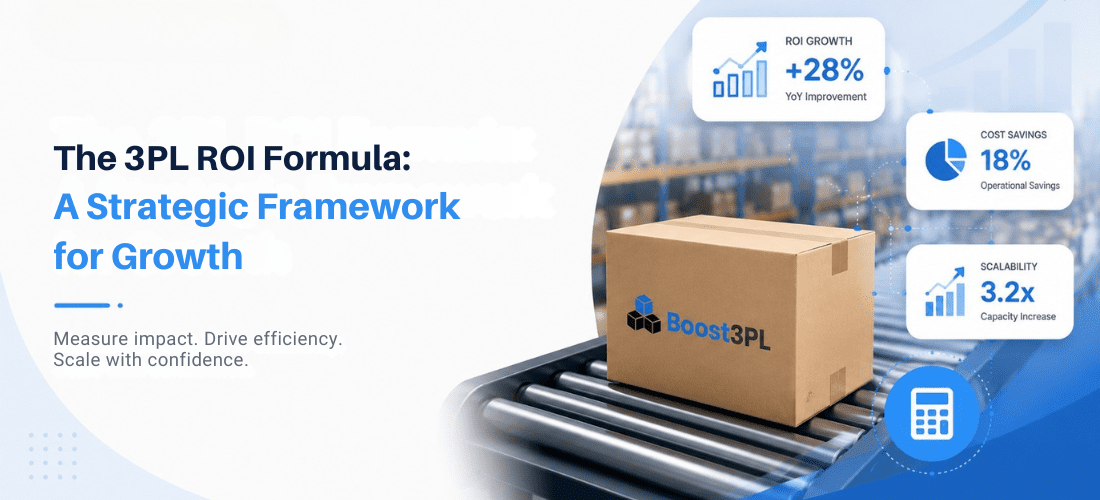
The 3PL ROI Formula: A Strategic Framework for Growth

Stop treating logistics like a guessing game. To see the real value of your operations, you need a structured approach to calculating the roi of a 3pl. Start by aggregating every dollar spent on your current in-house setup. This total must include rent, warehouse labor, technology subscriptions, and the cost of shipping errors. Next, compare these figures against 3PL quotes. High-performance partners often secure the best return on investment by slashing your base shipping costs through massive aggregate volume. Negotiated carrier rates can be 5% to 30% below retail prices, providing immediate margin relief.

The third step involves revenue recovery. You must calculate the money saved by eliminating mispicks and shipping delays. While competitors often focus only on the immediate cost of a mistake, you should consider the impact on your brand reputation and Customer Lifetime Value (CLV). Finally, add the scale multiplier. This represents your ability to handle a 500% spike in orders during peak season without the stress of hiring or training temporary staff. When calculating the roi of a 3pl, this flexibility is what transforms a warehouse into a strategic growth engine.

Hard Savings: Shipping Rates and Labor Efficiency

Soft Benefits: Conversion Lift and Customer Retention

Speed is a competitive advantage that directly impacts your bottom line. Quantify the impact of 2-day shipping on your cart abandonment rates. When customers trust your delivery speed, conversion rates climb. A perfect unboxing experience also drives repeat purchases and organic social shares. Maintaining this consistency across every platform is the core value of multichannel fulfillment services. If you’re ready to stop managing boxes and start scaling, it’s time to partner with a strategic ally that prioritizes your growth.

Maximizing Your Return with Boost3PL’s High-Performance Infrastructure

Your fulfillment partner should be a catalyst for expansion, not a bottleneck. When calculating the roi of a 3pl, the strength of their technology stack is often the deciding factor in long-term profitability. Boost3PL provides a frictionless integration that syncs your inventory across Shopify, TikTok Shop, and Amazon in real time. This technological sophistication prevents the nightmare of overselling, which is a critical risk for brands navigating the complex multichannel landscape of 2026. Professional frameworks for evaluating 3PL performance emphasize that a partner’s ability to integrate with your sales channels is a primary driver of efficiency gains.

Marketplace sellers face unique pressures that can quickly erode margins. Our strategic Amazon FBA prep services ensure your products meet strict compliance standards every time. This precision reduces the risk of costly marketplace penalties and stock-outs that damage your search rankings. By leveraging our national reach, you achieve lightning-fast delivery across the USA without the massive overhead of managing multiple regional warehouses yourself. You get the benefits of a nationwide network while maintaining a lean, agile business model.

Scaling Without the Friction

Boost3PL acts as a high-octane growth engine for your brand. We don’t just store boxes; we optimize your entire supply chain to handle sudden demand spikes with ease. Utilizing professional 3PL warehouse services allows you to maintain a 99.9% order accuracy rate even during your busiest seasons. This reliability protects your reputation and ensures that every customer receives a perfect unboxing experience.

The Bottom Line: Your Logistics Partner as a Profit Center

Shift your mindset away from simple cost-cutting. Stop asking "How much does it cost?" and start asking "How much growth does this partnership unlock?" Calculating the roi of a 3pl reveals that the right partner pays for itself by increasing conversion rates and improving customer retention. When you offload the chaos of daily operations, you gain the mental clarity needed to focus on creative strategy and brand building. In 2026, the most successful brands aren’t the ones with the biggest warehouses, but the ones with the most efficient partners.

Transform Your Logistics into a Strategic Growth Engine

Boost3PL is built for founders who demand excellence. We deliver 99.9% order accuracy and nationwide 2-day shipping coverage to keep you ahead of the competition. Our tech stack offers seamless integration with Shopify, TikTok Shop, and Amazon, ensuring your operations remain organized and fast. Stop drowning in pick-and-pack tasks and start focusing on your creative vision. Ready to accelerate your growth? Get a custom ROI analysis from Boost3PL today. We’re ready to help you build the future of your brand.

Frequently Asked Questions

How do I calculate the ROI of a 3PL for my ecommerce brand?

You calculate the ROI by subtracting your total outsourced fulfillment costs from the sum of your current in-house expenses and regained revenue. Your in-house math must include rent, labor, packing materials, and the cost of shipping errors. When calculating the roi of a 3pl, also factor in the value of your reclaimed time and the potential sales growth from faster shipping speeds.

Is a 3PL actually cheaper than fulfilling orders in-house?

A 3PL is generally more cost-effective because it converts high fixed costs into flexible variable costs. You stop paying for underutilized warehouse space and idle staff during slow seasons. By leveraging shared infrastructure and massive shipping volume, professional partners provide an efficiency level that solo brands can’t match. This model ensures you only pay for the fulfillment activity you actually use.

What are the most important KPIs to track when measuring 3PL performance?

Focus on order accuracy, shipping speed, and inventory precision. You should monitor the percentage of orders shipped within your promised window and the rate of mispicks. High-performance providers maintain a 99.9% order accuracy rate. Tracking these metrics helps you quantify the "soft" savings of a partnership, such as reduced customer service tickets and lower return processing costs.

How much can I save on shipping rates by using a 3PL?

Brands typically access negotiated carrier discounts that are 5% to 30% below retail shipping rates. These savings are a result of the 3PL’s ability to aggregate volume across their entire client base. When calculating the roi of a 3pl, these shipping discounts often offset a significant portion of the pick and pack fees. This immediate margin relief allows you to reinvest in customer acquisition.

What is the typical ‘break-even’ point for moving to a 3PL?

The break-even point often occurs when your order volume hits 500 to 1,000 shipments per month or when you need to lease dedicated warehouse space. It’s also the moment when the opportunity cost of your time becomes too high. If you’re spending more time taping boxes than growing your brand, the efficiency gains of outsourcing will immediately outweigh the service fees.

Does a 3PL help reduce customer acquisition costs (CAC)?

A 3PL indirectly lowers your CAC by increasing your Customer Lifetime Value and improving your conversion rates. Fast, reliable delivery leads to better reviews and higher repeat purchase rates, which makes your advertising spend more efficient. When your fulfillment is frictionless, you don’t have to spend as much to replace customers who were lost to poor shipping experiences.

The Business Case for Outsourcing Fulfillment in 2026: Scale Without Friction

How many hours of growth potential are you trading just to tape boxes and print labels? If you’re spending 20 hours a week on pick and pack tasks, you aren’t running a brand; you’re running a warehouse. With Amazon FBA fees increasing by an average of $0.08 per unit as of January 2026 and USPS Ground Advantage rates jumping 7.8 percent, the cost of doing it all yourself has never been higher. Understanding the benefits of using a US based 3pl is no longer just about convenience. It’s about protecting your margins and reclaiming your time to focus on what actually moves the needle.

You deserve a logistics strategy that scales as fast as your ambition. We’ll show you how to transform your shipping operations from a frustrating cost center into a high-octane growth engine. This guide breaks down how to secure discounted national shipping rates, maintain 2-day delivery standards across Shopify and Amazon, and build a strategic partnership that feels like a natural extension of your team. From navigating 2026 carrier hikes to mastering multichannel fulfillment, it’s time to trade operational friction for pure momentum.

Key Takeaways

  • Stop the “Founder’s Trap” and redirect your energy toward strategic brand building by automating your manual pick and pack workflows.
  • Unlock the competitive benefits of using a US based 3pl to secure deep carrier discounts and maintain 2-day delivery standards across every sales channel.
  • Protect your cash flow by converting rigid warehouse overhead into a scalable variable cost model that adapts to 2026 market volatility.
  • Master a frictionless transition framework that prioritizes deep tech integration and minimizes operational downtime during your inventory migration.

The Strategic Shift: Why In-House Fulfillment Becomes a Growth Bottleneck

Founder energy is a finite resource. If you’re losing 20 hours every week to pick and pack fulfillment, you’ve hit a growth ceiling. This "Founder’s Trap" turns visionaries into warehouse managers, stalling brand development and high-level strategy. It’s an expensive trade; your hourly rate as a CEO is far higher than the cost of professional logistics. Every box you tape is a missed opportunity to scale your marketing or refine your product line.

Fixed warehouse leases represent a massive infrastructure liability in the volatile 2026 market. Locked-in overhead drains cash flow when demand dips. Conversely, it caps your potential when orders spike. One of the primary benefits of using a US based 3pl is the ability to flip these fixed costs into variable ones. You pay for the space you use, not the empty square footage you’re stuck with during the off-season. This flexibility is the difference between surviving and thriving in a shifting economy.

Modern commerce demands extreme agility. Your logistics must pivot instantly between Shopify storefronts, viral TikTok Shop trends, and strict Amazon FBM requirements. Trying to manage these technical nuances in-house often leads to the "Agility Gap," where operational lag results in missed sales. To understand the broader scope of what is third-party logistics, you have to see it as a strategic shield against this operational chaos. Scaling without friction starts with recognizing the benefits of using a US based 3pl to bridge the gap between your current capacity and your revenue goals.

The Hidden Costs of Doing It Yourself

In-house operations carry invisible expenses that eat margins from the inside out. These include:

  • Escalating warehouse insurance premiums and liability coverage.

  • Excessive packaging waste from unoptimized box sizing and manual packing.

  • The administrative nightmare of seasonal labor management and training (similar to how growing restaurant groups explore Digital Onboarding & Training to simplify staff integration).

  • Compounding shipping errors that destroy customer lifetime value (CLV).

Fixed overhead prevents rapid scaling during peak 2026 shopping seasons because you cannot expand your physical walls or staff overnight. To dive deeper into optimizing your back-end, read our guide on Mastering 3PL Warehouse Services: A Strategic Guide for Growing Brands.

The Business

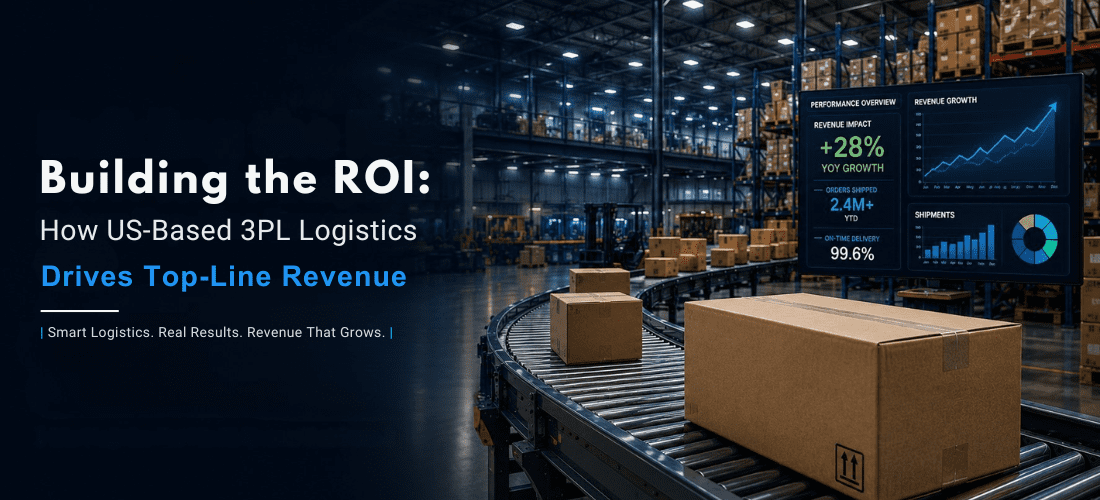
Building the ROI: How US-Based 3PL Logistics Drives Top-Line Revenue

Logistics isn’t a bill to be paid. It’s an investment in your brand’s scale. One of the most immediate benefits of using a US based 3pl is the shift from CAPEX to OPEX. Instead of sinking capital into warehouse equipment or long-term debt, you pay only for the fulfillment you use. This protects your cash flow. It allows you to redirect funds into aggressive marketing campaigns that drive customer acquisition while we handle the heavy lifting.

You gain access to the "Boost" effect. We leverage massive national shipping volumes to secure deep carrier discounts that individual brands simply can’t reach. These savings go straight back to your bottom line. Beyond shipping, marketplace dominance requires precision. Utilizing an Amazon FBA prep center ensures your inventory meets every strict requirement to win the Buy Box and maintain Prime eligibility. It’s about being where your customers are, without the operational headache.

Converting Logistics into a Sales Tool

Speed sells. Offering 2-day delivery capabilities directly increases checkout conversion rates. Customers don’t want to wait; they want their products now. When you meet that expectation, cart abandonment drops significantly. "Reliable multichannel fulfillment services act as your brand’s insurance policy, preventing stockouts and overselling across TikTok and Shopify." This consistency builds trust and repeat business.

Technology as a Growth Lever

Frictionless operation depends on data. Connecting your tech stack to a 3PL warehouse management system (WMS) provides real-time visibility into every order. This integration supports supply chain resilience and sustainability by reducing waste and optimizing transport routes. Use our logistics analytics to forecast demand and reduce expensive storage fees. Another of the benefits of using a US based 3pl is having a single source of truth for your inventory. You can explore our fulfillment center USA options to start turning your shipping operations into a competitive advantage today.

Executing the Transition: A Frictionless Framework for Scaling Your Brand

Switching to an external partner isn’t just a vendor change; it’s a strategic upgrade for your entire business model. Vetting for this partnership requires moving beyond a simple price-per-pick comparison. You need to evaluate technological compatibility and cultural alignment. One of the primary benefits of using a US based 3pl is the ability to communicate in real-time with a team that understands the nuances of the American consumer landscape. We don’t just move boxes. We act as a proactive ally that anticipates your needs before they become bottlenecks.

The onboarding process at Boost3PL is designed to be entirely frictionless. We know that every hour of operational downtime is an hour of lost revenue. Our team manages the inventory transfer with surgical precision, ensuring your Shopify and TikTok shops remain live and active. We take our role as the guardian of your brand seriously. Every package that leaves our facility reflects your reputation. We treat your customers with the same care your original founder team did, ensuring that high-quality presentation remains a constant as you scale.

Your 3PL Vetting Checklist

Before signing a contract, perform a strategic audit of your potential partner’s capabilities. Ask these critical questions to ensure they can handle your growth:

  • Do their 3PL warehouse services integrate directly with your current tech stack for real-time data?

  • Can they demonstrate specialized expertise in both Amazon FBA prep and FBM fulfillment to navigate marketplace complexity?

  • Do they offer the scalability to handle a 5x or 10x surge in order volume during peak 2026 shopping windows?

  • Are they equipped to manage multichannel returns without creating an administrative burden for your team?

The Future of Your Brand with Boost3PL

Imagine a business where your Monday mornings aren’t consumed by shipping labels and packing tape. When you leverage the benefits of using a US based 3pl, you reclaim the mental bandwidth needed for product innovation and aggressive marketing. This shift away from manual warehouse tasks also provides the opportunity to prioritize your health, and you can explore AI Fitness Coach to maintain your energy levels during long work weeks. You focus on the vision while we handle the operational chaos of the modern digital economy. It’s time to stop playing defense with your logistics and start using them as a weapon for expansion. Secure Your Amazon Growth: FBA Prep Without the Risk and experience the power of a high-performance fulfillment partnership.

Unlock Your Brand’s Full Velocity

Success in 2026 isn’t just about what you sell. It’s about how fast and reliably you deliver it. Moving beyond the "Founder’s Trap" of manual fulfillment allows you to reclaim your mental bandwidth and focus on high-level strategy. By leveraging the benefits of using a US based 3pl, you trade rigid infrastructure liabilities for a high-performance growth engine that adapts to your sales volume in real-time. This isn’t just an operational shift; it’s a strategic move to protect your margins and enhance your reputation across every digital storefront.

Boost3PL stands as your tech-savvy strategic ally. We bring specialized Amazon FBA Prep Center expertise and seamless integrations for Shopify and TikTok Shop to your back-end operations. Our team handles the inherent chaos of the supply chain so you can focus on building your empire with absolute confidence. It’s time to stop letting logistics hold you back and start using them as a catalyst for rapid expansion.

Ready to scale without the friction? Get your custom fulfillment quote from Boost3PL today.

Your growth is our primary metric of success. Let’s build something extraordinary together.

Frequently Asked Questions

Is outsourcing fulfillment more expensive than doing it in-house in 2026?

Outsourcing often reduces your total cost of ownership by eliminating fixed overhead like warehouse leases, equipment maintenance, and permanent labor. One of the primary benefits of using a US based 3pl is the ability to leverage massive shipping volumes for deep carrier discounts that individual brands can’t access alone. When you factor in the 20+ hours of founder time reclaimed each week, the ROI shifts heavily in favor of a professional partnership.

How does a US-based 3PL handle Amazon FBA prep and marketplace requirements?

A specialized Amazon FBA prep center manages the technical nuances of labeling, kitting, and boxing to meet strict marketplace standards. We act as a strategic ally to ensure your inventory arrives at Amazon facilities without rejection or costly penalties. This specialized support allows you to maintain Prime eligibility and win the Buy Box while offloading the complex manual labor required for multichannel fulfillment services.

Can I maintain my brand’s unique custom packaging when using a fulfillment center?

You can absolutely maintain your brand’s unique identity through custom packaging and branded inserts. We act as the guardian of your customer experience, ensuring that every box reflects your brand’s high standards and attention to detail. Our warehouse teams are trained to follow specific kitting and packing instructions, so your unboxing experience remains a powerful marketing tool for your digital-native brand.

What happens to my fulfillment costs if my sales volume fluctuates significantly month-to-month?

Your fulfillment costs scale directly with your order volume, turning rigid fixed expenses into a flexible variable model. This is one of the key benefits of using a US based 3pl during peak 2026 shopping seasons or slower months. You only pay for the storage space and labor you actually use, which protects your cash flow during transitions and allows for frictionless scaling when demand spikes.

How a 3PL Improves Supply Chain Resilience for Ecommerce Brands in 2026

In 2026, the Amazon Buy Box isn’t won by the brand with the best marketing. It’s won by the brand that never goes out of stock. With the total suspension of Section 321 duty-free entries and new EU sustainability mandates, the logistics game has changed forever. You’ve likely felt the sting of fragile shipping networks breaking during peak seasons or the panic of losing visibility into your inventory across multiple warehouses. It’s an exhausting cycle that threatens your brand reputation and your bottom line.

We understand that you need more than just a warehouse; you need a strategic ally. Discover how a 3pl improves supply chain resilience by transforming these operational headaches into a high-performance engine. This article explores how partnering with a tech-forward fulfillment company for ecommerce converts fixed costs into variable ones and creates a frictionless path to scale. We’ll show you how AI-powered forecasting and regionalized networks allow modern brands to pivot faster than the competition, ensuring your delivery speeds remain consistent even when global markets shift.

Key Takeaways

  • Shift from a fragile “just-in-time” model to a resilient “just-in-case” strategy that anticipates market shocks before they impact your customers.
  • Understand how a 3pl improves supply chain resilience by diversifying carrier networks to bypass regional bottlenecks and ensure consistent delivery speeds.
  • Leverage dynamic inventory placement to slash transit times and protect your brand reputation from weather-related delays and shipping disruptions.
  • Convert rigid, fixed logistics costs into a flexible variable model that scales automatically with your brand’s growth and seasonal demands.
  • Move beyond basic vendor transactions to build a high-performance strategic partnership that treats your fulfillment engine as a competitive advantage.

The New Standard of Supply Chain Resilience in Ecommerce

Resilience isn’t a defensive posture anymore. It’s an offensive strategy. In the 2026 ecommerce market, supply chain resilience means your brand has the muscle to anticipate shocks, react instantly, and thrive while others scramble. Old models focused on "just-in-time" inventory to save on storage costs, but that lean approach is now a liability. Today’s winners use a "just-in-case" strategic position. They keep stock closer to the customer and maintain buffer levels that protect against sudden spikes or shipping delays.

Digital-native brands face unique pressures that traditional retail never encountered. A single TikTok algorithm shift or a viral influencer moment can triple your demand overnight. Without an ecommerce logistics provider acting as your operational shock absorber, that success becomes a crisis. You need the infrastructure to handle 1,000% growth in a weekend without missing a single delivery deadline. This is exactly how a 3pl improves supply chain resilience; it provides the elastic capacity you can’t build on your own.

Identifying Vulnerabilities in Your Current Logistics Flow

Start by auditing your current setup for single points of failure. Relying on one warehouse or a single shipping carrier creates a fragile link in your chain. If that facility faces a labor shortage or that carrier hits a regional bottleneck, your business stops. Stockouts aren’t just missed sales; they are reputation killers that sink your marketplace rankings and destroy customer loyalty. Supply chain resilience is the ultimate competitive moat for 2026 ecommerce. By utilizing professional warehousing and inventory management services across multiple hubs, you ensure your brand stays visible and reliable regardless of external chaos.

Ecommerce Brands In 2026

4 Ways a 3PL Partner Strengthens Your Operations

Building a bulletproof operation requires more than just storing boxes. It’s about agility. Leading providers explain how 3PLs create more resilient supply chains by diversifying carrier networks to bypass regional shipping bottlenecks. If one carrier fails or a major hub freezes, your partner reroutes shipments instantly. Dynamic inventory placement follows this same logic. By spreading your stock across a 3PL warehouse services network, you reduce transit times and mitigate weather-related delays before they impact the customer.

This shift also transforms your financial structure. You convert heavy, fixed warehouse overhead into a flexible, pay-as-you-go model. You only pay for what you use. This is exactly how a 3pl improves supply chain resilience; it ensures your cash flow stays liquid even during market volatility. You gain the freedom to reinvest that capital back into product development—where you can discover VPrint3D Limited to support your prototyping needs—or high-growth marketing campaigns.

Multichannel Agility and Platform Protection

True resilience means your sales never stop. By leveraging multichannel fulfillment services, you keep your business active even if one platform experiences a technical outage or algorithm shift. Syncing your Shopify, Amazon, and TikTok Shop inventory prevents overselling and protects your account health. Utilizing a dedicated Amazon FBA prep center keeps your Prime eligibility intact during disruptions. Speed is your best defense. High-velocity pick and pack fulfillment ensures you maintain the seller ratings needed to win the Buy Box consistently.

Inventory Intelligence and Visibility

Data is the fuel for your supply chain engine. Frictionless software integration gives you real-time visibility into your stock levels across every warehouse. You can forecast demand spikes and stockout risks weeks in advance. This proactive approach allows you to focus on growth while your partner handles the operational complexity. If you’re ready to upgrade your backend, explore our warehousing and inventory management services to see the difference a tech-forward partner makes for your brand’s future.

Future-Proofing Your Brand with a Strategic 3PL Ally

Stop viewing logistics as a transactional cost center. In 2026, your fulfillment strategy is your brand’s backbone. Moving from a basic vendor relationship to a high-performance strategic partnership is the final step in securing your future. A partner with an entrepreneurial spirit doesn’t just ship boxes; they act as a guardian of your reputation. This deep alignment is exactly how a 3pl improves supply chain resilience. When your partner treats your success as their primary metric, you gain the confidence to pursue aggressive growth. Professional warehousing and inventory management provides the long-term stability you need to stay organized while the market remains chaotic.

Leveraging Integrated Technology for Real-Time Response

Dark data is the silent enemy of a scaling brand. If your inventory levels are hidden in spreadsheets or disconnected systems, you’re vulnerable to every market shift. A tech-forward 3PL illuminates your entire supply chain by integrating directly with your tech stack. You get a single source of truth for every SKU. Automated order routing then takes over, instantly sending orders to the most efficient fulfillment center USA location. This doesn’t just save time; it ensures your delivery promise stays intact even if one region faces a disruption.

Scaling Without the Risk of Fixed Assets

Owning a private warehouse is often a liability in a volatile economy. Long-term leases and fixed labor costs drain your capital and limit your ability to pivot. You don’t want to be stuck with empty square footage during a slow month or a cramped facility during a viral surge. A national 3PL network offers "instant" infrastructure that scales with you. You gain the reach of a global giant without the risk of heavy fixed assets. This model of outsourced infrastructure isn’t unique to ecommerce; in the energy and bulk transport sectors, DPP Logistics Company Ltd provides similar strategic resilience through their terminal and pipeline networks.

Boost3PL is the tech-savvy ally built for the modern digital economy. We thrive on handling complex operational tasks so you can focus on your creative and strategic goals. Don’t let logistics hold your brand back. Partner with Boost3PL today to build a frictionless, resilient supply chain that turns every disruption into a scalable competitive advantage.

Secure Your Competitive Edge in the 2026 Economy

The landscape of 2026 demands a shift from passive reaction to proactive agility. You’ve learned how moving to a "just-in-case" inventory strategy and diversifying your carrier networks protects your brand from the volatility of global trade. By leveraging integrated technology, you eliminate dark data and ensure your orders always find the fastest, most efficient path to the customer. This transition turns your logistics from a potential breaking point into a powerful engine for growth.

Understanding how a 3pl improves supply chain resilience is the first step toward true operational freedom. You can now stop worrying about rigid warehouse leases or sudden shipping bottlenecks and focus entirely on your creative vision. Boost3PL stands as your high-performance strategic ally. We offer advanced multichannel integration for Shopify, TikTok Shop, and Amazon alongside a strategic national fulfillment network designed to bypass regional disruptions.

It’s time to transform your supply chain into a scalable competitive advantage. Scale your brand with a resilient 3PL partner; Contact Boost3PL today. Your expansion is our primary metric for success. Let’s build a frictionless future together.

Frequently Asked Questions

What is supply chain resilience in 2026?

Supply chain resilience in 2026 is your brand’s ability to maintain seamless operations during global or regional shocks without losing customer trust. It goes beyond simple recovery; it’s about anticipating shifts like the suspension of Section 321 or new EU sustainability mandates. A resilient system uses real-time data to pivot inventory before a bottleneck occurs, turning market volatility into a competitive moat for your business.

How does a 3PL help with Amazon FBA prep during disruptions?

A 3PL acts as a critical buffer by providing professional Amazon FBA prep center services that ensure your inventory meets strict platform requirements even when primary warehouses are overwhelmed. If FBA intake slows down, your partner can quickly pivot to Amazon FBM fulfillment. This flexibility keeps your listings active and prevents the catastrophic loss of the Buy Box during peak season disruptions or carrier delays.

Can a 3PL reduce my shipping costs while improving resilience?

Yes, a 3PL reduces costs by converting high fixed overhead into a variable, pay-as-you-go model. Industry data shows that 66% of shippers agree using a 3PL contributes to lowering overall logistics costs. This is exactly how a 3pl improves supply chain resilience; it leverages a national warehouse network to place inventory closer to customers, which slashes last-mile delivery expenses while bypassing regional shipping delays.

What should I look for in a resilient ecommerce fulfillment partner?

Look for a tech-forward ecommerce logistics provider that offers seamless multichannel integration across Shopify, TikTok Shop, and Amazon. Your partner must possess a national network of 3PL warehouse services to ensure redundancy if one region fails. Prioritize providers that offer real-time visibility and proactive demand forecasting. You need a strategic ally that treats your brand’s reputation as their own primary metric for success.

How to Choose a 3PL Fulfillment Provider in 2026: The Strategic Founder’s Guide

In 2026, your warehouse isn’t just a storage space; it’s the high-tech engine room of your digital brand. If that engine stalls, your reputation goes with it. Learning how to choose a 3pl fulfillment provider is no longer about finding the cheapest labor. It’s about securing a strategic ally that moves at the speed of your Shopify and TikTok Shop feeds. You’ve likely felt the sting of inventory sync lag or the frustration of manual pick and pack errors that turn loyal customers into one-time buyers.

We agree that scaling your business shouldn’t feel like managing a constant crisis. You’ve outgrown the manual prep and the late-night inventory audits. This guide promises to teach you how to evaluate 3PL partners based on deep tech integration, multichannel expertise, and strategic scalability. We will preview how to navigate the 5.9% carrier rate increases and the new de minimis restrictions while building a fulfillment operation that feels effortless. It’s time to turn your supply chain into a high-performance growth tool and reclaim your focus for the big picture.

Key Takeaways

  • Discover why a tech-enabled 3PL acts as the central nervous system for your brand, ensuring your digital storefront and physical inventory move in perfect harmony.
  • Master sub-second inventory syncing to eliminate the risk of overselling during viral growth spurts on platforms like TikTok Shop and Shopify.
  • Learn exactly how to choose a 3pl fulfillment provider by prioritizing native integrations and high-accuracy pick and pack fulfillment that protects your margins.
  • Shift your mindset from hiring a vendor to securing a strategic ally that guards your brand reputation and handles operational chaos so you can scale.
  • Evaluate the non-negotiable plug-and-play connectors required to dominate multichannel fulfillment across Amazon, TikTok Shop, and beyond.

Identifying Your Growth Levers: Why You Need a Tech-Enabled 3PL in 2026

In the high-velocity commerce environment of 2026, a tech-enabled 3PL isn’t just a vendor. It is the central nervous system of your entire brand. When you are researching how to choose a 3pl fulfillment provider, you must prioritize speed and integration over simple square footage. Modern retail requires sub-second inventory syncing to prevent the disaster of overselling on viral platforms like TikTok Shop or Shopify. Minutes of delay mean thousands in lost revenue and platform strikes. You need a partner that breathes technology as much as you do.

Many founders fall into the ‘Tech Debt’ trap. They rely on basic shipping apps that worked during the startup phase but crumble under the weight of a scaling multichannel brand. Fulfillment software is the critical bridge that connects your digital sales platforms to the physical reality of the warehouse floor. Your decision on how to choose a 3pl fulfillment provider should hinge on whether their software can handle the inherent chaos of modern commerce. It ensures every click on a screen translates into a package on a truck without manual intervention.

The Cost of Operational Friction

Manual order processing is a silent killer of growth. Every hour you spend fixing address errors or manually updating stock levels is an hour stolen from your creative strategy. These invisible friction points lead to high error rates that tank your customer lifetime value. If a customer receives the wrong item or a late shipment, they won’t come back. You need a partner that eliminates this friction through automated workflows and proactive problem-solving.

Software as the Strategic Brain

The industry has shifted away from legacy WMS systems that operate in silos. A modern, API-first platform acts as your strategic brain. By utilizing Third-party logistics (3PL) providers with advanced tech stacks, you gain total control over your supply chain. Real-time data visibility empowers better warehousing and inventory management, allowing you to make proactive decisions based on live demand patterns. This is how you transform logistics from a cost center into a competitive edge that fuels your expansion.

Key Selection Criteria: Multichannel Syncing and Marketplace Mastery

Success in 2026 depends on your ability to sell everywhere at once. When evaluating how to choose a 3pl fulfillment provider, native integrations are your first filter. You need plug-and-play connectors for Shopify and TikTok Shop that eliminate manual data entry. If a provider relies on CSV uploads or outdated middleware, they are a bottleneck, not a partner. Your inventory must reflect reality across every channel in real time. This ensures you never sell a product you don’t have in stock.

This level of integration is particularly crucial for cross-border commerce; EZ3PL Ltd highlights how UK-based brands can leverage automated syncing to maintain high performance across multiple digital storefronts.

Accuracy is the only metric that matters for your bottom line. Demand a minimum of 99.9% accuracy in pick and pack fulfillment to protect your margins. Errors lead to returns, and returns kill growth. You also need a partner that scales effortlessly. Whether it’s a Q4 surge or a sudden viral social media moment, your 3PL must handle 10x order volume spikes without breaking a sweat. Transparency completes the picture. Insist on SKU-level profitability reporting and real-time tracking dashboards that show you the health of your business at a glance.

TikTok Shop and Shopify Integration Depth

Live-selling on TikTok creates unique demands that traditional warehouses can’t meet. Your multichannel fulfillment services must support high-velocity bursts of orders that happen in minutes. Unified inventory is non-negotiable. If you sell out on TikTok, your Shopify store needs to know instantly. This frictionless operation keeps your marketplace ratings high and your customers happy. If you want to see how this works in practice, consider partnering with a tech-first 3PL that prioritizes these digital-native channels.

Amazon FBA Prep and FBM Flexibility

Amazon remains a dominant force, but its rules are strict. Look for a professional Amazon FBA prep center that understands labeling, kitting, and packaging requirements. One mistake can lead to marketplace penalties or inventory blocks. Understanding how to choose a 3pl fulfillment provider that masters these marketplace nuances is the difference between profit and penalties. A strategic advantage comes from a partner that manages both FBA prep and FBM (Fulfilled by Merchant) under one roof. This hybrid approach allows you to pivot quickly if FBA storage limits tighten or shipping costs shift. It gives you the flexibility to keep selling no matter what the marketplace throws your way.

The Strategic Founders Guide

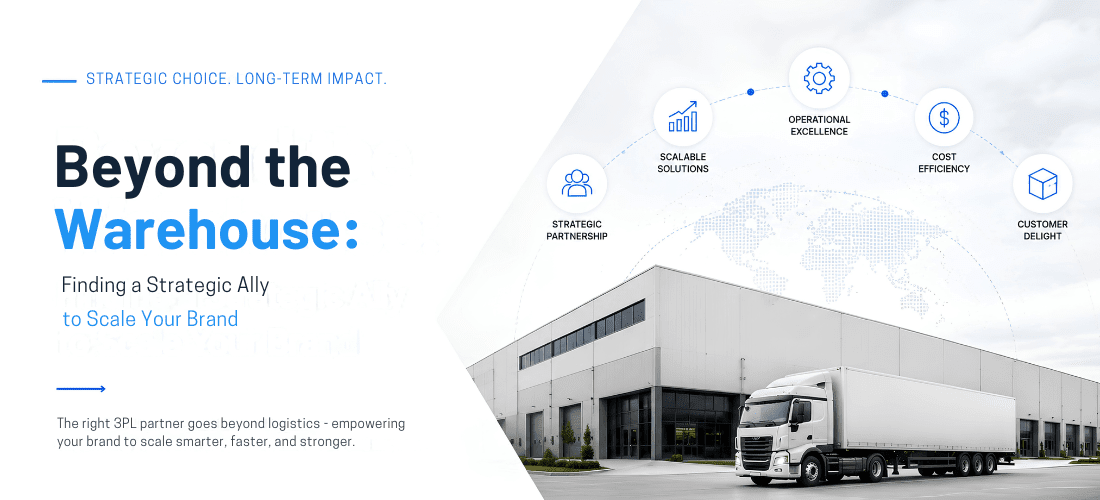
Beyond the Warehouse: Finding a Strategic Ally to Scale Your Brand

Many founders hesitate to outsource because they fear losing the personal touch that built their brand. It’s a valid concern. When you evaluate how to choose a 3pl fulfillment provider, you must look for an ally that acts as a guardian of your reputation. You aren’t just hiring a vendor to move boxes; you’re securing a high-performance partner. Boost3PL blends technological sophistication with a raw entrepreneurial spirit to protect your identity. We handle the inherent chaos of logistics so you can return to your creative roots. This frictionless experience ensures that as you scale, your customer experience remains elite.

Future-Proofing for 2026 Omnichannel Retail

Modern commerce moves too fast for reactive management. A top-tier fulfillment center USA now utilizes AI and predictive analytics to stay ahead of the curve. These tools identify potential supply chain bottlenecks before they ever impact your customers. A proactive partner anticipates issues like carrier delays or inventory shortages during peak seasons. This foresight is critical for maintaining your competitive edge in an omnichannel world. It transforms your supply chain from a back-office function into a proactive growth engine.

The Partnership Metric: Your Success

The old model of transactional billing is dead. Success in 2026 requires a shift toward a partnership model focused on total brand acceleration. When you decide how to choose a 3pl fulfillment provider, prioritize the one that measures their performance by your growth. You deserve a partner that is deeply invested in your unique identity and long-term vision. Stop wrestling with software integrations and manual spreadsheets. Start scaling with a strategic ally that treats your reputation as their own. Your brand’s next chapter begins when you trade operational chaos for streamlined, high-performance fulfillment.

Accelerate Your Expansion with Strategic Fulfillment

Logistics in 2026 demands more than just shipping boxes. It requires a seamless integration of your digital storefront and your physical inventory. You now understand that a tech-first approach is the only way to navigate carrier rate increases and complex marketplace requirements effectively. By prioritizing sub-second syncing and deep multichannel expertise, you protect your brand’s reputation and your customer’s long-term trust.

Mastering how to choose a 3pl fulfillment provider is the final step in turning operational friction into a scalable competitive advantage. It is about finding the brain that powers your physical operations so you can focus on the big picture. You’ve outgrown the manual audits and the inventory lag; it’s time for a solution that moves as fast as your sales feed.

Boost3PL stands ready as your high-performance strategic ally. We provide proprietary high-speed fulfillment technology alongside expert Amazon FBA prep to ensure your inventory moves without delay. Our multichannel support is specifically built for the high-velocity demands of TikTok Shop and Shopify founders. We are driven by your results and dedicated to the success of your brand identity.

Ready to accelerate your growth? Partner with Boost3PL today.

The future of your brand is built on the strength and reliability of your supply chain. It’s time to trade the chaos for a partner that scales at your speed and treats your success as the ultimate metric.

Frequently Asked Questions

What is the most important factor when choosing a 3PL for ecommerce?

The most critical factor is the provider’s ability to integrate seamlessly with your tech stack to provide real-time inventory visibility. In 2026, you cannot afford data lags that lead to overselling or stockouts on high-velocity channels. When you research how to choose a 3pl fulfillment provider, look for native API connections that automate the flow of information. This technological foundation ensures your physical operations keep pace with your digital growth and customer expectations.

Can one 3PL provider manage Shopify, TikTok Shop, and Amazon simultaneously?

Yes, a modern ecommerce logistics provider can manage all these channels through robust multichannel fulfillment services. The key is a unified inventory system that prevents channel conflict by syncing stock levels across every platform instantly. This allows you to scale on TikTok Shop while maintaining your Amazon FBA prep and Shopify storefront without manual intervention. It creates a frictionless experience where your brand remains consistent everywhere customers shop.

How do I know if my brand is ready to outsource to a 3PL?

You’re ready to outsource when operational tasks like packing boxes and managing returns start stealing time from your creative strategy. If you notice rising error rates or struggle to keep up with order spikes during viral moments, it’s time to transition. Moving to a professional fulfillment center USA allows you to offload the chaos of logistics. This shift empowers you to focus on high-level growth levers while experts handle the physical execution.

What is the difference between a traditional warehouse and a tech-enabled 3PL?

Traditional warehouses focus on manual labor and storage, often relying on paper trails or basic spreadsheets that slow down your growth. In contrast, a tech-enabled 3PL acts as a high-performance strategic ally using AI and real-time data to optimize every movement. These providers offer deep integrations and predictive analytics that anticipate bottlenecks before they happen. They prioritize speed of understanding and operational efficiency to turn your supply chain into a competitive advantage.

How does a 3PL handle Amazon FBA prep and compliance?

A specialized Amazon FBA prep center manages the entire compliance process, including labeling, kitting, and strict packaging requirements. They stay updated on Amazon’s evolving regulations to prevent marketplace penalties or inventory rejections. When you consider how to choose a 3pl fulfillment provider, ensure they have a dedicated team for these marketplace nuances. This precision protects your seller rating and ensures your products remain Prime-eligible without the headache of manual prep.

Will I lose control over my shipping and customer experience if I use a 3PL?

You actually gain more control by using a partner that offers SKU-level transparency and real-time tracking dashboards. A strategic 3PL acts as a guardian of your reputation, executing your brand’s specific standards at a scale you can’t achieve alone. You maintain oversight of the customer experience through clear data while offloading the manual burden of execution. It’s about trading the stress of micromanaging shipments for the confidence of a professional, frictionless operation.

Amazon vs. Walmart: The 2026 Battle for Ecommerce Dominance (Seller’s Guide)

In 2026, the real winner of the retail wars isn’t Amazon or Walmart; it’s the brand that refuses to be locked into a single ecosystem. Amazon’s 3.5% fuel surcharge and the new inbound defect fees, which can now reach $5.72 per unit, are aggressively eating into seller margins. You’re likely feeling the squeeze of the amazon fbm vs fba fulfillment debate as peak storage costs hit $2.40 per cubic foot. You want to scale your brand, but the platform’s increasing complexity feels like a constant bottleneck to your growth.

We understand that managing multichannel stock while chasing the Buy Box on two different giants is exhausting. This guide breaks down the critical 2026 shifts in fulfillment fees, market reach, and logistics strategies so you can reclaim your profits and maintain control. You’ll discover how to leverage Walmart’s 27.2% growth rate alongside Amazon’s massive reach without getting buried in surcharges. We are diving into a side-by-side comparison of WFS, FBA, and the hybrid models that will create a seamless logistics experience for your brand this year.

Key Takeaways

  • Identify “blue ocean” growth opportunities by analyzing the 2026 marketplace landscape and the convergence of Prime and Walmart+ buyer demographics.
  • Safeguard your margins by comparing the evolving cost structures of amazon fbm vs fba fulfillment against Walmart’s competitive WFS platform.
  • Discover why high-margin brands are pivoting toward a Merchant Fulfilled (FBM) model to reclaim control over kitting and avoid aggressive storage surcharges.
  • Integrate a scalable multichannel strategy to dominate both retail giants simultaneously without the friction of platform lock-in or inventory duplication.
  • Boost your delivery speed and brand reputation by leveraging a seamless 3PL partner to unify your logistics across Amazon, Walmart, and Shopify.

Amazon vs. Walmart in 2026: Analyzing the Marketplace Landscape

The ecommerce battlefield has shifted. Amazon maintains a massive 37.6% market share, but its maturity has created a high-density, saturated environment. Walmart currently holds 6.4% of the market, yet its 27.2% growth rate is nearly triple Amazon’s 9.6% expansion. This represents a "blue ocean" for your brand. When weighing amazon fbm vs fba fulfillment, remember that both giants now use advanced AI to drive predictive search results. These algorithms favor brands with elite logistics. If you don’t have the infrastructure to support rapid delivery, you won’t show up on the first page.

Market Reach and Buyer Loyalty

The subscription wars between Prime and Walmart+ have reached a fever pitch. Demographic lines are blurring as affluent shoppers now frequently subscribe to both platforms. Walmart’s 2026 advantage lies in its physical footprint. This allows for a robust omnichannel strategy where customers return online orders at local storefronts instantly. This convenience drives higher conversion rates and builds deep trust. To compete, your brand must be ready to serve this dual-loyalty audience through a reliable inventory management system that syncs across every channel.

Seller Competition and Algorithm Standards

Winning the Buy Box in 2026 is a race for logistics precision. The choice between amazon fbm vs fba fulfillment is now a strategic calculation of speed versus cost. Amazon’s algorithm treats fulfillment speed as the primary ranking factor, while Walmart’s curated marketplace remains a prestige play. Walmart’s vetting process is strict; they only want established brands that can handle high-velocity orders. You’ll need to navigate these high barriers to entry by proving your operational maturity. Boost your visibility by mastering the delivery experience to stay visible and profitable in this competitive landscape.

Amazon Vs Walmart The 2026 Battle For Ecommerce Dominance Sellers Guide

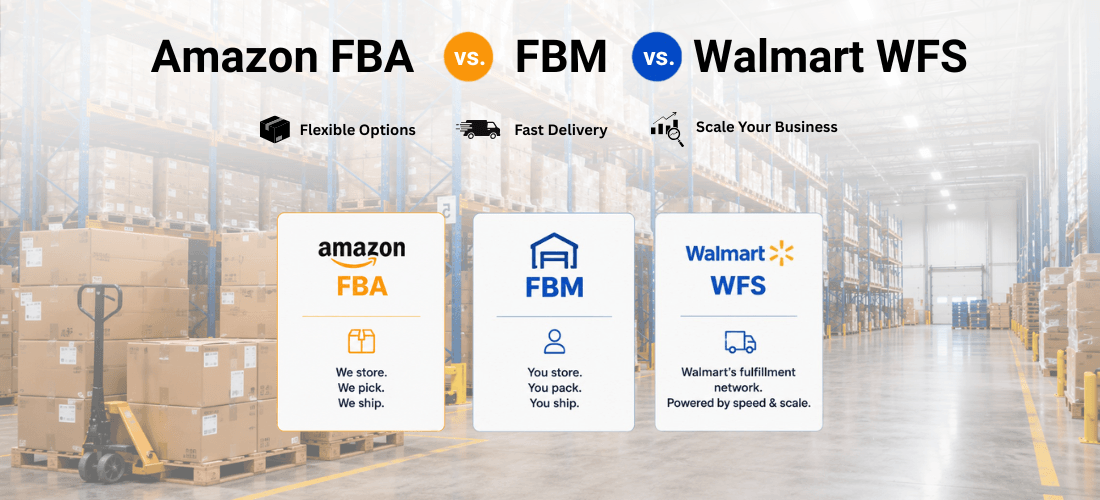
Fulfillment Showdown: Amazon FBA vs. FBM vs. Walmart WFS

Choosing between amazon fbm vs fba fulfillment is no longer just about convenience; it’s a strategic calculation of your brand’s survival. In 2026, Amazon’s 3.5% fuel surcharge and peak storage fees of $2.40 per cubic foot have transformed FBA into a high-stakes expense. High-margin brands are pivoting back to FBM to regain control over their bottom line and avoid the aggressive low-inventory-level fees that trigger when stock drops below 28 days. While Amazon remains the giant, Walmart WFS is emerging as a powerful contender by offering a simpler fee structure with no monthly subscription costs.

Fee Structures and Profit Margins

Amazon’s aged inventory penalties now kick in at 181 days, forcing sellers to move products faster or pay the price. This makes "dead inventory" a lethal profit killer for slower-moving SKUs. Recent omnichannel supply chain research highlights that inventory flow is the new currency of ecommerce. Walmart WFS offers a compelling alternative with storage rates holding steady at $0.75 during standard months, providing a more predictable cost model for brands looking to diversify. If you’re tired of complex surcharges, switching to a professional order fulfillment services provider can help you bypass these platform-specific traps.

Shipping Speed and Reliability

Organic rank lives or dies by the 2-day delivery promise. Amazon FBA is the gold standard for speed, but Walmart WFS is catching up with significantly less competition for that coveted delivery badge. To win on either platform, you must avoid the dreaded inbound defect fees, which can now reach $5.72 per unit on Amazon for mislabeled items. Utilizing an Amazon FBA prep center ensures your shipments meet strict 2026 compliance standards before they even hit the warehouse floor. This precision prevents rejected shipments and keeps your brand’s performance metrics in the green. Don’t let logistical errors stall your momentum; integrate a seamless fulfillment strategy that prioritizes accuracy and speed.

Winning the Retail War: Building a Scalable Multichannel Strategy

Success in 2026 requires more than just picking a side in the amazon fbm vs fba fulfillment debate. It’s about diversification. Relying solely on one platform leaves your brand vulnerable to sudden fee hikes or algorithm shifts. By expanding across Amazon, Walmart, and Shopify, you reduce platform risk and capture growth wherever your customers shop. Leading brands are using these 2026 seller benchmarks to track their performance against the competition and stay ahead of the curve. Scaling without the stress means moving beyond the limitations of platform-specific silos.

Diversification as a Growth Lever

Stop splitting your stock into fragmented piles. You can use a single, unified pool of inventory to fulfill orders across every channel simultaneously. This is the core of modern multichannel fulfillment services. Whether it’s an Amazon FBM order, a Walmart sale, or a trending TikTok Shop purchase, your logistics must be seamless. This approach prevents overstocking and ensures your capital isn’t tied up in redundant inventory sitting in multiple warehouses. It’s the most efficient way to maintain agility during volatile peak seasons.

How Boost3PL Elevates Your Brand

Boost3PL acts as your high-performance strategic ally in the digital economy. Our technology offers seamless API integration that syncs your orders and inventory in real-time across all platforms. This level of automation is essential for maintaining the high performance standards required to win the Buy Box. Our pick and pack fulfillment processes are built for speed and precision, ensuring every package reflects your brand’s reputation for excellence. By optimizing your 3PL warehouse services, you gain a national reach that rivals the biggest players in the industry. We handle the logistical heavy lifting so you can focus on creative growth. Let’s boost your brand’s potential today.

Dominate the 2026 Retail Landscape

The battle between Amazon and Walmart isn’t about choosing a single winner. It’s about positioning your brand to thrive across every available channel. We’ve analyzed how shifting fees and the amazon fbm vs fba fulfillment debate impact your bottom line. Success now depends on your ability to remain agile, avoiding platform lock-in while maintaining elite delivery standards. You don’t have to navigate rising storage costs or complex inbound requirements alone. The right strategy turns logistical chaos into a competitive advantage.

Boost3PL acts as your high-performance strategic ally. We provide an expert Amazon FBA Prep Center and seamless API integrations for both Walmart and Amazon to keep your inventory in sync in real-time. Our nationwide US fulfillment coverage ensures your customers receive their orders with the speed they expect, regardless of the platform. Boost your brand’s growth with seamless multichannel fulfillment and reclaim your focus on strategic expansion. Your brand’s potential is limitless when your logistics are organized, fast, and reliable. Let’s scale your brand and win the retail war together.

Frequently Asked Questions

Is it better to sell on Amazon or Walmart in 2026?

Can I use Amazon FBA to fulfill my Walmart orders?

You can use Amazon Multi-Channel Fulfillment (MCF), but Walmart strictly prohibits Amazon-branded packaging. Violating this policy can lead to immediate account suspension on Walmart Marketplace. A seamless 3PL partner uses neutral packaging to fulfill orders for both platforms simultaneously. This protects your brand’s standing on Walmart+ while you leverage Amazon’s massive reach. It’s the most reliable way to scale without platform friction.

How do Walmart Fulfillment Services (WFS) fees compare to Amazon FBA?

WFS fees are generally more predictable and often lower for standard items. Standard storage for WFS is $0.75 per cubic foot, while Amazon FBA charges $0.78 and adds a 3.5% fuel surcharge as of April 2026. During the peak season, Amazon’s storage fee jumps to $2.40 per cubic foot. Walmart’s lack of a monthly subscription fee makes it a highly cost effective alternative for brands focused on maintaining healthy margins.

What are the main requirements for selling on Walmart Marketplace?

Walmart is a curated marketplace that demands high performance and a proven track record. You must maintain a Negative Feedback Rate of 2% or less and provide a valid US Business Tax ID. They officially enforced new metrics in April 2026, including strict Return Rates and Item Not Received thresholds. They prioritize established brands that can demonstrate reliable fulfillment and high quality customer service standards.

How does an Amazon 3PL partner help with FBA prep and compliance?

A professional 3PL partner acts as your guardian against Amazon’s rising inbound defect fees. These penalties now range from $0.32 to $5.72 per unit for simple labeling or placement errors. We handle the precise kitting and labeling required to navigate the amazon fbm vs fba fulfillment landscape without losing your profits to avoidable fines. This ensures your inventory is organized, compliant, and ready for immediate sale upon arrival at the fulfillment center.

Which platform has a better return policy for sellers in 2026?

Walmart offers superior return flexibility through its massive physical store network. Their omnichannel approach allows customers to return online orders at local stores, which reduces the logistical burden on your brand. Conversely, Amazon has tightened its requirements for 2026. FBM sellers must now provide prepaid return labels for every item regardless of value. This makes Walmart a more seller friendly environment for managing the inherent costs of customer returns.

Top 3PL USA Companies: The 2026 Guide to Choosing Your Fulfillment Partner

Why would 74% of modern shippers switch their logistics provider specifically for better AI and technology capabilities? In a 2026 market valued at USD 227.69 billion, simply having a warehouse isn’t enough. You need a 3pl usa partner that understands the difference between moving boxes and building a brand reputation.

You’ve likely felt the excitement of a "sold out" notification, but that joy fades fast when slow shipping times and inventory errors at massive, detached facilities start costing you sales. It’s frustrating to feel like just another account number when you’re trying to scale a high-growth business on Shopify or Amazon. You need a partner that treats your inventory with the same care you do, ensuring every customer experience is flawless.

We’re here to change that dynamic by showing you how to find a partner that acts as a strategic ally. This 2026 guide evaluates the top national providers to help you achieve a seamless multichannel integration and lightning-fast delivery. You’ll discover exactly how to vet a provider’s tech stack to boost your brand’s US fulfillment strategy and ensure your operations finally match your vision.

Key Takeaways

  • Understand the critical shift from traditional warehousing to high-performance fulfillment centers that actively protect your brand reputation.
  • Master a 5-step evaluation framework to vet any 3pl usa provider based on their technological infrastructure and long-term scalability.
  • Learn how to achieve seamless multichannel integration across Shopify, Amazon, and TikTok Shop to eliminate inventory errors and shipping delays.
  • Discover why an agile, tech-forward logistics ally provides a superior competitive advantage over impersonal enterprise-level warehouses.
  • Identify the specific operational metrics that transform your fulfillment strategy from a backend necessity into a primary driver of growth.

##Navigating the 3PL USA Landscape in 2026

The US ecommerce ecosystem moves at light speed. A Third-party logistics (3PL) provider is no longer just a place to park your inventory. In 2026, the 3pl usa market is valued at USD 227.69 billion, and top-tier partners now function as the operational heartbeat of your brand. While enterprise giants focus on their own revenue rankings, high-growth founders require a partner focused on brand protection and multichannel agility. You can’t afford to be just another barcode in a massive, impersonal facility where your growth is secondary to their quarterly earnings.

The Difference Between a Warehouse and a Strategic Ally

Traditional warehouses store boxes. Strategic allies manage the entire customer journey from the moment a shopper clicks "buy." This shift requires absolute transparency. Our warehousing and inventory management services provide real-time visibility that traditional firms simply can’t match. You need to see your stock levels across all channels instantly. This data allows you to make bold marketing moves without fearing a stockout or a backorder nightmare. A strategic ally provides:

  • Seamless software integrations for real-time data flow

  • Proactive defect processing and quality inspection

  • Dedicated support that understands your brand’s unique needs

Why National 3PL Companies are Essential for Scaling

National coverage is the only way to meet 2026 shipping expectations. Customers expect packages in two days or less. If you ship everything from a single local hub, your transit costs will skyrocket as you hit higher shipping zones. Utilizing an east coast 3PL alongside other regional hubs slashes shipping times and preserves your margins. This geographic strategy ensures your brand stays competitive in a market where 15.4% of all retail sales happen online. Scaling your 3pl usa operations means moving closer to your customers, not just renting a bigger building.

##Evaluation Framework: How to Choose a 3PL in the USA

Finding the right 3pl usa partner requires looking past the surface. Revenue rankings don’t tell the whole story. You need a structured approach to vet potential allies. Follow this five-step framework to ensure your logistics partner can actually fuel your brand’s growth.

  • Tech Readiness: Does their software integrate natively with Shopify, Amazon, and TikTok Shop?

  • Operational Accuracy: What is their verified error rate for pick and pack fulfillment?

  • Financial Transparency: Are there hidden fees for receiving, returns, or account management?

  • Scalability: Can they increase labor capacity during Q4 without losing speed?

  • Strategic Alignment: Do they treat your brand like a partner or a line item?

Don’t fall into the hidden cost trap when selecting a 3pl usa. Low storage fees often mask high costs associated with inventory errors and poor return management. A single shipping error can cost your brand more in customer lifetime value than a month of storage fees ever would. Focus on accuracy and speed above all else.

Tech Stack Integration & Multichannel Sync

Your logistics partner must be a tech company first. In 2026, manual data entry is a death sentence for scaling brands. You need real-time synchronization across every sales channel. If your TikTok Shop inventory doesn’t update the moment a Shopify order ships, you risk overselling and damaging your reputation. Seamless integration ensures that your stock levels are always accurate, protecting your brand from negative reviews and marketplace penalties.

Scalability: Can They Handle Your Peak Season?

Peak season is the ultimate test of any provider. Ask potential partners how they managed the 2025 holiday rush. High-performance providers use automated warehousing and inventory management to prevent bottlenecks before they happen. They should have flexible labor models and enough warehouse capacity to handle a 5x surge in order volume. If you’re ready to stop worrying about backlogs, see how a strategic ally can boost your operations.

Top 3PL

Boost3PL: The Premier National Partner for Ecommerce Growth

You’ve seen the data and understood the risks of staying small. Now it’s time to choose a 3pl usa partner that matches your ambition. Boost3PL isn’t just a logistics firm; we’re a high-performance strategic ally. While enterprise giants prioritize their own margins, we prioritize your brand’s acceleration. Our "Boost" philosophy means we don’t just move boxes. We optimize every step of your supply chain to ensure you’re ready for the 8.4% annual market growth projected through 2030. We handle the logistical heavy lifting so you can focus on the creative strategy that built your business.

Seamless Multichannel Fulfillment

Success in 2026 requires being everywhere your customers are. Boost3PL synchronizes orders from Shopify, TikTok Shop, and Amazon into a single, automated stream. You won’t have to manage fragmented systems or worry about inventory discrepancies across platforms. Our technology-centric approach ensures real-time data flow for both DTC and B2B orders. For marketplace sellers, our integrated Amazon FBA prep center provides a massive advantage. We handle the labeling, kitting, and compliance hurdles that often bottleneck growing brands, allowing you to scale without the headache of Amazon’s strict requirements.

Elevated Brand Protection

We believe your package is a physical extension of your brand’s promise. Impersonal warehouses treat inventory as numbers; we treat it as your reputation. Boost3PL focuses on the details that drive customer loyalty, from precision kitting to an elevated unboxing experience. Accuracy isn’t just a goal; it’s our standard. When you partner with a 3pl usa ally that values quality as much as speed, you reduce returns and increase customer lifetime value. We provide the calm, controlled solution to the inherent chaos of rapid scaling. Stop being a small fish in a giant warehouse and start working with a partner that’s deeply invested in your success.

##Scale Your Brand with Operational Excellence

Choosing the right 3pl usa isn’t just about finding a warehouse; it’s about securing your brand’s future in an ecommerce market projected to reach USD 272.74 billion by 2031. You’ve learned how to look past revenue rankings and focus on the technical integrations that actually drive growth. By prioritizing real-time visibility and multichannel synchronization, you eliminate the shipping delays that kill customer loyalty. This guide has provided the framework to move from manual chaos to a tech-first fulfillment strategy that protects your reputation.

Our specialized TikTok and Shopify integrations ensure your inventory stays accurate across every platform. We offer dedicated Amazon FBA Prep services to keep your marketplace presence friction-free and compliant. High-growth brands need a partner that scales alongside them, providing the stability needed to dominate the 2026 landscape. It’s time to stop managing logistics and start leading your industry. Success belongs to the founders who prioritize their customer experience today.

Boost your brand with the premier USA 3PL partner—Get a custom quote today.

Your growth journey is just beginning. Let’s build something remarkable together.

##Frequently Asked Questions

What are the average costs for 3PL services in the USA in 2026?

Domestic DTC fulfillment typically costs between $8 and $15 per order including shipping as of May 2026. Storage rates average $8.22 per square foot annually; or you might pay between $0.43 and $0.78 per cubic foot each month. Standard pick and pack fees range from $1.25 to $5.00 per order. Setup fees vary from $0 to $1,000 depending on your integration complexity. These industry averages help you benchmark your logistics spend against current market standards.

How do I know if my brand is ready to switch to a 3PL?

You are ready to switch when your team spends more than 20% of their day packing boxes instead of growing the brand. If shipping delays cause your customer satisfaction scores to drop; it’s time for a professional 3pl usa partner. Most brands make the move when they hit 100 orders per month and need to reclaim their strategic focus. Outsourcing allows you to scale without adding fixed overhead or managing warehouse labor yourself.

Can a 3PL USA provider handle my Amazon FBA prep and FBM orders simultaneously?

A high-performance 3pl usa provider manages both Amazon FBA prep and FBM orders from the same inventory pool simultaneously. This hybrid strategy ensures you never lose the Prime badge while keeping backup stock ready for direct merchant fulfillment if FBA limits change. We synchronize your stock levels in real-time to prevent overselling on the marketplace. This dual approach protects your seller rating and optimizes your inventory turnover across all Amazon channels.

What is the difference between a fulfillment center and a 3PL warehouse?

A fulfillment center focuses on high-velocity movement and the customer experience; whereas a traditional warehouse is primarily for long-term storage. Fulfillment centers process orders within hours to meet the 2026 demand for fast shipping. They utilize advanced automation to handle pick and pack tasks at scale with precision. Warehouses are often better suited for bulk pallet storage where speed of exit is not the primary metric for success.

Choosing the Right Ecommerce Fulfillment Partner: The 2026 Strategic Guide

Your ecommerce fulfillment partner isn’t just a vendor in 2026; they’re the primary guardian of your brand’s reputation. A single inventory sync error or a 48 hour shipping delay can trigger a wave of negative reviews that take months to erase. Recent data from the 2024 State of Logistics Report shows that 73% of consumers will abandon a brand after just two late deliveries. You’ve worked too hard building your vision to let warehouse overhead and shipping bottlenecks stall your momentum. You need a solution that moves as fast as your sales notifications.

We agree that managing your own warehouse is a drain on your creative energy and your capital. This guide delivers the exact framework you need to select a partner that scales your brand, integrates your tech, and boosts your bottom line. You’ll learn how to achieve seamless multichannel integration across Shopify, Amazon, and TikTok Shop while significantly reducing shipping costs. We’ll walk through the specific technological requirements and operational benchmarks that will help you reclaim your time and elevate your customer experience.

Key Takeaways

  • Define the role of a modern ecommerce fulfillment partner as a strategic growth engine that protects your brand’s reputation.
  • Discover the five essential pillars for evaluating a 3PL to ensure they can handle the high-speed demands of the 2026 digital economy.
  • Learn how to sync Shopify, TikTok Shop, and Amazon into a single, seamless workflow that eliminates costly inventory errors.
  • Understand why integrated FBA prep services are non-negotiable for maintaining marketplace compliance and boosting your bottom line.
  • Identify the accuracy benchmarks needed in pick and pack operations to scale your brand fearlessly across multiple sales channels.

Beyond Shipping: Why Your Ecommerce Fulfillment Partner is a Growth Engine

In the 2026 digital economy, your ecommerce fulfillment partner is no longer just a back-end vendor. They are the engine of your scalability and the primary guardian of your brand’s reputation. While traditional logistics providers focus on moving boxes, a strategic ally manages the entire post-purchase journey to ensure every customer touchpoint reinforces your value proposition. They bridge the gap between your digital storefront and the physical reality of your customer’s doorstep.

Bad fulfillment carries a heavy price tag. Industry data from 2024 shows that 84% of shoppers will not return to a brand after a single poor delivery experience. These shipping errors directly slash your Customer Lifetime Value (LTV) while inflating your customer acquisition costs. When a package arrives late or contains the wrong item, your hard-earned ad spend effectively goes to waste. Efficient logistics creates "The Boost Factor." This is the competitive edge where founders stop firefighting warehouse issues and start focusing 100% of their energy on product innovation and aggressive marketing.

The Shift from Tactical Shipping to Strategic Fulfillment

Old-school warehousing is dead. Modern brands demand real-time data visibility and tech-enabled agility to survive. You need to know exactly where your inventory sits across every channel at any given second. This visibility allows you to make informed stock decisions and prevent stockouts before they happen. Establishing a strong 3PL fulfillment pillar is the first step in building a resilient supply chain that supports rapid expansion without the friction of manual data entry.

Protecting the Customer Experience at Scale

Your brand promise doesn’t end at the checkout button. A high-performance partner maintains your exact unboxing standards even when your order volume triples overnight. Accuracy is the ultimate customer service tool. By maintaining a 99.9% order accuracy rate, you drastically reduce costly returns and customer support tickets. This precision builds the trust necessary to turn one-time buyers into lifelong brand advocates who trust your delivery as much as your product.

The 2026 Evaluation Framework: 5 Pillars of a High-Performance 3PL

  • Technology & Integration: Seamlessly syncing with Shopify, TikTok Shop, and Amazon is no longer optional. It’s the baseline for survival.
  • Amazon Expertise: Your partner must double as an Amazon FBA prep center. This expertise prevents marketplace penalties that can freeze your account and stall your revenue.
  • Scalability & Flexibility: An elite ecommerce fulfillment partner provides the "flex" capacity needed for Q4 peaks. A viral TikTok moment can spike order volume by 500% in 24 hours; your 3PL must handle that surge without breaking.
  • Transparency: Demand clear performance data to audit their work. You need to see every movement within the warehouse to ensure your brand standards are met.
  • Operational Speed: Speed is your currency. Evaluate how fast a partner moves from receiving a shipment to making it "live" for sale.

Multichannel Mastery: Beyond the Basic API

True growth requires unified inventory views. When you sell across multiple platforms, you can’t afford fragmented data. Modern fulfillment demands "one pool of stock" for Shopify and TikTok Shop to prevent the nightmare of overselling and the subsequent customer service fallout. This seamless approach ensures your brand remains reliable in the eyes of your customers across every channel you occupy.

Operational Speed: The 2-Day Delivery Standard

Strategic 3PL warehouse USA placement is the only way to hit the 2-day delivery standard without destroying your margins. You must also evaluate "dock-to-stock" times. If your inventory takes five days to be ready for sale after arriving at the facility, you’re losing money. Demand a partner that prioritizes speed at every stage of the logistics chain. If you want to see how these pillars drive real results, you can explore our high-performance solutions.

Choosing

Scaling Fearlessly: Why Boost3PL is the Partner Your Brand Deserves

Choosing the right ecommerce fulfillment partner means finding a team that operates at your speed. You’ve built a brand that customers love; now you need a logistics engine that protects that love. Boost3PL acts as your high-performance strategic ally. We don’t just move boxes. We accelerate your growth by handling the logistical heavy lifting so you can stay focused on your next product launch or marketing campaign. Our "can-do" spirit ensures that no matter how complex your requirements are, we find a way to execute with precision.

Accuracy is our baseline. Our pick and pack order fulfillment process maintains a 99.9% accuracy rate. This precision protects your reputation and eliminates the "hidden costs" of shipping errors. We’ve also removed the fear of switching 3PLs. Our onboarding process is designed to be fast and friction-free. We transition your inventory and sync your systems in days, not weeks. With strategic locations across the USA and the UK, we provide the national and global coverage your brand needs to scale without borders.

The Boost3PL Tech Stack: Real-Time Control

Our "Seamless" integration philosophy means our tech stack plugs directly into your existing storefront. Whether you use Shopify, TikTok Shop, or Amazon, our system provides instant connectivity. This gives you 24/7 visibility through our advanced warehousing and inventory management platform. You’ll never have to guess about stock levels again. You get real-time data that empowers you to make aggressive, confident business decisions.

Your Strategic Advantage in the 2026 Marketplace

In the 2026 marketplace, logistics is either your biggest bottleneck or your sharpest competitive weapon. Partnering with Boost3PL turns your supply chain into a tool for market domination. We help you reduce transit times by 30% and lower customer support tickets related to shipping by 45%. This isn’t just about fulfillment; it’s about business acceleration. Scale your brand with a partner who cares about your success as much as you do. Let’s boost your bottom line together.

Take Control of Your Brand’s Future

The logistics landscape of 2026 rewards the fast and the integrated. You’ve seen how a strategic ecommerce fulfillment partner serves as the engine of your scalability. By prioritizing high-performance technology, Amazon expertise, and operational speed, you transform a traditional cost center into a powerful competitive weapon. It’s time to stop managing boxes and start growing your brand with absolute confidence.

Boost3PL provides the 99.9% pick and pack accuracy you need to protect your hard-earned reputation. Our professional Amazon FBA prep center and seamless Shopify and TikTok Shop integration ensure your inventory moves without friction across every sales channel. We handle the logistical heavy lifting so you can focus on the creative strategy and product innovation that built your business. Your next level of growth starts with a partner who operates at the speed of your ambition.

Ready to Boost your brand? Explore our seamless fulfillment solutions today.

Frequently Asked Questions

What is the difference between a shipping company and an ecommerce fulfillment partner?

A shipping company handles transportation, while an ecommerce fulfillment partner provides a comprehensive end to end solution for your brand. Carriers like UPS or DHL simply move the box from the warehouse to the doorstep. In contrast, your fulfillment partner manages inventory storage, technology integrations, and the entire pick and pack workflow. This strategic relationship ensures your brand scales efficiently across every sales channel you occupy.

How much does an ecommerce fulfillment partner cost in 2026?

Industry data from the 2025 Logistics Management Report suggests that fulfillment expenses typically account for 10% to 20% of a brand’s net revenue. These costs fluctuate based on your specific SKU count, order frequency, and packaging requirements. While prices vary, a high quality partner helps you reclaim these costs by optimizing shipping routes and reducing the 15% return rate often caused by fulfillment errors.

Can a fulfillment partner handle my Amazon FBA prep and TikTok Shop orders simultaneously?

Yes, a modern provider uses a unified inventory system to support multiple marketplaces from one location. You can fulfill TikTok Shop orders with 2 day shipping while your partner simultaneously manages bulk replenishment for an Amazon FBA prep center. This "one pool of stock" philosophy maximizes your capital efficiency. It prevents the need to split your inventory across different facilities for different platforms.

How long does it take to switch to a new ecommerce fulfillment partner?

Transitioning to a new partner usually takes between 7 and 14 business days once your inventory reaches the facility. This window allows for seamless API integration, product catalog syncing, and staff training on your specific brand standards. A tech forward partner prioritizes speed during this phase to ensure your sales never skip a beat. You’ll move from a bottlenecked operation to a scalable logistics engine in less than two weeks.

The Best Ecommerce Fulfillment Companies of 2026: A Strategic Guide for Scaling Brands

Your 3PL is no longer just a warehouse; it’s the heartbeat of your customer experience. In a market where 84% of consumers won’t return after one poor delivery experience, your logistics partner is the most critical hire you’ll make this year. You’ve likely felt the sting of losing sales to slow shipping or the headache of inventory discrepancies that derail your TikTok Shop momentum. Managing the friction between Amazon FBA and your DTC store shouldn’t feel like a full time job.

Key Takeaways

  • Master the 2026 strategic framework to turn delivery speed into your brand’s ultimate loyalty driver.
  • Identify the best ecommerce fulfillment companies by matching your specific scale—from startup to enterprise—with specialized marketplace expertise.
  • Eliminate scaling bottlenecks by integrating a seamless logistics strategy across Shopify, Amazon, and TikTok Shop.
  • Execute a high-performance migration to a new 3PL partner without a single minute of sales downtime.
  • Boost your brand’s trajectory by evolving from a storage-first mindset to a growth-oriented fulfillment strategy.

Evaluating the Best Ecommerce Fulfillment Companies: The 2026 Strategic Framework

In the 2026 landscape, delivery speed dictates your brand’s survival. Customers now treat 24-hour shipping as a baseline requirement rather than a premium perk. The best ecommerce fulfillment companies have evolved beyond simple "pick and pack" operations to become strategic brand guardians. You need a partner that masters the entire order fulfillment process from the moment a customer clicks "buy" to the final mile delivery. This shift requires a deep commitment to the Three Pillars of logistics: seamless technological integration, total operational transparency, and infrastructure that scales instantly with your growth. Don’t let hidden costs derail your momentum. Scrutinize every contract for "account maintenance fees" or "integration surcharges" that can unexpectedly erode your margins by up to 15%.

Technology and Multichannel Integration

Your inventory must live everywhere your customers shop. Real-time syncing across Shopify, TikTok Shop, and Amazon is no longer optional; it’s a necessity to prevent overselling. Evaluate a 3PL’s warehouse management system (WMS) for granular data accuracy and on-demand reporting. A tech-forward partner ensures your data flows without friction, allowing you to Boost your operational efficiency. Check out our 2026 Founder’s Evaluation Checklist to see how your current technology stacks up against industry leaders.

Operational Accuracy and Brand Protection

Precision is the heartbeat of customer loyalty. A seemingly small 1% error rate can slash your customer lifetime value (LTV) by 25% through negative reviews and increased churn. High-performance brands rely on specialized pick and pack fulfillment services to serve as the foundation of their reputation. When every order arrives perfectly and on time, you solidify your place as a market leader. The best ecommerce fulfillment companies treat your packages like their own, ensuring every unboxing experience protects your brand equity. Accuracy isn’t just a metric; it’s your most powerful retention tool.

Comparing the Best Ecommerce Fulfillment Services by Category

Choosing the best ecommerce fulfillment companies requires looking past the monthly storage fee. You need a partner that aligns with your specific business stage. Startup-friendly 3PLs offer low minimums, while enterprise-scale providers offer a national warehouse footprint that reaches 98% of the US within two days. Avoid the "one-size-fits-all" trap. Generic logistics often lead to scaling bottlenecks where your tech can’t talk to your warehouse. A human partner beats a ticketing system every time. Logistics is about relationships, not just barcodes. With ecommerce market growth statistics projecting global sales to hit $8 trillion by 2027, your warehousing and inventory management must be ready for the surge.

Best for Amazon-Native and Hybrid Sellers

Success on Amazon depends on strict compliance. Industry data shows that 15% of sellers face temporary suspensions due to shipping or labeling errors. Moving inventory to a specialized Amazon FBA prep center eliminates these risks. The right partner manages the shift from FBA to FBM seamlessly during peak season to protect your Buy Box status. You can secure your Amazon growth by offloading the prep work to experts who know the Seller Central rules inside out. This ensures your products are retail-ready the moment they hit the fulfillment center floor.

Best for High-Growth DTC and TikTok Shop Brands

TikTok Shop growth is explosive and unpredictable. A single viral video can generate 5,000 orders in under three hours. Your 3PL must handle these flash sales without breaking. Boost your Average Order Value (AOV) by using custom kitting and assembly services. These services turn a standard shipment into a premium branded experience. Since 52% of consumers say packaging influences their brand loyalty, your fulfillment team acts as an extension of your marketing department. You should optimize your pick and pack process to ensure every unboxing experience drives a repeat purchase and social media share.

The Best Ecommerce

Scaling Your Brand: How the Right 3PL Partner Boosts Your Trajectory

Scaling a brand in 2026 requires a total mindset shift. You can’t view a warehouse as just a static box for your products. The best ecommerce fulfillment companies act as high-velocity growth engines that turn logistics into a competitive edge. Transitioning to a new partner shouldn’t cause a single second of sales downtime. We execute seamless migrations by using parallel systems during the onboarding phase, ensuring your store stays live while we sync your SKU data. This proactive approach transforms warehousing and inventory management from a back-office expense into a tool for market domination.

Global expansion is the next logical step for ambitious founders. Navigating the complexities of US and UK logistics requires more than just a shipping label. It demands a ecommerce fulfillment partner that understands VAT compliance, customs clearance, and local carrier networks. We handle the technical friction of international borders so your brand feels local to every customer, regardless of their geography.

Maximizing Efficiency through Strategic Warehousing

Speed is the primary currency of modern commerce. We optimize your inventory placement to slash shipping zones and transit times. Academic research on strategic facility placement demonstrates that positioning goods near major transportation arteries can reduce last-mile delivery costs by as much as 12 to 15 percent. By cutting the distance between your product and the porch, you boost customer satisfaction and your bottom line. Dive deeper into these tactics by reading our guide on Mastering 3PL Warehouse Services: A Strategic Guide.

Future-Proofing Your Logistics for 2026 and Beyond

Scalability is the only feature that matters when your brand goes viral. Your fulfillment partner must be able to handle a 400 percent surge in order volume without breaking a sweat. If your current provider can’t keep up with your ambition, they aren’t a partner; they’re a bottleneck. Use this final checklist to audit your logistics:

  • Tech Integration: Does your 3PL sync with your sales channels in real-time?
  • Elasticity: Can they scale labor and space during Q4 peaks?
  • Visibility: Do you have 100 percent transparency into your stock levels?
  • Accuracy: Is their pick-and-pack error rate below 0.1 percent?

Ready to scale? Let Boost3PL handle the heavy lifting so you can focus on your brand.

Accelerate Your Global Trajectory Through Strategic Partnership

Mastering the 2026 logistics landscape requires a shift from passive warehousing to active, tech-driven growth. Success hinges on real-time inventory visibility and a high-performance tech stack that integrates every sales channel into one streamlined operation. As you evaluate the best ecommerce fulfillment companies, remember that the right partner acts as a guardian of your brand reputation. Since 2018, Boost3PL has specialized in cross-border expansion and multichannel expertise to solve the unique pressures of scaling. We provide specialized Amazon FBA Prep and the logistical muscle needed to handle the global supply chain’s brisk rhythm. Our team focuses on the heavy lifting so you can prioritize your creative goals. It’s time to eliminate friction and empower your brand to reach its full potential. We’re ready to help you dominate your category and exceed every customer expectation.

Boost your brand growth with seamless fulfillment today

Your vision deserves a logistics strategy that never slows down.

Frequently Asked Questions

How do I know if I should switch to a new ecommerce fulfillment company?

You should switch your provider once your order error rate exceeds 1 percent or if customer complaints regarding shipping speed rise by 15 percent in a single quarter. Scaling brands require a partner that provides real-time data and automated inventory tracking. If your current logistics provider can’t scale with your 50 percent year-over-year growth, it’s time to find a solution that will boost your brand’s reputation.

What are the average fulfillment costs for a growing brand in 2026?

According to 2025 logistics industry benchmarks, the best ecommerce fulfillment companies typically represent 10 percent to 15 percent of a brand’s total operating costs. This percentage covers everything from receiving stock to the final delivery at the customer’s door. Brands that optimize their packaging often see a 12 percent reduction in dimensional weight charges, proving that a strategic partner saves money through efficiency rather than just low fees.

Can a 3PL handle both my Shopify store and my Amazon FBA prep?

High-performance 3PLs manage both Shopify fulfillment and Amazon FBA prep through a single, seamless technology stack. You can sync your entire inventory and direct 30 percent of your stock to FBA while keeping the rest for your direct-to-consumer store. This strategy ensures your brand remains compliant with Amazon’s strict 2026 labeling requirements while maintaining complete control over your own website’s customer experience.

What is the difference between a fulfillment center and a standard warehouse?

A fulfillment center is a dynamic hub built for speed, whereas a standard warehouse is designed for static, long-term storage. Fulfillment centers prioritize a 24-hour turnaround on orders to meet modern consumer expectations. They use advanced robotics and integration software to move inventory quickly, ensuring your brand’s products don’t sit idle for more than 45 days. This elevated approach focuses on movement rather than just storage.

Choosing the Right Ecommerce 3PL Provider: A Strategic Growth Case Study for 2026

Your fulfillment strategy is no longer just a back-office expense; by 2026, it’s the primary engine driving your brand’s market share. Choosing a strategic ecommerce 3pl provider is the difference between a business that scales and one that stalls under pressure. If your current logistics feel like an anchor rather than a sail, you aren’t alone. You’ve likely felt the sting of shipping delays that erode customer trust, especially since 84% of shoppers won’t return after one poor delivery experience. It’s frustrating to watch hidden fees drain your Q4 profits while struggling with rigid systems that refuse to adapt to TikTok Shop or Amazon requirements.

We agree that your brand deserves better than "good enough" shipping that halts your momentum. This case study shows you exactly how the right partnership turns operational chaos into a scalable growth engine. You’ll discover how to achieve a 99.9% order accuracy rate and implement seamless integrations that handle seasonal spikes without breaking a sweat. We’re breaking down the blueprint for zero-error FBA prep and the tech-forward infrastructure you need to Boost your growth and protect your reputation in an increasingly fast-paced digital economy.

Key Takeaways

  • Stop viewing logistics as a bottleneck and learn how to leverage fulfillment as a high-octane growth engine for your brand.
  • Audit your tech stack using our 5-point checklist to ensure your operations are ready for the demands of 2026.
  • Discover why choosing the right ecommerce 3PL provider is critical for maintaining brand integrity during rapid multichannel scaling.
  • Activate the “Fulfillment Flywheel” strategy to turn lightning-fast shipping into higher search rankings and explosive customer loyalty.
  • Boost your bottom line by trading heavy fixed overhead for a seamless, variable-cost model that scales with your ambition.

Why Choosing the Right Ecommerce 3PL Provider is the Ultimate Growth Lever

In 2026, an ecommerce 3pl provider isn’t just a warehouse with a shipping dock. It’s the physical heartbeat of your digital brand. Many founders hesitate to outsource because they fear losing the "soul" of their customer experience. This hesitation creates a "Logistics Bottleneck" where CEOs spend 40% of their work week troubleshooting tracking numbers instead of scaling their vision. A modern third-party logistics (3PL) partner flips this script, turning your supply chain into a high-octane "Growth Engine."

Tech-enabled fulfillment is now a competitive necessity. With 73% of online shoppers expecting same-day processing, your backend systems must be fast and flawless. Choosing a partner that prioritizes seamless integration means you can scale without friction. It’s about moving from a reactive state of "getting orders out" to a proactive state of "boosting brand equity" through every package delivered.

The "Brand First" Logistics Philosophy

Your 3PL must act as the guardian of your reputation. Logistics should never be a dry cost-center; it’s a primary driver of value creation. When you utilize custom pick and pack fulfillment, you ensure that every unboxing experience matches your high brand standards. This meticulous attention to detail transforms a simple delivery into a viral marketing moment. We help you protect that customer connection by treating every order like a brand statement, not just a SKU.

Signs You Have Outgrown Your Current Fulfillment Setup

The inflection point usually arrives when manual tasks stifle your creative focus. If your shipping error rate climbs above 1%, your Customer Lifetime Value (CLV) is at risk. Industry data shows that a single delivery failure can slash repeat purchase rates by 35%. You’ve outgrown your setup when:

  • Transit times lag behind competitor benchmarks by more than 48 hours.

  • Inventory counts are frequently inaccurate, leading to overselling.

  • Your team spends more time on support tickets than on growth strategy.

Don’t let operational drag slow your momentum. Boost your efficiency by partnering with experts who thrive on the complexity of 2026 commerce.

Evaluating 3PL Capabilities: From Multichannel Integration to Amazon FBA Excellence

Choosing the right ecommerce 3pl provider is more than a logistics decision; it is a tech-driven growth strategy. You need a partner that eliminates manual data entry and replaces it with automated precision. Industry data shows that human error causes 62% of warehouse inaccuracies. A high-performance partner uses technology to remove these friction points. Use this 5-point checklist to audit your potential partner’s tech stack:

  • API-First Architecture: Ensure instant, two-way data flow between your storefront and the warehouse.

  • Real-Time Visibility: Demand a dashboard that shows live SKU levels across all fulfillment nodes.

  • Automated Order Routing: Systems should automatically send orders to the facility closest to the customer.

  • Integrated Returns Portal: A seamless reverse logistics process protects your brand’s reputation.

  • Scalable Cloud Infrastructure: The tech must handle a 10x surge in volume during peak seasons without lagging.

While auditing your fulfillment tech, it’s also a prime opportunity to look for efficiencies in your broader software stack. To ensure your overhead is as lean as possible, learn more about LicenseIQ and how their platform helps companies discover and recover wasted spend on Microsoft 365 licenses.

Precise warehousing and inventory management prevents the dreaded stockout that kills your search rankings. Your partner must understand the key factors in a 3PL partnership to ensure your physical stock always matches your digital storefront. When you reduce manual touchpoints, you boost accuracy and speed.

Mastering the Multichannel Maze: Shopify, TikTok, and Beyond

Modern brands don’t just sell in one place. Success in 2026 requires winning on Shopify and the high-velocity TikTok Shop environment simultaneously. A strategic ecommerce 3pl provider syncs inventory across all channels to avoid the "siloed inventory" trap. This prevents situations where you’re sold out on TikTok but have idle stock sitting in a Shopify-only bin. Use professional fulfillment services to maintain a unified brand presence across every platform your customers frequent. Brands operating in regulated categories like supplements and skincare should also explore specialized health and beauty product fulfillment strategies to navigate compliance requirements across these channels.

The Amazon Factor: FBA Prep and FBM Synergy

Amazon’s "rules of engagement" are notoriously strict. One labeling error can lead to costly marketplace penalties or suspended listings. Your partner must double as a professional Amazon FBA prep center to ensure every shipment meets FBA standards. Amazon Prep acts as the critical bridge between manufacturing and the Buy Box. By balancing FBA for Prime badges with FBM (Fulfillment by Merchant), you maintain higher margin control and stock flexibility. Boost your operational resilience by optimizing your fulfillment strategy today.

Choosing 1

The Scalability Blueprint: How Strategic Fulfillment Partners Drive 2026 Brand Success

The "Fulfillment Flywheel" is your engine for 2026 dominance. It starts when your ecommerce 3pl provider prioritizes lightning-fast shipping. Speed earns 5-star reviews. Positive feedback boosts your search rankings. Higher rankings drive more sales. The cycle repeats. This isn’t just logistics; it’s a growth strategy. By outsourcing, you convert heavy fixed costs into scalable variable expenses that adapt to your monthly order volume. Brands using this model often see a 22% reduction in overhead during their first year. You won’t spend Q4 sweating over packing tables or managing temporary staff. Boost3PL handles the heavy lifting so you can focus on the "Boost."

From Bottleneck to Breakthrough: A Growth Narrative

Scaling a brand often starts with "chaos management." You’re likely drowning in tracking numbers and inventory errors. Partnering with a high-performance ecommerce 3pl provider for pick and pack services changes the game. Real-time data visibility allows you to make inventory purchasing decisions based on facts, not guesses. This clarity can improve stock accuracy by up to 99.4%. For a deeper look at sales acceleration, explore the Fulfillment Flywheel Strategy. It’s time to stop managing boxes and start leading your Brand.

Future-Proofing Your Supply Chain for 2026

A national fulfillment footprint is non-negotiable for 2026 success. Shipping from a single coast is too slow for modern customers who expect two-day delivery. Spreading inventory across strategic hubs reduces shipping zones and slashes transit times. "Seamless" isn’t just a marketing term. It’s a technical requirement for survival. Your systems must talk to each other instantly to prevent overselling and customer disappointment. Don’t let logistics hold your growth hostage. Elevate your brand with Boost3PL today and secure your growth trajectory.

Secure Your 2026 Growth with a High-Performance Fulfillment Strategy

Success in the 2026 landscape requires more than just shipping boxes; it demands mastering the complexity of modern retail. You’ve seen how a strategic ecommerce 3pl provider acts as a catalyst for scale, turning logistical bottlenecks into competitive advantages. By 2026, brands that prioritize 99.9% pick and pack accuracy and native multichannel integration will outpace the competition. You need a partner that treats your reputation as its own. Logistics shouldn’t be a hurdle. It should be your secret weapon for market dominance.

Boost3PL delivers the technical edge your brand requires to win. We provide specialized Amazon FBA Prep Center services to ensure your inventory hits the warehouse without friction. Our seamless TikTok Shop and Shopify integrations keep your sales flowing across every channel instantly. We handle the high-performance pick and pack operations so you can dedicate your energy to creative strategy and brand building. Stop managing inventory and start scaling your legacy. Your brand’s potential is limitless when the foundation is rock solid.

Boost your brand with the premier ecommerce 3PL provider

Frequently Asked Questions

What is the difference between a standard warehouse and an ecommerce 3PL provider?

A standard warehouse focuses on long term pallet storage, while an ecommerce 3PL provider manages the entire customer journey through high speed technology. Traditional facilities often keep 100% of inventory static for months. In contrast, a 3PL uses real time software to pick, pack, and ship orders within 24 hours. They provide value added services like kitting and returns management that standard warehouses don’t offer. Boost your operations by choosing a partner that prioritizes movement over storage.

How does an ecommerce 3PL provider integrate with my Shopify or TikTok store?

Integration happens through direct API connections that sync your inventory and orders in under 60 seconds. You simply link your Shopify or TikTok Shop dashboard to the 3PL software. This connection automates tracking updates and stock levels across every sales channel instantly. It eliminates manual data entry and ensures your Brand never oversells during a flash sale. This seamless technical bridge allows you to scale without technical friction.

Can a 3PL handle my Amazon FBA prep and direct-to-consumer orders simultaneously?

Yes, a modern ecommerce 3PL provider can split your inventory to fuel Amazon FBA and your direct store from one central hub. They prep shipments to meet 100% of Amazon’s strict labeling requirements while fulfilling individual website orders. This hybrid model can reduce your total shipping costs by 18% compared to using separate facilities. It keeps your logistics lean and ensures your Brand stays visible on every major platform.

What are the typical costs associated with hiring an ecommerce 3PL provider in 2026?

Costs in 2026 focus on storage, picking, and shipping fees driven by current labor indices and carrier rates. Industry data from the 2025 Logistics Management report indicates that fulfillment costs generally track with the Consumer Price Index, which saw a 3.4% increase in the last fiscal cycle. You pay for the exact space you use and the orders you ship. This variable structure lets you scale during peak seasons without the 100% overhead of a private warehouse lease.