
Schedule a Call

Tag: Order Fulfillment

Direct to Consumer Fulfillment Strategy: The 2026 Growth Blueprint

What if your fulfillment center wasn’t just a cost center, but your most powerful engine for customer retention? In 2026, with UPS and FedEx implementing 5.9% rate hikes and USPS Ground Advantage jumping by 7.8%, the old way of simply moving boxes is a recipe for margin erosion. You’ve likely felt the sting of customer acquisition costs that have surged by 222% over the last eight years. It’s exhausting to watch high shipping fees eat your profits while you struggle to sync inventory across Shopify, Amazon, and TikTok Shop. Implementing a sophisticated direct to consumer fulfillment strategy is no longer optional. It’s the definitive line between brands that scale and those that stall.

We’re here to help you turn that operational burnout into a competitive advantage. This guide provides the 2026 growth blueprint you need to master a logistics framework that protects your margins and owns the customer journey from click to doorstep. You’ll learn how to achieve frictionless multichannel operations, leverage AI-powered inventory optimization, and navigate new global regulations like the EU’s Packaging and Packaging Waste Regulation. We’ll break down how to build a scalable infrastructure that delivers at the speed of major retailers. Your brand deserves to stay fast, flexible, and profitable during even the most intense peak seasons.

Key Takeaways

  • Define the post-purchase experience as a strategic asset to win customer loyalty in a crowded digital marketplace.
  • Execute a high-performance direct to consumer fulfillment strategy that syncs inventory across all sales channels to prevent costly stockouts.
  • Utilize advanced warehousing and inventory management services to create a centralized source of truth for your entire operation.
  • Pinpoint the exact moment your brand reaches the operational tipping point where a strategic 3PL partnership becomes necessary for scale.
  • Transform your logistics framework into a frictionless bridge between your brand promise and the physical reality your customers experience.

The Pillars of a High-Growth Direct to Consumer Fulfillment Strategy

A high-performance direct to consumer fulfillment strategy is the strategic end-to-end process of delivering products directly from your brand to the final user. It represents the physical manifestation of the direct-to-consumer (DTC) business model. Owning the post-purchase experience is your ultimate competitive advantage in 2026. You aren’t just moving freight. You’re managing the most critical touchpoint in the customer journey.

Shift your perspective. Stop treating shipping as a back-office cost. Start treating it as a retention tool. With customer acquisition costs (CAC) increasing by 222% over the past eight years, your profitability depends on repeat business. While BrandLume helps you refine your marketing and website performance to lower these costs, custom packaging and reliable speed transform a standard delivery into a brand moment. Founders often worry that scaling volume through a partner results in lost brand integrity. A professional framework ensures your standards are met at every scale, protecting your reputation as you grow.

DTC vs. Traditional Retail Logistics

Traditional retail logistics involves moving bulk pallets to a few distribution centers. DTC requires a different engine. You’re managing thousands of individual parcels headed to diverse locations. This requires higher accuracy and faster processing times to meet modern consumer expectations. Utilizing professional order fulfillment services ensures your brand meets the high-velocity demands of individual buyers. It removes the errors that plague manual operations.

Why 2026 Demands a “Brand-First” Logistics Approach

The unboxing experience is your most powerful marketing channel in a social-media-driven economy. A fast, clean, and branded delivery builds immediate trust. Fulfillment speed directly impacts your customer lifetime value (CLV). When you deliver quickly, you prove your brand’s reliability. This creates the frictionless experience necessary to turn first-time buyers into lifelong advocates. Focus on speed to dominate the market.

Designing Your Operational Framework for Multichannel Success

Scaling across Shopify, Amazon, and TikTok Shop simultaneously requires more than just luck. It demands a centralized source of truth. Without a unified view of your stock, you risk the nightmare of overselling on one platform while inventory sits idle on another. Your direct to consumer fulfillment strategy must prioritize visibility to protect your reputation. High-growth brands leverage professional warehousing and inventory management services to eliminate the guesswork. This ensures every unit is accounted for in real time, preventing the stockouts that kill momentum.

Geographic positioning is your secret weapon for margin protection. By placing inventory closer to your customers, you slash “zone skipping” costs and transit times. This is vital as E-commerce growth is reshaping direct-to-consumer fulfillment, forcing brands to process higher volumes of smaller orders with surgical precision. Real-time data doesn’t just track boxes; it informs your capital allocation. It tells you exactly where to invest in stock to maximize turnover and minimize waste. Ensure your brand is ready for the next viral spike by choosing a partner that prioritizes frictionless multichannel operations.

Technology Integration: Connecting Shopify, TikTok Shop, and Amazon

Social commerce is expected to surpass $100 billion in 2026, with TikTok Shop accounting for nearly 20% of that total. Seamless API integrations are the only way to keep up. They eliminate manual order entry and the human errors that lead to shipping delays. Utilizing multichannel fulfillment services allows you to maintain brand consistency across every digital storefront. Whether a customer buys on a social app or your main site, the experience remains identical.

Advanced Inventory Management & Demand Forecasting

Safety stock is the tactical buffer that protects your brand during viral marketing spikes and unexpected supply chain disruptions. You must manage these levels aggressively to maximize turnover without ever risking backorders. In 2026, a winning direct to consumer fulfillment strategy uses AI-driven forecasting to predict these shifts before they happen. This proactive approach keeps your operation lean, fast, and ready for rapid expansion.

Executing and Scaling: Why a Strategic 3PL Partnership is the Final Piece

Every founder hits a tipping point. It’s the moment when managing tape, cardboard, and warehouse labor begins to throttle your brand’s growth. When you spend more time troubleshooting shipments than refining your marketing funnels, your expansion has hit a ceiling. This is where your direct to consumer fulfillment strategy must shift from a manual task to a professional operation. Partnering with a third party logistics company provides more than just space. It secures a strategic ally invested in your success.

Outsourcing pick and pack order fulfillment returns your most valuable asset: time. You can finally focus on product innovation and high-level strategy while experts handle the physical details. You also gain immediate access to institutional cost efficiencies. A national fulfillment partner offers shared labor models and significant shipping volume discounts that individual brands can’t negotiate alone. This protects your margins as you scale across new digital channels.

From In-House Chaos to Frictionless 3PL Operations

The transition from founder-led fulfillment to a professional 3PL shouldn’t disrupt your momentum. A strategic partner ensures zero downtime during the move, keeping your storefronts active and orders flowing. You’ll gain immediate peace of mind with specialized Amazon FBA prep and FBM support. This removes the stress of marketplace compliance and lets you focus on winning the Buy Box.

Measuring Success: Key KPIs for DTC Fulfillment

Data is the fuel for your growth. To refine your direct to consumer fulfillment strategy, you must track these essential metrics with precision:

  • Order Accuracy Rate: Ensure every customer gets exactly what they ordered.
  • Time to Ship: Measure the speed from click to carrier pickup to meet 2026 delivery standards.
  • Cost per Order: Track your total fulfillment spend to maintain healthy profitability.

Use these KPIs to identify bottlenecks and accelerate your business. When your logistics framework is frictionless and you use TrackMyBusiness to streamline and manage your workflows, your brand is free to dominate the modern digital economy.

Future-Proof Your Brand with a High-Performance Fulfillment Engine

In 2026, the brands that dominate the digital economy are those that bridge the gap between their brand promise and physical delivery. You’ve learned that owning the customer experience isn’t just about the click; it’s about the unboxing moment. By centralizing your inventory and leveraging AI-driven forecasting, you eliminate the chaos of multichannel selling across disparate platforms. A sophisticated direct to consumer fulfillment strategy transforms your logistics from a back-office burden into a high-octane growth engine. It’s about protecting your margins while delivering at the speed of the world’s largest retailers.

Now is the time to transition from founder-led struggle to frictionless operations. You need a partner that understands the unique pressures of scaling a digital-native brand. Accelerate your brand growth with Boost3PL’s frictionless fulfillment solutions. We provide expert Amazon FBA/FBM and TikTok Shop support with seamless integration for Shopify and every major ecommerce platform. Our national US fulfillment infrastructure ensures rapid delivery that keeps your customers coming back. Let’s build your legacy together. Your ambition deserves an infrastructure that never slows down.

Expert Insights: Direct to Consumer Fulfillment FAQ

What are the main components of a direct to consumer fulfillment strategy?

A robust direct to consumer fulfillment strategy consists of real-time inventory management, high-speed order processing, and strategic warehousing. It requires a centralized data system to sync stock levels across every digital storefront you operate. High-growth brands also prioritize a branded unboxing experience and a streamlined returns process. These elements work together to ensure your customer journey is frictionless from the first click to the final delivery.

How does DTC fulfillment differ from traditional B2B fulfillment?

DTC fulfillment focuses on shipping high volumes of individual parcels directly to residential addresses. Traditional B2B logistics typically involves moving bulk pallets to retailers or large distribution centers. This makes DTC operations more complex. They require extreme picking accuracy and much faster processing speeds to meet modern consumer expectations. Success in the DTC space depends on managing thousands of unique shipping destinations rather than a few dozen retail locations.

When is the right time for a growing brand to switch to a 3PL partner?

Switch to a 3PL partner when your team spends more time packing boxes than building the business. This operational tipping point often happens when order volumes become unpredictable or shipping errors begin to hurt your brand reputation. Outsourcing allows you to leverage national infrastructure and carrier volume discounts immediately. It frees founders to focus on product innovation and high-level marketing while experts handle the physical logistics of your direct to consumer fulfillment strategy.

Can a DTC fulfillment strategy support selling on TikTok Shop and Amazon simultaneously?

Yes, a modern direct to consumer fulfillment strategy is designed to handle multichannel operations through seamless API integrations. You can sync your inventory across TikTok Shop, Amazon, and Shopify to prevent overselling and manual data entry errors. This technology-centric approach ensures your brand remains consistent across every digital channel. It allows you to capture rapid social commerce growth while maintaining the high performance standards required by major marketplaces like Amazon.
The Hidden Dangers of Cheap 3PL Services: Why Low-Cost Logistics Risk Your Brand Growth

In the 2026 ecommerce market, a cheap 3PL isn’t a budget saver; it’s a high-interest loan against your brand equity that eventually comes due. Just as individuals facing high-interest cycles may turn to Consolidate My Payday Loans to find a sustainable path forward, ecommerce brands must avoid ‘operational debt’ that compounds over time. While a low-cost quote looks great on a spreadsheet, the hidden dangers of cheap 3pl services often manifest as shattered customer trust and tanking marketplace ratings. You’re working hard to scale, and every dollar counts. It’s frustrating when “affordable” logistics result in inventory shrinkage or slow shipping that puts your TikTok Shop and Amazon accounts at risk. A single percentage drop in order accuracy can mean losing dozens of loyal customers every month.

We agree that protecting your margins is vital for long-term growth. However, with top-performing 3PLs maintaining inventory accuracy rates of 99.5% or higher, settling for budget providers that cut corners is a gamble you don’t need to take. This article reveals how budget-tier fulfillment compromises your bottom line and provides a roadmap to identifying a high-performance partner that protects your reputation. We’ll explore how to achieve frictionless logistics, zero-error Amazon FBA prep, and transparent billing with no surprise surcharges. It’s time to stop managing chaos and start focusing on the creative strategies that move your business forward.

Key Takeaways

  • Identify the “hidden fee” trap where deceptive base rates hide aggressive surcharges for receiving, kitting, and account management.
  • Analyze the specific dangers of cheap 3pl services that sacrifice security and labor quality, resulting in higher inventory loss.
  • Shield your marketplace reputation from the “negative review death spiral” by ensuring zero-error Amazon FBA prep and labeling.
  • Screen potential logistics partners for a “Strategic Ally” mindset and advanced technology stacks that support rapid 2026 expansion.

The False Economy: Why Low-Cost 3PLs Drain Your Bottom Line

A low price tag often acts as a smokescreen for operational fragility. When you choose a provider based solely on the lowest quote, you’re usually subsidizing their lack of investment in security and high-quality labor. One of the primary dangers of cheap 3pl services is the inevitable spike in inventory shrinkage. Budget warehouses often cut costs by hiring seasonal, untrained staff and skipping essential security protocols. This neglect can even extend to the physical facility; while premium warehouses ensure their floors are perfectly level using specialists like RiseLock Concrete Lifting, cheap providers may ignore uneven surfaces that cause equipment damage. This creates a “leaky bucket” effect where your capital disappears through lost, stolen, or damaged goods. A fifty-cent saving on a pick fee is worthless if it results in a thirty-dollar return or a permanently lost customer.

The Hidden Costs of Inventory Inaccuracy

Manual tracking is the hallmark of a budget provider. Without a robust, tech-forward warehouse management system, your brand suffers from “phantom inventory” where your store shows stock that doesn’t exist. This leads to the “overselling” nightmare that kills your conversion rates and triggers marketplace penalties. High-performing warehousing and inventory management services provide the real-time visibility you need to scale confidently. In contrast, cheap providers often leave damaged goods unrecorded, which distorts your P&L and complicates your annual tax filings. While top-tier third-party logistics (3PL) partners maintain accuracy rates of 99.5% or higher, budget providers often fall well below this benchmark, leaving you to pay for their mistakes.

Decoding Opaque Pricing Models and Surcharges

Beware of the “introductory rate” trap. Many low-cost providers lure you in with unsustainable base prices only to hammer your bottom line with Q4 surcharges and opaque “peak season” fees. They often nickel and dime you for basic necessities like software access, standard packaging, or simple kitting tasks. These “hidden” costs can quickly exceed the rates of a high-performance partner who offers transparent, all-in pricing. You need a partner that fuels your expansion, not a vendor that profits from your operational complexity. Shift your focus from the lowest per-order cost to the total cost of fulfillment to protect your long-term margins.

Operational Risks: How Budget Fulfillment Sabotages Your Brand Reputation

Your brand is more than just a collection of products; it’s a promise of reliability. One of the most severe dangers of cheap 3pl services is the speed with which they can dismantle years of hard-earned customer trust. Slow shipping times and dispatch delays trigger a “negative review death spiral” that social algorithms punish immediately. These operational inefficiencies are consistently listed among the Top Supply Chain Risks for modern digital brands. When your logistics partner lacks proactive communication, your customer service team becomes a bottleneck, spending their entire day apologizing for missing tracking numbers instead of driving new sales.

Marketplace Compliance and the High Cost of Amazon Penalties

Amazon rewards precision and punishes everything else. One misplaced SKU label or a non-compliant poly bag triggers hefty chargebacks, rejected shipments, and potential account suspension. Utilizing a dedicated Amazon FBA prep center ensures your inventory meets every strict requirement before it ever reaches the fulfillment center floor. The “Buy Box” is the featured “Add to Cart” button on a product detail page; winning it depends heavily on your fulfillment speed and historical performance metrics. Cheap providers often lack the technology to maintain the 99.9% order accuracy required to stay competitive in the 2026 marketplace.

The TikTok Shop Effect: Why Speed is Your Only Currency

TikTok Shop has transformed the ecommerce pace with incredibly strict Service Level Agreements (SLAs). If your warehouse takes 48 hours just to pick an order, you risk immediate account throttling or total platform bans. Budget warehouses often prioritize their own operational convenience over your shipping deadlines. Don’t let a slow provider kill your viral momentum before it starts. High-growth brands need a partner that treats a surge in orders as an opportunity rather than a burden. Scaling into big-box retail or wholesale requires even tighter “retail compliance” standards that budget providers rarely meet. Finding a partner that understands these high-stakes environments is essential for scaling your brand reputation alongside your sales volume.

Beyond the Price Tag: Choosing a Strategic Partner for Scalable Growth

Transitioning from a budget vendor to a strategic ally is the most critical move for your 2026 expansion. A partner invested in your growth doesn’t just ship boxes; they protect your marketplace standing and customer experience. When you evaluate potential providers, prioritize transparency and a shared vision over the absolute lowest quote. High-performance partners offer pick and pack fulfillment with proven accuracy rates above 99%. This level of precision is non-negotiable for brands scaling on Amazon or TikTok Shop. Following best practices for selecting a 3PL helps you avoid the common dangers of cheap 3pl services that trap brands in cycles of operational debt and customer dissatisfaction.

Technology Integration as a Growth Accelerator

Legacy warehouse management systems are the silent killers of digital-native brands. These outdated platforms lack the real-time data sync necessary for modern multichannel commerce. You need a cloud-based fulfillment platform that offers native integrations with Shopify and TikTok. This ensures your inventory levels stay accurate across every channel, preventing the overselling issues that lead to account penalties. Real-time visibility isn’t a luxury; it’s the engine that drives your decision-making and inventory turnover. Demand a tech stack that matches your ambition.

The Boost3PL Advantage: Frictionless Scaling

Boost3PL acts as your proactive strategic ally. We thrive on handling complex operational tasks so you can focus on your creative and strategic goals. Our infrastructure is built for speed and organization, specifically designed for high-growth digital brands that value technological sophistication. We provide a frictionless experience that mirrors the fast-paced nature of global commerce. By choosing Boost3PL, you aren’t just hiring a warehouse; you’re securing a guardian for your reputation and a functional promise of business acceleration. Stop worrying about the dangers of cheap 3pl services and start envisioning a successful, scaled outcome with a partner who cares about your bottom line.

Secure Your Brand’s Future with High-Performance Logistics

Scaling a digital-native brand requires more than just a warehouse; it requires a strategic ally that values your reputation as much as you do. We’ve explored how the dangers of cheap 3pl services extend far beyond high shipping rates, manifesting as hidden surcharges, inventory shrinkage, and marketplace penalties. Don’t let operational fragility hold your business back. Choosing a partner that prioritizes technology and transparency ensures you stay ahead of the competition while protecting your customer experience.

Boost3PL provides the high-performance infrastructure you need to win in the modern digital economy. With 99.9% Pick and Pack Accuracy, specialized Amazon FBA Prep, and native TikTok Shop and Shopify integrations, we turn logistics into your greatest competitive advantage. It’s time to stop managing supply chain chaos and start focusing on your creative vision. Ready to accelerate your growth? Get a transparent quote from Boost3PL today. Your ambition deserves a logistics partner that matches your pace, and we’re ready to help you reach your expansion goals with absolute confidence.

Frequently Asked Questions

What are the most common hidden fees in cheap 3PL contracts?

Common hidden fees include receiving surcharges, account management premiums, and software access costs. Many budget providers lure brands with low per-pick rates but add “peak season” surcharges or “non-standard” shipment penalties during Q4. These charges quickly erase initial savings and disrupt your cash flow. Always demand a transparent, all-in pricing model to avoid these predatory billing practices and protect your margins.

How does a low-cost 3PL impact my Amazon seller rating?

Low-cost providers often lack the precision required for marketplace compliance, leading to late shipments and high order defect rates. These failures directly lower your Amazon seller rating and can result in losing the Buy Box or total account suspension. Avoiding the dangers of cheap 3pl services means choosing a partner that guarantees the 99.9% accuracy Amazon demands. Protecting your rating is vital for maintaining your marketplace visibility.

Can a cheap 3PL handle seasonal spikes like Black Friday?

Budget providers typically struggle with seasonal spikes because they lack the scalable infrastructure and technological backbone to manage rapid volume increases. During high-stakes events like Black Friday, cheap warehouses often face labor shortages and legacy system crashes that stall your fulfillment. A high-performance strategic ally uses modern, cloud-based automation to maintain frictionless operations even during peak demand. Don’t risk your viral momentum on a provider that can’t handle your success.

What is the “total cost of fulfillment” and how do I calculate it?

Total cost of fulfillment is the sum of all expenses related to getting a product into your customer’s hands; it includes storage, labor, shipping, and the cost of errors. To calculate it, add your monthly 3PL invoice to the cost of inventory shrinkage, returns processing, and revenue lost from stockouts. This comprehensive metric reveals the true financial impact of your logistics strategy. Shifting your focus to this number helps you avoid the dangers of cheap 3pl services.

How 3PL Improves Customer Experience: Turning Logistics into Brand Loyalty

What if your warehouse was actually your most powerful marketing tool? You’ve likely felt the sting of a viral TikTok moment turning into a logistical nightmare. When orders spike, shipping delays and high error rates don’t just hurt your bottom line; they destroy your reputation. It’s frustrating to watch a hard-won customer disappear because of a late package or a missing tracking link. You already know that in 2026, logistics is no longer a back-office function. It’s the physical manifestation of your brand’s promise. Understanding how 3pl improves customer experience is the difference between a one-time buyer and a lifelong fan.

A strategic 3PL partnership transforms your fulfillment from a draining cost center into a high-performance growth engine. You deserve professional-grade accuracy and lightning-fast delivery that wins back your time. This guide explores the shift toward tech-driven logistics, including why 74% of shippers now choose partners based on AI and automation capabilities. You’ll discover how to eliminate shipping friction, scale effortlessly during seasonal peaks, and pivot your focus back to product development. Let’s turn your supply chain into your greatest competitive advantage and build the brand loyalty your business earns every day.

Key Takeaways

  • Redefine your fulfillment strategy to deliver a premium brand experience that goes far beyond simple shipping.
  • Discover exactly how 3pl improves customer experience by eliminating unboxing friction and ensuring professional-grade order accuracy every time.
  • Maintain a seamless unboxing experience across Shopify, Amazon, and TikTok Shop to build trust through multichannel consistency.
  • Scale your operations with confidence using the agility of a strategic partner to handle viral spikes and seasonal peaks effortlessly.
  • Turn the headache of returns into a competitive advantage by implementing high-performance reverse logistics that drive second-purchase loyalty.

The Logistics-to-Loyalty Pipeline: Why 3PL is the New Customer Service

Logistics is no longer a hidden cost buried in your spreadsheet. It’s the front line of your customer service. When you partner with a Third-party logistics (3PL) provider, you’re doing more than just outsourcing labor. You’re hiring a guardian for your brand’s reputation. Traditional “pick and pack” is dead; today’s market demands brand experience delivery. Professional fulfillment eliminates unboxing friction, that frustrating moment when a customer receives a crushed box or the wrong size. Industry reports indicate that 83% of shippers see immediate satisfaction gains after outsourcing because they move from reactive chaos to proactive precision. This is exactly how 3pl improves customer experience by turning every shipment into a physical handshake between you and your buyer.

Positioning your 3PL as a high-performance strategic ally allows you to protect your brand identity at scale. You aren’t just moving inventory. You’re ensuring that the promise you made in your marketing is kept at the doorstep. To complement this physical reliability with a strong digital reputation, learn more about WhoRatesMe. When fulfillment is seamless, your logistics team becomes an invisible extension of your customer support, solving problems before the customer even knows they exist.

Speed and Accuracy as the Minimum Standard

Nothing kills brand trust faster than a “wrong item” review on social media. High-performance pick and pack fulfillment ensures your accuracy rates stay at professional grades, even during viral spikes. Anxiety starts the moment a customer clicks “buy.” The timing of that “Order Shipped” notification is a powerful psychological trigger. Fast, accurate processing tells your customer they’re in good hands, replacing buyer’s remorse with excitement and anticipation.

Radical Transparency and Real-Time Visibility

Modern shoppers demand to see every step of the journey. They don’t just want a tracking number; they want total visibility. Integrated 3PL warehouse services bridge this information gap by syncing directly with your storefront. This transparency builds a frictionless bridge between your warehouse and your customer’s doorstep. When your data is real-time, your customer feels in control, which is a core pillar of how 3pl improves customer experience in a competitive digital economy.

Scaling the Frictionless Experience Across Multiple Channels

Scaling your brand across multiple storefronts shouldn’t multiply your stress. Your customer’s unboxing experience must feel premium whether they buy from your Shopify store, Amazon, or a TikTok Shop. This unified reliability is a key way how 3pl improves customer experience by stripping away the complexity of modern commerce. Strategic multichannel fulfillment services centralize your stock and slash transit times. This ensures your brand is always ready to deliver, even when the next viral surge hits.

Platform-Specific Excellence: From Shopify to TikTok

Viral growth is a founder’s dream but an operational nightmare. A sudden spike leads to “oversold” notifications if your stock levels aren’t synced. High-performance multichannel fulfillment prevents this disappointment. It keeps your inventory data live across every storefront. This tech-driven approach protects your reputation and meets delivery guarantees. It’s a critical part of how 3pl improves customer experience during rapid expansion.

The Amazon Synergy: FBA and FBM for Customer Choice

Amazon customers expect perfection. A specialized Amazon FBA prep center ensures your products meet every rigid requirement. This prevents rejected shipments and costly delays. For direct control, FBM (Fulfillment by Merchant) lets you maintain the buyer relationship while keeping shipping fast. If you’re ready to streamline these complex operations, partnering with a strategic 3PL ally can turn your logistics into a growth engine.

Inventory management is the heartbeat of customer satisfaction. Nothing frustrates a loyal buyer more than a backorder notice after they’ve already paid. By leveraging advanced data, a 3PL helps you predict demand and keep your most popular items in stock. This proactive planning moves your brand from a reactive state to a position of total control. You focus on the creative strategy; we’ll handle the frictionless execution. This shift from back-office cost to customer engine is the ultimate competitive advantage in 2026.

Future-Proofing Satisfaction: Tech-Driven Fulfillment in 2026

In 2026, top-tier logistics operations don’t just react; they predict. By leveraging advanced warehousing and inventory management, you can forecast demand before the first order is even placed. This technological foresight is a cornerstone of how 3pl improves customer experience. It ensures your high-demand items are positioned correctly within a strategic fulfillment center USA, slashing delivery times and reducing your brand’s carbon footprint. You aren’t just shipping boxes. You’re executing a data-driven strategy that respects the customer’s time and values.

Every shipment generates valuable data. A high-performance 3PL partner helps you close the loop by analyzing shipping preferences and transit trends. If customers in a specific region consistently choose express options, you can adjust your regional stock levels accordingly. This constant refinement turns your supply chain into a living, breathing part of your product development cycle. It transforms logistics from a back-office necessity into a front-facing competitive advantage.

The Professional Return: Turning a Negative into a Positive

A frictionless return process is the number one driver of repeat business. If a customer needs to send an item back, the speed of that exchange determines their future loyalty. Professional 3PLs process returns immediately. This gets refunds or replacement items back to customers quickly, proving you value their satisfaction more than a single sale. High-performance reverse logistics turn a potential point of frustration into a powerful loyalty builder.

Tech-Forward Reliability as a Competitive Advantage

Use data-driven insights to optimize your shipping zones. This saves your customers money without sacrificing speed. When your logistics are this good, you become the “Silent Partner” in your customers’ lives. They never have to think about the warehouse because the service is effortless. This level of reliability is the ultimate way how 3pl improves customer experience and builds lasting brand power in a crowded digital economy.

Turn Your Logistics into Your Greatest Competitive Edge

Your supply chain is no longer just a series of shipments. It’s the physical bridge between your brand vision and your customer’s doorstep. From mastering the unboxing experience to scaling across TikTok and Amazon, every touchpoint matters. Understanding exactly how 3pl improves customer experience allows you to pivot from reactive survival to strategic growth. You’ve seen how precision in pick and pack, combined with radical transparency, turns a simple transaction into a lifelong partnership.

It’s time to stop letting operational bottlenecks hold your brand back. You need a strategic ally that treats your reputation as its own. With specialized multichannel support and tech-forward inventory management, you can focus on building your product while we handle the frictionless execution. Our team of Amazon FBA prep experts is ready to ensure your products meet every standard with professional-grade accuracy.

Ready to accelerate your brand’s growth? Partner with Boost3PL for frictionless fulfillment today.

Your next viral peak is coming. Make sure your logistics are ready to turn that surge into a community of loyal fans. Build something remarkable; let us handle the rest.

Frequently Asked Questions

How does a 3PL help with faster shipping times for my customers?

A 3PL accelerates shipping by using strategically located fulfillment centers across the USA to place your products closer to your final customers. This proximity reduces transit zones and slashes shipping costs. High-performance providers use automated systems to process orders the moment they hit your store. This ensures packages leave the warehouse faster than manual in-house operations ever could.

Will I lose the ‘personal touch’ of my brand if I use a 3PL?

You keep total control over your brand’s physical identity while a professional 3PL handles the heavy lifting. Many providers offer specialized kitting and custom packaging services that maintain your unique unboxing experience. By outsourcing the physical labor, you gain more time to design the creative elements that define your brand’s personality. You focus on the vision while we handle the execution.

Whether you need to distribute custom branded yeti tumblers bulk as part of a corporate gift campaign or include them in individual customer orders, a strategic 3PL partner makes the logistics of premium merchandise seamless.

How does 3PL inventory visibility prevent customer frustration?

Real-time visibility is exactly how 3pl improves customer experience by ensuring your storefront stock levels always match the physical reality in the warehouse. This synchronization prevents the “oversold” nightmare where a customer pays for an item that isn’t actually available. It builds immediate trust by providing accurate “In Stock” labels and reliable delivery estimates throughout the entire buying journey.

Can a 3PL handle the specific shipping requirements of TikTok Shop or Amazon?

Yes, a professional 3PL specializes in the rigid shipping and labeling requirements of platforms like TikTok Shop and Amazon. They act as an Amazon FBA prep center to ensure your inventory meets every compliance standard, preventing rejected shipments or costly penalties. Multichannel fulfillment services sync your data across every platform, keeping your operations frictionless no matter where your customers choose to shop.

What happens to the customer experience when I have a sudden surge in orders?

A 3PL provides the instant scalability you need to handle viral spikes without crashing your customer service team. When orders surge, the warehouse scales its labor and resources to maintain your standard shipping speed. This agility prevents the delays and high error rates that typically lead to negative reviews. You can scale with confidence knowing your fulfillment engine won’t stall during growth.

How does professional returns management improve customer retention?

Speed is the most important factor in reverse logistics. Professional returns management is a vital way how 3pl improves customer experience by processing exchanges and refunds the moment the item arrives back at the warehouse. This rapid response proves you value the customer’s satisfaction above a single sale. Effortless returns are the primary driver for turning a one-time buyer into a loyal fan.

3PL Pricing for Small Business: The 2026 Strategy for Scalable Growth

What if your biggest monthly overhead wasn’t a drain on your cash flow, but the high-performance engine driving your next 200% growth spurt? For most founders, 3pl pricing for small business feels like a black box of hidden fees and unpredictable charges that make long-term planning impossible. You’re likely tired of “nickel and dime” costs that eat your margins and quotes that feel impossible to compare side-by-side. It’s frustrating to feel like you’re losing control of your most critical operations.

We understand that pressure because we’ve seen how it stalls even the most promising digital-native brands. With e-commerce return rates hitting as high as 20% to 30% in early 2026, managing your bottom line requires surgical precision. This guide promises to strip away the complexity and hand you a clear strategy for scalable growth. We’ll break down modern pricing models and show you how to find a partner that offers frictionless scaling. You’ll learn to build a predictable budget with total visibility into every shipment. It’s time to stop fearing your fulfillment bill and start leveraging it as a competitive weapon.

Key Takeaways

  • Master the unit economics of your fulfillment lifecycle to transform every shipment into a strategic growth opportunity.
  • Compare transactional and flat-rate models to identify the exact structure that protects your margins during seasonal spikes.
  • Gain total visibility into 3pl pricing for small business with tech-driven insights that eliminate hidden fees and “nickel and dime” charges.
  • Discover how Boost3PL acts as your high-performance ally by removing the “small business tax” and accelerating your brand’s reputation.
  • Shift your perspective from viewing logistics as a fixed cost to treating it as a frictionless engine for rapid expansion.

Understanding the Anatomy of 3PL Pricing for Small Business

Stop viewing logistics as a static expense. Effective Third-party logistics (3PL) pricing functions as a multifaceted structure that tracks your product from the moment it hits the dock to the second it reaches the customer’s doorstep. For an ambitious founder, 3pl pricing for small business must be analyzed through the lens of unit economics. If you don’t know exactly what it costs to move a single SKU, you can’t protect your margins. Transitioning to a 3PL means trading heavy, fixed overhead like warehouse rent and seasonal labor for a lean, variable cost model. This shift creates frictionless logistics. Your expenses scale directly with your sales volume, ensuring you never pay for empty shelf space or idle hands.

Inbound Logistics and Inventory Management

Your growth starts at the receiving dock. Professional 3PL warehouse services charge receiving fees to verify, sort, and log your initial stock arrivals. This process is critical because inventory accuracy is your best defense against lost capital. Modern providers offer flexible storage fee structures tailored to small SKU counts. You might utilize small bins for jewelry or large pallets for bulky electronics. This granular approach ensures you only occupy the precise cubic footage you need. By digitizing this stage, you gain real-time visibility into your stock levels, allowing you to reinvest capital with confidence rather than guessing your next reorder point.

The Fulfillment Cycle: Picking, Packing, and Shipping

The core of your customer experience happens during the fulfillment cycle. Precision pick and pack fulfillment fees cover the labor of selecting items and securing them for transit. High accuracy rates here save you thousands by eliminating the “hidden” costs of mis-picks and expensive returns. You also have the choice between standard packaging or custom branded options that turn a simple delivery into a marketing event. Finally, leverage your partner’s massive shipping volume. While a small business might pay retail rates, 3PLs often secure carrier discounts between 5% and 30% lower than standard retail shipping. These savings go directly back into your marketing budget, accelerating your brand’s reach.

3PL Pricing Models: Which Strategy Fits Your Brand?

Choosing the right model is a high-stakes decision for any founder. The transactional, or activity-based, model remains the gold standard for early-stage growth. You pay exactly for what you use. This flexibility protects your cash flow during quiet months. Conversely, the flat-rate model offers predictable monthly costs. It works well for established brands with steady volume but lacks the agility needed for seasonal spikes. By 2026, the hybrid model has emerged as the winning strategy for multichannel brands. It combines a manageable base fee with variable activity charges to ensure you never overpay. To fully grasp these 3PL pricing elements, you must align your choice with your specific sales velocity. For a deeper dive into these variables, consider mastering 3PL warehouse services through a strategic lens.

Evaluating the Total Cost of Outsourcing

Stop doing the “DIY” math in your head. If you’re spending hours packing boxes, you’re sacrificing your growth strategy. Industry data suggests the breakeven point for outsourcing typically lands between 100 and 200 orders per month. Below this volume, in-house efforts might save pennies. Above it, you’re losing money on missed opportunities. Scrutinize every quote for “all-in” costs. A low pick fee means nothing if the shipping markups are massive. You need a partner that helps you calculate your true margins before you sign.

Red Flags: Hidden Fees to Watch For

Transparency is the only currency that matters in 3pl pricing for small business. Watch out for excessive “technology” fees. Some providers hide these costs deep in the fine print or charge high monthly minimums that exceed your current volume. SKU maintenance fees can also cripple brands with high product variety. Finally, never ignore returns. With e-commerce return rates reaching 30%, reverse logistics can become your largest hidden expense. Demand a clear rate card for inspections and restocking before committing your inventory. Success requires a partner that prioritizes your profit over their own line items. To further optimize your overhead, using a low-fee merchant service like LyrxPay can help you keep more of your hard-earned revenue.

Maximizing ROI: Why Boost3PL is the Strategic Choice for Growth

Stop paying the “small business tax” on your logistics. Boost3PL acts as your high-performance ally, giving you the operational muscle usually reserved for enterprise giants. Our tech-centric platform ensures you never lose a cent to opaque fee structures or inefficient processes. You gain real-time visibility into every shipment, which transforms your 3pl pricing for small business from a budgeting headache into a strategic advantage. By leveraging our multichannel fulfillment services, you consolidate your Shopify and TikTok Shop operations into one streamlined flow. This isn’t just about moving boxes; it’s about protecting your brand reputation with every delivery. For founders seeking a broader perspective, Global Trade Magazine provides a comprehensive guide to 3PLs that highlights the importance of evaluating these partnerships early in your lifecycle.

Winning the Marketplace Game

Marketplace success depends on speed and compliance. Professional Amazon FBA prep prevents the costly penalties and inventory rejections that drain your margins. When your fulfillment is reliable, you win the Buy Box more often. This directly increases your sales velocity without forcing a spike in your marketing spend. We handle the technical requirements and labeling standards so you can focus on winning your category. High-performance logistics is the secret weapon of every top-tier Amazon seller.

Ready to Scale? Your Next Steps

It’s time for a fulfillment audit. Identify the specific bottlenecks that are slowing your growth and inflating your 3pl pricing for small business today. Boost3PL makes the transition from your garage or a subpar warehouse frictionless. We manage the operational complexity while you lead the creative expansion. Don’t let logistics hold your brand back from its potential. Accelerate your growth with a custom Boost3PL quote today.

Fuel Your Brand’s Expansion with Strategic Logistics

You now have the blueprint to transform fulfillment from a complex cost center into a high-performance growth engine. Success in the modern digital economy requires more than just shipping products; it demands deep visibility into your unit economics and a partner that scales alongside your ambitions. By mastering 3pl pricing for small business, you protect your margins and ensure every customer experience reinforces your brand’s reputation. You’ve seen how the right model eliminates hidden fees and turns logistics into a competitive weapon.

Boost3PL delivers this frictionless operation through tech-savvy, real-time inventory tracking and specialized support for Amazon FBA Prep and multichannel sales. We don’t just store your items; we act as a results-oriented strategic ally dedicated to your long-term expansion. Our technology ensures you stay organized and fast, even as your order volume surges. It’s time to stop managing the chaos of supply chain tasks and start focusing on your creative goals. Get a Transparent, High-Performance Quote from Boost3PL today. Your brand’s potential is limitless. Build the infrastructure that matches your vision and watch your growth accelerate.

Frequently Asked Questions

How does 3PL pricing typically work for a startup?

Startups usually benefit most from a transactional pricing model where you pay only for the storage and fulfillment activities you actually use. This structure minimizes upfront risk and allows your expenses to scale directly with your revenue. You’ll typically encounter a one-time setup fee for system integration followed by variable costs for receiving, storage, and pick and pack services. It’s a frictionless way to access professional logistics without the heavy capital investment of a private warehouse.

What are the most common “hidden” fees in 3PL contracts?

The most frequent “hidden” charges include monthly account management fees, technology access fees, and SKU maintenance costs for slow-moving products. While 3pl pricing for small business should be transparent, some providers add surcharges for kitting, special packaging, or returns processing that aren’t highlighted in the initial quote. Always demand a complete rate card that includes reverse logistics and any minimum monthly billing requirements to ensure your budget remains predictable as you scale.

Is a 3PL cost-effective for businesses with low order volume?

Outsourcing becomes cost-effective once your volume reaches a point where the value of your time exceeds the cost of professional fulfillment. Industry professionals report the breakeven point often falls between 100 and 200 orders per month. Below this level, the founder’s hustle might save money, but it prevents you from focusing on sales and product development. A strategic partner handles the operational chaos so you can reinvest your energy into high-growth activities that move the needle. To further streamline your operations, you can learn more about Postal Methods to automate your physical document mailing and eliminate another manual administrative task.

How do shipping zones and warehouse locations affect my pricing?

Your warehouse location determines the shipping zones your packages travel through, which directly impacts your total 3pl pricing for small business. Shipping a package to a nearby Zone 1 is significantly cheaper than sending it to Zone 8 across the country. Strategic 3PLs use bicoastal or centralized locations to reduce both transit times and carrier costs. This geographic efficiency ensures your customers receive their orders faster while keeping your shipping margins healthy and competitive.

Common Ecommerce Shipping Mistakes: The 2026 Guide to Frictionless Logistics

Did you know that as of January 18, 2026, USPS Ground Advantage rates surged by an average of 7.8% while DIM weight divisors for major carriers shifted from 166 to 139? These hidden costs, combined with the total removal of the EU de minimis exemption, mean that common ecommerce shipping mistakes are more expensive now than ever before. Navigating these international trade shifts effectively requires professional Customs and Trade Logistics expertise. You’ve likely felt the frustration of rising rates eating your margins or the drain of constant "where is my order" tickets. It’s exhausting to manage Amazon FBA non-compliance fines when you should be focusing on your next big product launch.

We’re here to help you stop the bleeding and reclaim your time. This guide identifies the operational leaks in your strategy and provides a clear roadmap to scale your brand without the logistical headaches. You’ll learn how to transform your supply chain into a competitive advantage through expert 3PL fulfillment services. We’ll show you how to achieve predictable shipping costs, near-perfect order accuracy, and the frictionless multichannel growth your brand deserves. Let’s turn your logistics into a high-performance engine for success.

Key Takeaways

  • Stop draining your margins by identifying the hidden dimensional weight trap and automating manual data entry to prevent costly address corrections.
  • Discover how to avoid common ecommerce shipping mistakes by unifying your inventory across Shopify, Amazon, and TikTok Shop for a frictionless multichannel experience.
  • Safeguard your seller reputation by mastering Amazon FBA prep requirements to eliminate rejected shipments and costly non-compliance fines.
  • Eliminate human error by deploying a tech-driven WMS to automate your pick and pack fulfillment as you scale into new markets.
  • Slash transit times and delivery costs by positioning your inventory in a strategic fulfillment center USA to minimize shipping zones.

The Operational Blind Spots: Hidden Shipping Mistakes Draining Your Revenue

Operational leaks don’t always look like massive failures. Often, they’re quiet drains on your capital. These common ecommerce shipping mistakes usually hide in plain sight, masquerading as standard costs of doing business—much like how electronics resellers lose revenue on locked returns without an icloud activation lock bypass strategy. In 2026, where carrier rates for services like USPS Ground Advantage have climbed by 7.8%, every inch of wasted space or digit of incorrect data matters. You need a proactive strategy to plug these holes before they sink your profitability.

The Dimensional Weight (DIM) trap is the number one silent killer of ecommerce margins. Carriers calculate costs based on package volume rather than just physical weight. If you’re shipping small items in oversized boxes, you’re essentially paying to ship air. With DIM divisors tightening from 166 to 139 across major carriers, your shipping costs could skyrocket overnight without a strategy to optimize box sizes and packing methods. Real-time auditing is equally vital. Don’t assume your carrier invoices are accurate; verify them against actual shipping weights and zones to reclaim lost revenue.

Data Integrity: The Cost of Manual Entry Errors

Manual processes are an invitation for disaster. A single typo in a ZIP code or a missing apartment number triggers carrier surcharges and expensive address corrections. Address validation is the first line of defense against delivery failure. By automating this at checkout, you ensure your delivery and distribution process stays on track. Our pick and pack fulfillment systems use real-time data to catch these errors before they leave the warehouse.

Packaging Strategy: Beyond the Cardboard Box

Your unboxing experience shouldn’t come at the expense of your bottom line. Selecting the right materials is a strategic decision that impacts your entire supply chain. Use these tactics to protect your revenue:

  • Right-size your boxes: Minimize void fill to avoid DIM weight surcharges and reduce waste.
  • Optimize sealing: Improperly sealed packages lead to carrier rejection and sorting delays.
  • Audit your labels: Ensure high-contrast, durable labels to maintain high warehouse sorting speeds.

Strategic warehouse fulfillment services help you select the exact packaging needed to balance brand aesthetics with logistical durability.

The Scaling Wall: Why In-House Fulfillment Fails in a Multichannel World

Scaling a brand from a single Shopify store to a multichannel powerhouse is the ultimate goal for digital-native founders. However, this growth often exposes deep flaws in in-house operations. Managing inventory fragmentation across Shopify, Amazon, and TikTok without a single source of truth is one of the most common ecommerce shipping mistakes today. When your stock levels don’t sync in real time, you risk overselling. This triggers marketplace penalties and destroys customer trust. These ecommerce logistics challenges require a technologically advanced approach to keep your brand reputation intact.

Speed is the new currency of commerce. On high-velocity platforms like TikTok Shop, even a 24-hour delay in processing can tank your conversion rates. Relying on a single carrier is another trap that limits your flexibility. You need a multi-carrier network to pivot based on pricing and speed. This ensures your products reach customers without friction. If your current setup feels like it’s holding you back, it might be time to explore how our pick and pack fulfillment solutions can accelerate your growth.

Multichannel Chaos: Syncing Shopify, TikTok, and Amazon

Desynced inventory leads to chaos. Marketplace algorithms are unforgiving. They reward consistency and punish stockouts. Professional multichannel fulfillment services solve this by providing a unified view of your assets. This integration ensures 99.9% order accuracy across every sales channel you operate. Stop wasting time on manual spreadsheet updates and let technology handle the heavy lifting for your brand.

Amazon FBA Prep: Avoiding the Compliance Hammer

Amazon FBA is a massive growth lever, but it comes with strict compliance hurdles. FBA prep errors like incorrect barcodes, improper poly-bagging, or weight limit violations lead to rejected shipments and account health risks. These common ecommerce shipping mistakes are expensive and entirely preventable. For a deeper dive into maintaining compliance, check out our Amazon FBA Prep Center guide to see how we safeguard your seller status. Partnering with a proactive 3PL fulfillment provider ensures your shipments meet every requirement before they reach the warehouse floor.

Common Ecommerce

Frictionless Fulfillment: Leveraging a Strategic 3PL to Eliminate Errors

Operational excellence isn’t just about moving boxes. It’s about protecting your brand’s future. Transitioning to a tech-enabled partner allows you to bypass the most common ecommerce shipping mistakes that stall growth. Instead of managing chaos, you leverage a system designed for precision. A modern Warehouse Management System (WMS) acts as the central nervous system of your logistics. It automates the pick and pack process, ensuring human error becomes a thing of the past. When your operations are automated, your brand becomes unstoppable.

Strategic positioning is your secret weapon for 2026. By utilizing a fulfillment center USA, you place your products closer to your customers. This reduces shipping zones and slashes transit times immediately. Faster shipping isn’t just a perk; it’s a requirement in the modern digital economy. Your 3PL acts as the guardian of your unboxing experience. They ensure every package reflects your brand’s quality. Plus, shifting from fixed warehouse overhead to a variable cost model means your expenses only grow as your sales do. This flexibility is vital for digital-native brands looking to scale fast.

The Power of Integrated Warehouse Management

Barcode scanning at every touchpoint ensures the right product reaches the right customer every time. From the moment we receive stock to the second it ships, our warehousing and inventory management protocols provide the total visibility you need for 2026 growth. You can track every movement in real time. This level of data integrity eliminates the "where is my order" tickets that drain your customer service resources. It turns your logistics into a transparent, high-performance engine.

From Logistics Bottleneck to Brand Acceleration

Don’t let packing boxes hold you back from your creative goals. Your time is better spent on marketing, community building, and product innovation. Shifting your operational burden to a professional 3PL transforms your logistics from a bottleneck into a growth engine. It’s time to build your empire without the logistical headaches that plague your competitors. You deserve a partner that is as invested in your success as you are. Partner with Boost3PL to secure your fulfillment strategy today and experience the power of frictionless operation.

Master Your Growth Strategy with Frictionless Logistics

In 2026, your logistics strategy is the difference between a stagnant brand and a market leader. We’ve explored how common ecommerce shipping mistakes like desynced inventory and the dimensional weight trap can silently erode your margins. You now have the roadmap to move beyond these bottlenecks. By shifting from reactive in-house packing to a proactive, tech-driven partnership, you reclaim the creative energy needed to build your empire.

Success requires precision at every touchpoint. Our specialized Amazon FBA Prep Center ensures your shipments meet every compliance standard. Our multichannel sync for Shopify and TikTok Shop keeps your stock levels accurate across every platform. Combined with our advanced pick and pack accuracy, you gain the operational stability to expand without hesitation. Don’t let logistics hold your vision hostage.

Scale your brand with frictionless 3PL fulfillment today. Your growth is our primary metric. We’re ready to build something incredible together.

Frequently Asked Questions

What is the most expensive shipping mistake for small ecommerce brands?

Inaccurate data entry and failing to account for Dimensional Weight (DIM) are the most expensive common ecommerce shipping mistakes. Address correction fees from major carriers often exceed $20 per package; while shipping small items in oversized boxes effectively doubles your postage costs due to volume-based pricing. Automating your data flow through professional order fulfillment services eliminates these manual leaks and protects your bottom line immediately.

How do I avoid Amazon FBA prep rejection and fines?

You avoid Amazon FBA rejection by partnering with a specialized Amazon FBA prep center that understands current compliance standards. Errors like non-scannable barcodes or missing suffocation warnings on poly bags trigger immediate fines and "unplanned service" fees that eat your margins. Professional prep ensures every unit is labeled, bagged, and boxed according to Amazon’s exact specifications before it ever leaves the warehouse floor.

Can a 3PL help me reduce shipping costs for my Shopify store?

A strategic 3PL reduces Shopify shipping costs by leveraging massive carrier volume discounts that individual brands cannot access on their own. By utilizing a fulfillment center USA, you also shift shipments from expensive long-haul zones to local zones. This transition slashes transit times and postage rates; allowing you to offer the competitive shipping speeds your customers expect without sacrificing your hard-earned profits.

What happens if I enter the wrong shipping weight or dimensions?

Entering incorrect weight or dimensions leads to automatic carrier audit surcharges and "additional handling" fees on your final invoice. Carriers use automated laser scales to verify every package; if your data doesn’t match, they charge the difference plus a penalty fee. Modern warehouse fulfillment services use integrated scales and cubing technology to ensure every shipment is 100% accurate before the label is even generated.

How does multichannel fulfillment work for TikTok Shop and Amazon?

Multichannel fulfillment works by syncing your Shopify, TikTok Shop, and Amazon inventory into a single source of truth. When an order is placed on any platform, the data flows directly to your ecommerce 3PL provider for immediate pick and pack fulfillment. This real-time integration prevents overselling and ensures that high-velocity sales from TikTok are processed with the same precision as your Amazon FBM fulfillment.

Is it cheaper to do fulfillment in-house or use a 3PL in 2026?

Using a 3PL is typically more cost-effective in 2026 because it replaces fixed warehouse overhead with a scalable, variable cost model. With major carriers implementing significant rate hikes this year, the deep discounts and technological efficiency of a third party logistics company outweigh the labor and lease costs of in-house operations. You pay only for the space and labor you actually use, which is vital for brands scaling in a fast-paced economy.

Choosing a 3PL in the USA: The 2026 Founder’s Guide to Scaling Fulfillment

What if your fulfillment provider wasn’t just a line item on your P&L, but the high-performance engine driving your brand’s reputation? In 2026, choosing a 3pl in the USA is no longer about finding a warehouse; it’s about securing a strategic ally that manages the complexity while you scale the vision. You’ve likely felt the sting of shipping delays damaging your brand or the stress of zero inventory visibility. You deserve a partner that moves as fast as your growth and understands the digital-native landscape.

We agree that your brand identity is your most valuable asset. It’s too precious to risk on a vendor that treats your products like simple commodities. This guide delivers a strategic framework for selecting a high-performance 3PL partner that safeguards your reputation and fuels national expansion. You will learn how to secure frictionless multichannel fulfillment, master Amazon FBA compliance, and unlock reliable national 2-day shipping. We are diving into the tech-first requirements and operational benchmarks that turn logistics into your biggest competitive advantage.

Key Takeaways

  • Define your 3PL as a high-performance engine for the entire post-purchase journey rather than just a storage facility.
  • Implement a rigorous 5-step framework for choosing a 3pl in the USA to verify tech compatibility and operational resilience.
  • Elevate pick and pack fulfillment accuracy to a non-negotiable KPI that safeguards your brand’s market standing.
  • Avoid the hidden costs of budget-driven providers by prioritizing strategic brand stewardship over the lowest base price.
  • Audit potential partners for real-time visibility and compliance capabilities to ensure frictionless national growth.

Evaluating Operational Capabilities for 2026 Ecommerce

High-performance fulfillment in 2026 is no longer about finding a place to park your pallets. It’s about identifying a tech-enabled partner that masters the entire post-purchase journey. When you are choosing a 3pl in the USA, you must look past the square footage of a warehouse. Total warehouse size doesn’t ship orders; processing speed and pick accuracy do. Accelerating your growth requires a partner that views logistics as a strategic asset rather than a utility.

Frictionless Fulfillment is the new industry standard. This means your operations should feel invisible to your customers because they are so fast and reliable. When you are evaluating third-party logistics (3PL) providers, prioritize those who offer a national footprint. By distributing inventory across a wide network, you eliminate regional bottlenecks and ensure your brand reaches every doorstep in record time. Choosing a 3pl in the USA is a decision that dictates whether you hit your Q4 targets or lose customers to delays.

Multichannel Integration: Shopify, TikTok, and Beyond

Native API integrations are the lifeblood of 2026 ecommerce. Your fulfillment center must sync with Shopify, TikTok Shop, and Amazon in real-time to prevent the brand-killing cycle of overselling and stockouts. Multichannel sync is the backbone of modern ecommerce growth. Utilizing professional multichannel fulfillment services ensures your inventory remains accurate across every digital storefront simultaneously. This level of integration allows you to focus on marketing while your partner handles the operational complexity. This focus on efficient integration is why many developers building these bridges are opting for web3 API pay per call pricing to ensure their infrastructure costs only scale alongside their actual transaction volume.

Scalability: From Startup to National Powerhouse

Your partner must be ready for the viral moment. If a social media campaign triggers a 10x spike in volume overnight, your 3PL should handle it without breaking a sweat. High-growth brands need flexible warehouse space that expands with their success. This agility allows you to manage inventory fluctuations without the crushing weight of long-term lease risks. Scaling should feel like a controlled acceleration, not a chaotic scramble. You need a partner that treats your brand’s reputation as their own.

Choosing 3PL

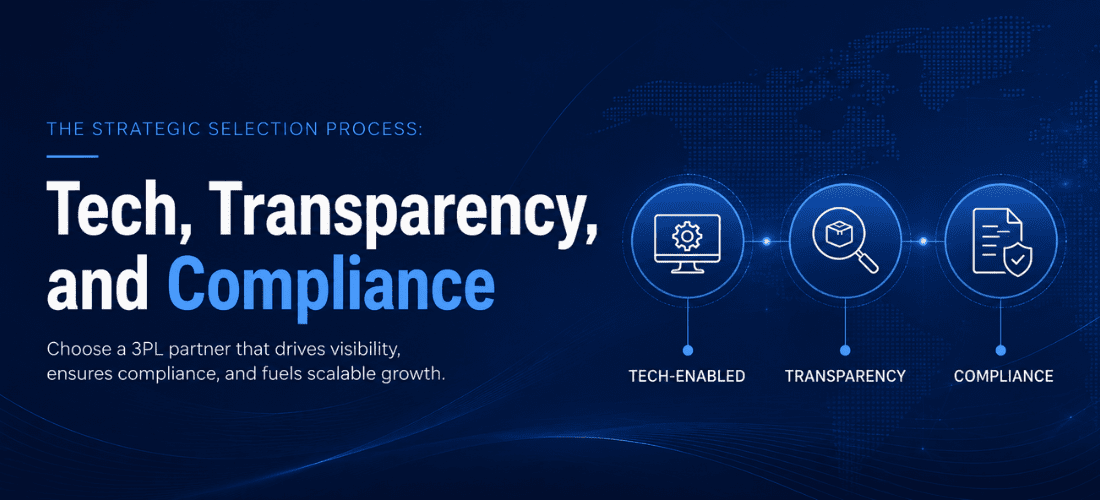
The Strategic Selection Process: Tech, Transparency, and Compliance

Success requires a disciplined vetting process that moves beyond surface-level promises. When you are choosing a 3pl in the USA, follow a strict 5-step framework: Tech Audit, Compliance Check, Site Visit, Pricing Review, and Culture Fit. This structured approach ensures you are choosing the right one for your business’s needs rather than settling for the nearest warehouse. Don’t skip the site visit; seeing the operation in person reveals the true efficiency of their workflows and the quality of their team.

Accuracy in pick and pack fulfillment is your most critical non-negotiable KPI. Even a 1% error rate can erode your margins and destroy customer trust over time. During your pricing review, dig deep into the contract for "hidden" fees that many providers bury in the fine print. Ask specifically about packaging surcharges, return processing costs, and account management fees. Transparency is the foundation of a true partnership and prevents budget surprises during peak seasons.

Technology is the ultimate differentiator in 2026. If a provider doesn’t offer a dedicated client portal with real-time data, they aren’t a strategic partner; they’re just a storage unit. You need a window into your operations that provides instant clarity on order status and carrier performance. Partnering with a tech-savvy third party logistics company allows you to offload the chaos and focus on your brand’s creative direction.

Amazon FBA Prep and Marketplace Compliance

Marketplace rules are unforgiving. Utilizing a dedicated Amazon FBA prep center is essential for maintaining account health and avoiding costly suspensions. Your partner must master the nuances of kitting, precise labeling, and strict shipping windows. This level of compliance is a core factor when choosing a 3pl in the USA because failure results in more than just fees; it risks your entire marketplace presence.

Inventory Visibility: The Data-Driven Advantage

Founders need 24/7 cloud-based access to stock levels and order statuses. This level of inventory visibility eliminates the need for manual tracking and frantic emails. When you have real-time data at your fingertips, you make better decisions about replenishment and marketing spend. It’s about moving from reactive fire-fighting to proactive brand orchestration with a partner that values data as much as you do.

Partnership Over Pricing: Making the Final Decision

The cheapest 3PL often becomes your most expensive mistake. Low per-pick fees mean nothing if shipping delays and inventory errors drive your customers to competitors. When choosing a 3pl in the USA, prioritize Brand Stewardship. This means your partner views every package as a reflection of their own reputation. They don’t just ship boxes; they protect your brand’s promise to the consumer. A high-performance partner offers frictionless operation that lets you stop worrying about the warehouse and start focusing on the next big product launch.

Your final decision should rest on the quality of the relationship. A shared entrepreneurial spirit between a founder and their logistics provider leads to faster problem-solving and proactive optimization. Transitioning to a new provider takes discipline and focus. During the first 30 days of a successful onboarding, expect deep API syncing, SOP alignment, and rigorous test orders to ensure every gear is turning correctly. You aren’t just buying space; you are investing in a scalable future.

Evaluating the Cost-to-Value Ratio

Audit every quote by looking at the total landed cost rather than isolated line items. Use this checklist to compare potential partners effectively: To help you benchmark these expenses, Warenous offers a detailed breakdown of 3PL pricing and hidden fees to watch for.

  • Total Packaging Costs: Verify if custom branding or eco-friendly materials are included.
  • Return Handling Speed: Evaluate how quickly items are restocked and ready for resale.
  • Account Management: Confirm if you have a dedicated point of contact for urgent issues.
  • Integration Fees: Identify any one-time or recurring costs for platform syncing.

Saved time is the ultimate ROI of a strategic 3PL partnership. When you stop chasing tracking numbers, you gain the mental bandwidth to grow your business.

Onboarding and Cultural Alignment

Choose a partner that matches your pace. If you are a high-growth brand, you need a team that understands the urgency of viral trends and Q4 surges. You can learn more about managing these long-term relationships by Mastering 3PL Warehouse Services. Alignment on values ensures that when challenges arise, your partner acts as an extension of your own team. Stop being the bottleneck in your own supply chain. Start accelerating your growth and reclaim your time with Boost3PL.

Master Your Logistics and Own Your Growth

Your fulfillment strategy is the engine of your brand’s reputation. Navigating the complexities of 2026 ecommerce requires more than just space; it demands a tech-forward ally that prioritizes your identity. By focusing on deep multichannel integration and rigorous accuracy benchmarks, you move from reactive troubleshooting to proactive scaling. The process of choosing a 3pl in the USA should lead you to a partner that treats every order as a critical brand interaction.

Success in the modern digital economy belongs to founders who leverage high-performance infrastructure. Boost3PL provides the specialized Amazon FBA Prep Center and seamless multichannel integration across TikTok, Shopify, and Amazon that your brand needs to thrive. Our high-performance USA warehouse network ensures your products move with frictionless speed from shelf to doorstep. Stop managing the chaos and start leading your industry. Ready to accelerate your growth? Partner with Boost3PL today. We are ready to build your legacy together.

Frequently Asked Questions

How do I know if my business is ready for a 3PL?

You are ready for a partner when fulfillment tasks prevent you from focusing on high-level growth or when your order volume exceeds your current storage capacity. If you’re spending more than 15 hours a week packing boxes, you’ve become the bottleneck. Scalability becomes impossible when the founder is the primary picker. Moving to a professional fulfillment center USA allows you to reclaim your time and focus on brand strategy.

What is the difference between FBA and FBM fulfillment?

FBA involves shipping inventory directly to Amazon’s warehouses, while FBM allows you to use a 3PL warehouse USA for order delivery. FBM gives you significantly more control over your brand experience and inventory levels. Choosing a 3pl in the USA for FBM often results in more predictable storage fees and avoids the strict inventory caps frequently imposed by Amazon’s internal logistics system.

How much does a 3PL cost in the USA for a typical ecommerce brand?

Costs vary based on your specific order volume, storage footprint, and specialized requirements like kitting or custom inserts. You will typically encounter fees for receiving inventory, monthly storage per pallet or bin, and per-order pick and pack services. A high-performance ecommerce logistics provider offers a transparent pricing structure that scales with your business rather than hitting you with hidden surcharges during peak seasons.

Can a 3PL handle my TikTok Shop and Shopify orders simultaneously?

Yes, a modern partner uses native API integrations to manage multichannel fulfillment services across all your platforms at once. This ensures your inventory levels remain accurate whether a sale happens on TikTok, Shopify, or Amazon. Real-time syncing is the only way to prevent overselling and protect your seller ratings on high-velocity social commerce platforms. It creates a unified view of your entire operation.

What happens if a 3PL makes a mistake on an order?

A professional fulfillment company for ecommerce should have a clear remediation policy for errors such as mis-picks or shipping delays. Most high-performance partners will cover the cost of the re-shipment and prioritize the correction to safeguard your brand’s reputation. You should discuss these Service Level Agreements (SLAs) during the vetting process to ensure your partner is as invested in accuracy as you are.

Calculating the ROI of a 3PL: A Strategic Framework for Scaling Brands in 2026

Your 3PL isn’t a line-item expense; it’s the engine that determines how fast your brand can actually grow. If you’re still viewing logistics as a cost center, you’re missing the bigger picture when calculating the roi of a 3pl. You probably feel the weight of every mispick and the sting of shipping rates that keep your margins thin. It’s frustrating to spend your day managing boxes instead of marketing your products. We understand that scaling feels like a constant battle against operational friction. It’s time for a change.

You’re ready to move beyond the chaos and take control of your bottom line. We promise to help you master the exact formulas and hidden metrics required to prove the financial impact of outsourcing to a high-performance partner. This guide provides a clear ROI framework to help you reclaim your time, lower your per-order costs, and build a frictionless operation that fuels your brand’s expansion.

Key Takeaways

  • Audit your invisible overhead by identifying hidden expenses like warehouse insurance, utilities, and the true cost of seasonal labor turnover.
  • Master a strategic framework for calculating the roi of a 3pl by aggregating your total in-house spend and comparing it against professional quotes.
  • Unlock significant savings by leveraging negotiated carrier rates and reducing the financial impact of shipping errors.
  • Scale your brand across multiple channels like TikTok Shop and Shopify with Boost3PL’s frictionless tech integrations that prevent costly overselling.
  • Protect your marketplace status and avoid penalties through strategic Amazon FBA prep and smarter inventory management.

The Hidden Costs of Self-Fulfillment: Why Your Current Math is Wrong

Most founders start their logistics math with rent and postage. This is a mistake. When you’re calculating the roi of a 3pl, you must account for the "invisible" overhead that drains your bank account every single day. Audit your monthly spend on utilities, packing materials, and warehouse insurance premiums. These small line items often hide the true cost of staying in-house. Equipment maintenance and facility repairs also eat away at your margins, creating a financial leak that’s hard to plug without professional oversight.

Labor is your next big hurdle. It’s never just the hourly wage. You’re paying for recruitment, training, payroll taxes, and the high cost of seasonal turnover. If a warehouse worker leaves after two months, you’ve lost the thousands of dollars invested in their onboarding. Transitioning to Third-party logistics (3PL) providers eliminates these administrative headaches and stabilizes your operational costs. You stop paying for idle time and start paying for performance.

Don’t forget the "Dead Stock" penalty. Poor inventory management ties up your working capital in products that aren’t moving. Professional warehousing and inventory management services use data to keep your stock lean and your cash flow healthy. This ensures your money is working for you, not sitting in a dusty corner of a warehouse.

The Founder’s Opportunity Cost

Assign a real dollar value to every hour you spend on pick and pack fulfillment. If your time is worth $200 an hour and you spend 20 hours a week shipping boxes, you’re effectively paying $4,000 weekly for basic labor. Compare that to the cost of a strategic partner handling the same volume. Ask yourself: if I spent those 20 hours on high-level marketing instead of taping boxes, what would my brand’s growth look like by next quarter?

Technology Debt in In-House Logistics

Manual tracking systems might feel free, but they create technology debt. Technology debt is the cumulative cost of inefficient manual workarounds that slow down your entire operation. A modern Boost3PL WMS provides a frictionless experience that manual spreadsheets simply can’t match. Calculating the roi of a 3pl means recognizing that better tech leads to fewer errors, faster scaling, and a better reputation for your brand.

Calculating ROI

The 3PL ROI Formula: A Strategic Framework for Growth

Stop treating logistics like a guessing game. To see the real value of your operations, you need a structured approach to calculating the roi of a 3pl. Start by aggregating every dollar spent on your current in-house setup. This total must include rent, warehouse labor, technology subscriptions, and the cost of shipping errors. Next, compare these figures against 3PL quotes. High-performance partners often secure the best return on investment by slashing your base shipping costs through massive aggregate volume. Negotiated carrier rates can be 5% to 30% below retail prices, providing immediate margin relief.

The third step involves revenue recovery. You must calculate the money saved by eliminating mispicks and shipping delays. While competitors often focus only on the immediate cost of a mistake, you should consider the impact on your brand reputation and Customer Lifetime Value (CLV). Finally, add the scale multiplier. This represents your ability to handle a 500% spike in orders during peak season without the stress of hiring or training temporary staff. When calculating the roi of a 3pl, this flexibility is what transforms a warehouse into a strategic growth engine.

Hard Savings: Shipping Rates and Labor Efficiency

Soft Benefits: Conversion Lift and Customer Retention

Speed is a competitive advantage that directly impacts your bottom line. Quantify the impact of 2-day shipping on your cart abandonment rates. When customers trust your delivery speed, conversion rates climb. A perfect unboxing experience also drives repeat purchases and organic social shares. Maintaining this consistency across every platform is the core value of multichannel fulfillment services. If you’re ready to stop managing boxes and start scaling, it’s time to partner with a strategic ally that prioritizes your growth.

Maximizing Your Return with Boost3PL’s High-Performance Infrastructure

Your fulfillment partner should be a catalyst for expansion, not a bottleneck. When calculating the roi of a 3pl, the strength of their technology stack is often the deciding factor in long-term profitability. Boost3PL provides a frictionless integration that syncs your inventory across Shopify, TikTok Shop, and Amazon in real time. This technological sophistication prevents the nightmare of overselling, which is a critical risk for brands navigating the complex multichannel landscape of 2026. Professional frameworks for evaluating 3PL performance emphasize that a partner’s ability to integrate with your sales channels is a primary driver of efficiency gains.

Marketplace sellers face unique pressures that can quickly erode margins. Our strategic Amazon FBA prep services ensure your products meet strict compliance standards every time. This precision reduces the risk of costly marketplace penalties and stock-outs that damage your search rankings. By leveraging our national reach, you achieve lightning-fast delivery across the USA without the massive overhead of managing multiple regional warehouses yourself. You get the benefits of a nationwide network while maintaining a lean, agile business model.

Scaling Without the Friction

Boost3PL acts as a high-octane growth engine for your brand. We don’t just store boxes; we optimize your entire supply chain to handle sudden demand spikes with ease. Utilizing professional 3PL warehouse services allows you to maintain a 99.9% order accuracy rate even during your busiest seasons. This reliability protects your reputation and ensures that every customer receives a perfect unboxing experience.

The Bottom Line: Your Logistics Partner as a Profit Center

Shift your mindset away from simple cost-cutting. Stop asking "How much does it cost?" and start asking "How much growth does this partnership unlock?" Calculating the roi of a 3pl reveals that the right partner pays for itself by increasing conversion rates and improving customer retention. When you offload the chaos of daily operations, you gain the mental clarity needed to focus on creative strategy and brand building. In 2026, the most successful brands aren’t the ones with the biggest warehouses, but the ones with the most efficient partners.

Transform Your Logistics into a Strategic Growth Engine

Boost3PL is built for founders who demand excellence. We deliver 99.9% order accuracy and nationwide 2-day shipping coverage to keep you ahead of the competition. Our tech stack offers seamless integration with Shopify, TikTok Shop, and Amazon, ensuring your operations remain organized and fast. Stop drowning in pick-and-pack tasks and start focusing on your creative vision. Ready to accelerate your growth? Get a custom ROI analysis from Boost3PL today. We’re ready to help you build the future of your brand.

Frequently Asked Questions

How do I calculate the ROI of a 3PL for my ecommerce brand?

You calculate the ROI by subtracting your total outsourced fulfillment costs from the sum of your current in-house expenses and regained revenue. Your in-house math must include rent, labor, packing materials, and the cost of shipping errors. When calculating the roi of a 3pl, also factor in the value of your reclaimed time and the potential sales growth from faster shipping speeds.

Is a 3PL actually cheaper than fulfilling orders in-house?

A 3PL is generally more cost-effective because it converts high fixed costs into flexible variable costs. You stop paying for underutilized warehouse space and idle staff during slow seasons. By leveraging shared infrastructure and massive shipping volume, professional partners provide an efficiency level that solo brands can’t match. This model ensures you only pay for the fulfillment activity you actually use.

What are the most important KPIs to track when measuring 3PL performance?

Focus on order accuracy, shipping speed, and inventory precision. You should monitor the percentage of orders shipped within your promised window and the rate of mispicks. High-performance providers maintain a 99.9% order accuracy rate. Tracking these metrics helps you quantify the "soft" savings of a partnership, such as reduced customer service tickets and lower return processing costs.

How much can I save on shipping rates by using a 3PL?

Brands typically access negotiated carrier discounts that are 5% to 30% below retail shipping rates. These savings are a result of the 3PL’s ability to aggregate volume across their entire client base. When calculating the roi of a 3pl, these shipping discounts often offset a significant portion of the pick and pack fees. This immediate margin relief allows you to reinvest in customer acquisition.

What is the typical ‘break-even’ point for moving to a 3PL?

The break-even point often occurs when your order volume hits 500 to 1,000 shipments per month or when you need to lease dedicated warehouse space. It’s also the moment when the opportunity cost of your time becomes too high. If you’re spending more time taping boxes than growing your brand, the efficiency gains of outsourcing will immediately outweigh the service fees.

Does a 3PL help reduce customer acquisition costs (CAC)?

A 3PL indirectly lowers your CAC by increasing your Customer Lifetime Value and improving your conversion rates. Fast, reliable delivery leads to better reviews and higher repeat purchase rates, which makes your advertising spend more efficient. When your fulfillment is frictionless, you don’t have to spend as much to replace customers who were lost to poor shipping experiences.

Calculating Ecommerce Fulfillment Costs: The 2026 Margin-First Guide

Your 2026 growth strategy is only as strong as your last fulfillment audit. With FedEx announcing a 5.9% average freight rate increase and Amazon implementing a 3.5% fuel and logistics surcharge, your margins are facing an unprecedented squeeze. You likely feel the weight of complex invoices and surprise peak-season fees that make forecasting feel like guesswork. It’s frustrating to build a brand only to see your profits eroded by hidden operational costs that you didn’t see coming.

We’re here to turn that around. This guide gives you the tools for calculating ecommerce fulfillment costs with total clarity, ensuring every shipment supports your expansion rather than draining your bank account. You’ll learn how to protect your margins while scaling across new platforms like TikTok Shop. We’ll provide a clear formula to audit your existing spend, a framework to evaluate 3PL quotes, and a roadmap to peak profitability through logistics efficiency. It’s time to stop reacting to invoices and start driving your brand’s financial future with precision and confidence.

Key Takeaways

  • Identify every line item beyond the standard invoice to capture your total fulfillment spend per order.
  • Master our 3-step framework for calculating ecommerce fulfillment costs by auditing a 90-day window of logistics data.
  • Uncover hidden drains on your profitability by factoring in invisible costs like insurance and warehouse equipment.
  • Evaluate the strategic shift from in-house operations to professional 3PL warehouse services to unlock zone skipping and lower shipping spend.
  • Transform your logistics from a mystery expense into a predictable engine for margin protection and brand scaling.

Beyond the Invoice: The Core Components of Ecommerce Fulfillment Costs

Stop looking at your shipping bills as the final word on your profitability. True fulfillment cost per order captures the entire lifecycle of a product. This lifecycle starts the moment a shipment hits the dock and ends only when it reaches the customer’s doorstep. It’s a comprehensive metric that includes every touchpoint in the Order fulfillment process. When you start calculating ecommerce fulfillment costs, you must look beyond the base shipping rate to see the full picture.

Modern 3PL environments split costs into fixed overhead and variable expenses. Fixed costs include monthly storage minimums or software access fees that remain steady. Variable expenses fluctuate with your sales velocity, covering labor for picking, packing, and shipping. This holistic view is the only way to master calculating ecommerce fulfillment costs without missing the small details that erode your margins. Dimensional weight (DIM) is a critical factor in 2026. Carriers calculate rates based on the space a package occupies, not just its weight. If your boxes are too big, you are paying for air. Silent killers like excessive packaging waste and inefficient kitting processes can drain your bank account before you even realize there’s a problem.

Operational Expenses: Labor, Storage, and Materials

Pick and pack fees are the heartbeat of your daily operations. However, your accuracy rate is the real cost driver. A 1% error rate leads to expensive returns and lost customer trust. For storage, hero-product brands thrive on pallet pricing, while high-SKU brands need the granularity of bin storage to keep overhead lean. In the US market, the shift toward sustainable packaging is no longer optional. While eco-friendly materials may have higher upfront costs, they reduce long-term brand risk and align with modern consumer expectations.

The Technology & Integration Layer

Technology isn’t a luxury; it’s a cost-saving necessity. Seamless API integrations for Shopify and TikTok Shop eliminate manual data entry errors and speed up processing times. Your account management fees should provide proactive strategy, not just status updates. Leveraging professional warehousing inventory management services reduces tech friction and ensures your data remains clean across every sales channel.

Calculating

The 3-Step Framework for Calculating Your True Cost Per Order

Mastering your margins requires a move away from simple division. Most brands fail because they only look at a single month of data. This creates a skewed perspective that ignores the peaks and valleys of high-growth commerce. To get a real grip on calculating ecommerce fulfillment costs, you need a burdened view of every dollar spent to move a product from your manufacturer to your customer.

Step 1: Aggregate your logistics data. Gather every expense from the last 90 days. This includes freight-in, storage, pick and pack fees, and shipping labels. A 90-day window is the "gold standard" because it smooths out weekly anomalies while staying relevant to current carrier rates. However, for true annual forecasting, you should eventually compare this to a 12-month average to account for Q4 surcharges and seasonal dips.

Step 2: Identify the "invisible" layers. Your CPO isn’t just labor and postage. Factor in your WMS software subscriptions, warehouse insurance, and any specialized equipment like label printers or scanners. These are operational necessities that must be amortized across your total order volume to understand your true break-even point. For many growing brands, partnering with Financial Foothold for outsourced accounting ensures these complex overhead costs are tracked with precision.

Step 3: Apply the Cost Per Order (CPO) formula. Take your total logistics spend (Direct + Invisible) and divide it by your total shipped orders. Adjust this figure for seasonality by adding a buffer for peak-season surcharges, which can often spike your variable costs by 10% or more during November and December. Partnering with a professional ecommerce 3PL provider can simplify this calculation by consolidating these variables into a single, transparent dashboard.

The Multichannel Fulfillment Variance

Selling on TikTok Shop, Amazon, and Shopify simultaneously creates a "multichannel tax." Amazon has rigid prep requirements that differ from direct-to-consumer TikTok orders. You must weight your costs by platform. For example, your spend on Amazon FBA prep and multi-channel services may be higher per unit than Shopify orders, but the volume might justify the margin hit. Calculate a platform-specific CPO to see which channel is actually driving your profit.

Factoring in the "Return Tax"

Returns are a silent profit killer. With 2026 projections suggesting 15.8% of retail sales will be returned, reverse logistics must be part of your math. A 10% return rate can increase your overall CPO by up to 15% when you account for return shipping, labor for inspection, and potential disposal fees. Don’t let these costs hide in your P&L; treat every return as a variable fulfillment expense to keep your calculating ecommerce fulfillment costs accurate and actionable.

Strategic Optimization: Reducing Costs Without Sacrificing Speed

Crunching the numbers is only the first step. True mastery comes from using that data to re-engineer your operations for maximum profit. When calculating ecommerce fulfillment costs, many founders realize they’re trapped in the "founder’s trap." Every hour you spend managing tape, boxes, and warehouse staff is an hour lost on product development or high-level marketing. In-house fulfillment often looks cheaper on a basic spreadsheet, but it carries a massive opportunity cost that stunts your brand’s trajectory.

Switching to a professional ecommerce logistics provider unlocks advanced strategies like zone skipping. By placing your inventory closer to your customers in a strategic fulfillment center, you bypass expensive long-haul shipping zones. This move alone can slash your shipping spend and significantly increase delivery speed. Automation also plays a critical role. The tipping point for ROI happens when your manual labor costs exceed the cost of integrated tech solutions. Boost3PL eliminates this complexity tax, allowing you to scale without the operational friction that slows down your competitors.

Scaling with a High-Performance Strategic Ally

Professional pick and pack fulfillment services leverage massive scale to reduce your per-order labor costs. We provide a frictionless operation that protects your brand reputation and boosts customer LTV. "In 2026, the most expensive fulfillment strategy is the one that slows your ability to scale." Don’t let outdated processes become the bottleneck for your ambition. High-growth brands require a partner that moves as fast as the modern digital economy.

Next Steps: From Calculation to Execution

Take immediate action to protect your margins. Audit your current provider using the 90-day framework we established earlier. Identify the top three leaks in your pipeline, such as excessive packaging waste or slow intake times. Once you’ve identified these gaps, reach out for a strategy session. We’ll show you how Boost3PL optimizes these variables while calculating ecommerce fulfillment costs with total transparency. Turn your logistics from a cost center into a high-speed growth engine today.

Take Control of Your Brand’s Financial Future

Mastering the math of your supply chain is the ultimate competitive advantage. You’ve learned that calculating ecommerce fulfillment costs requires a deep dive into 90-day data sets and a keen eye for "invisible" overhead. By optimizing for dimensional weight and leveraging zone-skipping strategies, you transform logistics from a margin drain into a scalable engine. Every dollar you reclaim through efficiency is a dollar you can reinvest in your brand’s creative vision. It’s time to stop reacting to surprise surcharges and start driving your expansion with data-backed precision.

Stop letting operational chaos dictate your growth. We’re here to act as your high-performance strategic ally. Boost3PL provides specialized TikTok Shop and Shopify integrations alongside a professional Amazon FBA Prep Center to ensure your brand remains organized and fast. We thrive on handling the heavy lifting so you can focus on creative expansion. Our results-oriented partnership is built specifically for high-growth brands that value technological sophistication and operational excellence.

Ready to optimize your margins? Get a frictionless fulfillment quote from Boost3PL today.

Your success is the primary metric of our performance. Let’s build something remarkable together.

Frequently Asked Questions

How much should fulfillment cost as a percentage of revenue?

Fulfillment costs typically represent between 8% and 15% of a brand’s average order value. This range includes every expense from initial receiving and storage to final mile delivery. While luxury brands with high price points might see a lower percentage, brands selling heavy or low-cost items often find their logistics spend sits at the higher end of this bracket. Keeping your costs within this range is vital for maintaining healthy margins as you scale.

What is the average cost of pick and pack fulfillment in the USA?

Pick and pack fulfillment costs depend on your order volume, item count per box, and the complexity of your kitting requirements. Most providers structure their pricing with a base order fee followed by a smaller charge for each additional item picked. Brands with high-velocity "hero products" usually see lower per-unit costs than those managing thousands of individual SKUs. Focus on finding a partner that balances speed with high accuracy to avoid the hidden costs of shipping errors.

Is it cheaper to use Amazon FBA or a third-party logistics company?

The cost effectiveness of Amazon FBA versus a third party logistics company hinges on your sales channels and inventory turnover. Amazon FBA is built for speed within their ecosystem, but their peak-season storage hikes and surcharges can be aggressive. A dedicated ecommerce 3PL provider often offers more predictable pricing for multichannel brands. This is especially true if you’re growing on Shopify or TikTok Shop where brand control and custom packaging are priorities.

What are the most common hidden fees in 3PL contracts?

Common hidden fees include account management charges, API integration fees, and unexpected surcharges for receiving non-compliant shipments. Many founders miss these "silent killers" when calculating ecommerce fulfillment costs during the initial vetting process. You should also watch for dimensional weight adjustments and peak-season fuel surcharges that aren’t always highlighted in a basic quote. Demand a transparent, fully burdened cost model to ensure your brand’s profitability remains protected year-round.

The Business Case for Outsourcing Fulfillment in 2026: Scale Without Friction

How many hours of growth potential are you trading just to tape boxes and print labels? If you’re spending 20 hours a week on pick and pack tasks, you aren’t running a brand; you’re running a warehouse. With Amazon FBA fees increasing by an average of $0.08 per unit as of January 2026 and USPS Ground Advantage rates jumping 7.8 percent, the cost of doing it all yourself has never been higher. Understanding the benefits of using a US based 3pl is no longer just about convenience. It’s about protecting your margins and reclaiming your time to focus on what actually moves the needle.

You deserve a logistics strategy that scales as fast as your ambition. We’ll show you how to transform your shipping operations from a frustrating cost center into a high-octane growth engine. This guide breaks down how to secure discounted national shipping rates, maintain 2-day delivery standards across Shopify and Amazon, and build a strategic partnership that feels like a natural extension of your team. From navigating 2026 carrier hikes to mastering multichannel fulfillment, it’s time to trade operational friction for pure momentum.

Key Takeaways

  • Stop the “Founder’s Trap” and redirect your energy toward strategic brand building by automating your manual pick and pack workflows.
  • Unlock the competitive benefits of using a US based 3pl to secure deep carrier discounts and maintain 2-day delivery standards across every sales channel.
  • Protect your cash flow by converting rigid warehouse overhead into a scalable variable cost model that adapts to 2026 market volatility.
  • Master a frictionless transition framework that prioritizes deep tech integration and minimizes operational downtime during your inventory migration.

The Strategic Shift: Why In-House Fulfillment Becomes a Growth Bottleneck

Founder energy is a finite resource. If you’re losing 20 hours every week to pick and pack fulfillment, you’ve hit a growth ceiling. This "Founder’s Trap" turns visionaries into warehouse managers, stalling brand development and high-level strategy. It’s an expensive trade; your hourly rate as a CEO is far higher than the cost of professional logistics. Every box you tape is a missed opportunity to scale your marketing or refine your product line.

Fixed warehouse leases represent a massive infrastructure liability in the volatile 2026 market. Locked-in overhead drains cash flow when demand dips. Conversely, it caps your potential when orders spike. One of the primary benefits of using a US based 3pl is the ability to flip these fixed costs into variable ones. You pay for the space you use, not the empty square footage you’re stuck with during the off-season. This flexibility is the difference between surviving and thriving in a shifting economy.

Modern commerce demands extreme agility. Your logistics must pivot instantly between Shopify storefronts, viral TikTok Shop trends, and strict Amazon FBM requirements. Trying to manage these technical nuances in-house often leads to the "Agility Gap," where operational lag results in missed sales. To understand the broader scope of what is third-party logistics, you have to see it as a strategic shield against this operational chaos. Scaling without friction starts with recognizing the benefits of using a US based 3pl to bridge the gap between your current capacity and your revenue goals.

The Hidden Costs of Doing It Yourself

In-house operations carry invisible expenses that eat margins from the inside out. These include:

  • Escalating warehouse insurance premiums and liability coverage.
  • Excessive packaging waste from unoptimized box sizing and manual packing.
  • The administrative nightmare of seasonal labor management and training (similar to how growing restaurant groups explore Digital Onboarding & Training to simplify staff integration).
  • Compounding shipping errors that destroy customer lifetime value (CLV).

Fixed overhead prevents rapid scaling during peak 2026 shopping seasons because you cannot expand your physical walls or staff overnight. To dive deeper into optimizing your back-end, read our guide on Mastering 3PL Warehouse Services: A Strategic Guide for Growing Brands.

The Business

Building the ROI: How US-Based 3PL Logistics Drives Top-Line Revenue

Logistics isn’t a bill to be paid. It’s an investment in your brand’s scale. One of the most immediate benefits of using a US based 3pl is the shift from CAPEX to OPEX. Instead of sinking capital into warehouse equipment or long-term debt, you pay only for the fulfillment you use. This protects your cash flow. It allows you to redirect funds into aggressive marketing campaigns that drive customer acquisition while we handle the heavy lifting.

You gain access to the "Boost" effect. We leverage massive national shipping volumes to secure deep carrier discounts that individual brands simply can’t reach. These savings go straight back to your bottom line. Beyond shipping, marketplace dominance requires precision. Utilizing an Amazon FBA prep center ensures your inventory meets every strict requirement to win the Buy Box and maintain Prime eligibility. It’s about being where your customers are, without the operational headache.

Converting Logistics into a Sales Tool

Speed sells. Offering 2-day delivery capabilities directly increases checkout conversion rates. Customers don’t want to wait; they want their products now. When you meet that expectation, cart abandonment drops significantly. "Reliable multichannel fulfillment services act as your brand’s insurance policy, preventing stockouts and overselling across TikTok and Shopify." This consistency builds trust and repeat business.

Technology as a Growth Lever

Frictionless operation depends on data. Connecting your tech stack to a 3PL warehouse management system (WMS) provides real-time visibility into every order. This integration supports supply chain resilience and sustainability by reducing waste and optimizing transport routes. Use our logistics analytics to forecast demand and reduce expensive storage fees. Another of the benefits of using a US based 3pl is having a single source of truth for your inventory. You can explore our fulfillment center USA options to start turning your shipping operations into a competitive advantage today.

Executing the Transition: A Frictionless Framework for Scaling Your Brand

Switching to an external partner isn’t just a vendor change; it’s a strategic upgrade for your entire business model. Vetting for this partnership requires moving beyond a simple price-per-pick comparison. You need to evaluate technological compatibility and cultural alignment. One of the primary benefits of using a US based 3pl is the ability to communicate in real-time with a team that understands the nuances of the American consumer landscape. We don’t just move boxes. We act as a proactive ally that anticipates your needs before they become bottlenecks.

The onboarding process at Boost3PL is designed to be entirely frictionless. We know that every hour of operational downtime is an hour of lost revenue. Our team manages the inventory transfer with surgical precision, ensuring your Shopify and TikTok shops remain live and active. We take our role as the guardian of your brand seriously. Every package that leaves our facility reflects your reputation. We treat your customers with the same care your original founder team did, ensuring that high-quality presentation remains a constant as you scale.

Your 3PL Vetting Checklist

Before signing a contract, perform a strategic audit of your potential partner’s capabilities. Ask these critical questions to ensure they can handle your growth:

  • Do their 3PL warehouse services integrate directly with your current tech stack for real-time data?
  • Can they demonstrate specialized expertise in both Amazon FBA prep and FBM fulfillment to navigate marketplace complexity?
  • Do they offer the scalability to handle a 5x or 10x surge in order volume during peak 2026 shopping windows?
  • Are they equipped to manage multichannel returns without creating an administrative burden for your team?

The Future of Your Brand with Boost3PL

Imagine a business where your Monday mornings aren’t consumed by shipping labels and packing tape. When you leverage the benefits of using a US based 3pl, you reclaim the mental bandwidth needed for product innovation and aggressive marketing. This shift away from manual warehouse tasks also provides the opportunity to prioritize your health, and you can explore AI Fitness Coach to maintain your energy levels during long work weeks. You focus on the vision while we handle the operational chaos of the modern digital economy. It’s time to stop playing defense with your logistics and start using them as a weapon for expansion. Secure Your Amazon Growth: FBA Prep Without the Risk and experience the power of a high-performance fulfillment partnership.

Unlock Your Brand’s Full Velocity

Success in 2026 isn’t just about what you sell. It’s about how fast and reliably you deliver it. Moving beyond the "Founder’s Trap" of manual fulfillment allows you to reclaim your mental bandwidth and focus on high-level strategy. By leveraging the benefits of using a US based 3pl, you trade rigid infrastructure liabilities for a high-performance growth engine that adapts to your sales volume in real-time. This isn’t just an operational shift; it’s a strategic move to protect your margins and enhance your reputation across every digital storefront.

Boost3PL stands as your tech-savvy strategic ally. We bring specialized Amazon FBA Prep Center expertise and seamless integrations for Shopify and TikTok Shop to your back-end operations. Our team handles the inherent chaos of the supply chain so you can focus on building your empire with absolute confidence. It’s time to stop letting logistics hold you back and start using them as a catalyst for rapid expansion.

Ready to scale without the friction? Get your custom fulfillment quote from Boost3PL today.

Your growth is our primary metric of success. Let’s build something extraordinary together.

Frequently Asked Questions

Is outsourcing fulfillment more expensive than doing it in-house in 2026?

Outsourcing often reduces your total cost of ownership by eliminating fixed overhead like warehouse leases, equipment maintenance, and permanent labor. One of the primary benefits of using a US based 3pl is the ability to leverage massive shipping volumes for deep carrier discounts that individual brands can’t access alone. When you factor in the 20+ hours of founder time reclaimed each week, the ROI shifts heavily in favor of a professional partnership.

How does a US-based 3PL handle Amazon FBA prep and marketplace requirements?

A specialized Amazon FBA prep center manages the technical nuances of labeling, kitting, and boxing to meet strict marketplace standards. We act as a strategic ally to ensure your inventory arrives at Amazon facilities without rejection or costly penalties. This specialized support allows you to maintain Prime eligibility and win the Buy Box while offloading the complex manual labor required for multichannel fulfillment services.

Can I maintain my brand’s unique custom packaging when using a fulfillment center?

You can absolutely maintain your brand’s unique identity through custom packaging and branded inserts. We act as the guardian of your customer experience, ensuring that every box reflects your brand’s high standards and attention to detail. Our warehouse teams are trained to follow specific kitting and packing instructions, so your unboxing experience remains a powerful marketing tool for your digital-native brand.

What happens to my fulfillment costs if my sales volume fluctuates significantly month-to-month?

Your fulfillment costs scale directly with your order volume, turning rigid fixed expenses into a flexible variable model. This is one of the key benefits of using a US based 3pl during peak 2026 shopping seasons or slower months. You only pay for the storage space and labor you actually use, which protects your cash flow during transitions and allows for frictionless scaling when demand spikes.

How to Choose a 3PL Fulfillment Provider in 2026: The Strategic Founder’s Guide

In 2026, your warehouse isn’t just a storage space; it’s the high-tech engine room of your digital brand. If that engine stalls, your reputation goes with it. Learning how to choose a 3pl fulfillment provider is no longer about finding the cheapest labor. It’s about securing a strategic ally that moves at the speed of your Shopify and TikTok Shop feeds. You’ve likely felt the sting of inventory sync lag or the frustration of manual pick and pack errors that turn loyal customers into one-time buyers.

We agree that scaling your business shouldn’t feel like managing a constant crisis. You’ve outgrown the manual prep and the late-night inventory audits. This guide promises to teach you how to evaluate 3PL partners based on deep tech integration, multichannel expertise, and strategic scalability. We will preview how to navigate the 5.9% carrier rate increases and the new de minimis restrictions while building a fulfillment operation that feels effortless. It’s time to turn your supply chain into a high-performance growth tool and reclaim your focus for the big picture.

Key Takeaways

  • Discover why a tech-enabled 3PL acts as the central nervous system for your brand, ensuring your digital storefront and physical inventory move in perfect harmony.
  • Master sub-second inventory syncing to eliminate the risk of overselling during viral growth spurts on platforms like TikTok Shop and Shopify.
  • Learn exactly how to choose a 3pl fulfillment provider by prioritizing native integrations and high-accuracy pick and pack fulfillment that protects your margins.
  • Shift your mindset from hiring a vendor to securing a strategic ally that guards your brand reputation and handles operational chaos so you can scale.
  • Evaluate the non-negotiable plug-and-play connectors required to dominate multichannel fulfillment across Amazon, TikTok Shop, and beyond.

Identifying Your Growth Levers: Why You Need a Tech-Enabled 3PL in 2026

In the high-velocity commerce environment of 2026, a tech-enabled 3PL isn’t just a vendor. It is the central nervous system of your entire brand. When you are researching how to choose a 3pl fulfillment provider, you must prioritize speed and integration over simple square footage. Modern retail requires sub-second inventory syncing to prevent the disaster of overselling on viral platforms like TikTok Shop or Shopify. Minutes of delay mean thousands in lost revenue and platform strikes. You need a partner that breathes technology as much as you do.

Many founders fall into the ‘Tech Debt’ trap. They rely on basic shipping apps that worked during the startup phase but crumble under the weight of a scaling multichannel brand. Fulfillment software is the critical bridge that connects your digital sales platforms to the physical reality of the warehouse floor. Your decision on how to choose a 3pl fulfillment provider should hinge on whether their software can handle the inherent chaos of modern commerce. It ensures every click on a screen translates into a package on a truck without manual intervention.

The Cost of Operational Friction

Manual order processing is a silent killer of growth. Every hour you spend fixing address errors or manually updating stock levels is an hour stolen from your creative strategy. These invisible friction points lead to high error rates that tank your customer lifetime value. If a customer receives the wrong item or a late shipment, they won’t come back. You need a partner that eliminates this friction through automated workflows and proactive problem-solving.

Software as the Strategic Brain

The industry has shifted away from legacy WMS systems that operate in silos. A modern, API-first platform acts as your strategic brain. By utilizing Third-party logistics (3PL) providers with advanced tech stacks, you gain total control over your supply chain. Real-time data visibility empowers better warehousing and inventory management, allowing you to make proactive decisions based on live demand patterns. This is how you transform logistics from a cost center into a competitive edge that fuels your expansion.

Key Selection Criteria: Multichannel Syncing and Marketplace Mastery

Success in 2026 depends on your ability to sell everywhere at once. When evaluating how to choose a 3pl fulfillment provider, native integrations are your first filter. You need plug-and-play connectors for Shopify and TikTok Shop that eliminate manual data entry. If a provider relies on CSV uploads or outdated middleware, they are a bottleneck, not a partner. Your inventory must reflect reality across every channel in real time. This ensures you never sell a product you don’t have in stock.

This level of integration is particularly crucial for cross-border commerce; EZ3PL Ltd highlights how UK-based brands can leverage automated syncing to maintain high performance across multiple digital storefronts.

Accuracy is the only metric that matters for your bottom line. Demand a minimum of 99.9% accuracy in pick and pack fulfillment to protect your margins. Errors lead to returns, and returns kill growth. You also need a partner that scales effortlessly. Whether it’s a Q4 surge or a sudden viral social media moment, your 3PL must handle 10x order volume spikes without breaking a sweat. Transparency completes the picture. Insist on SKU-level profitability reporting and real-time tracking dashboards that show you the health of your business at a glance.

TikTok Shop and Shopify Integration Depth

Live-selling on TikTok creates unique demands that traditional warehouses can’t meet. Your multichannel fulfillment services must support high-velocity bursts of orders that happen in minutes. Unified inventory is non-negotiable. If you sell out on TikTok, your Shopify store needs to know instantly. This frictionless operation keeps your marketplace ratings high and your customers happy. If you want to see how this works in practice, consider partnering with a tech-first 3PL that prioritizes these digital-native channels.

Amazon FBA Prep and FBM Flexibility

Amazon remains a dominant force, but its rules are strict. Look for a professional Amazon FBA prep center that understands labeling, kitting, and packaging requirements. One mistake can lead to marketplace penalties or inventory blocks. Understanding how to choose a 3pl fulfillment provider that masters these marketplace nuances is the difference between profit and penalties. A strategic advantage comes from a partner that manages both FBA prep and FBM (Fulfilled by Merchant) under one roof. This hybrid approach allows you to pivot quickly if FBA storage limits tighten or shipping costs shift. It gives you the flexibility to keep selling no matter what the marketplace throws your way.

The Strategic Founders Guide

Beyond the Warehouse: Finding a Strategic Ally to Scale Your Brand

Many founders hesitate to outsource because they fear losing the personal touch that built their brand. It’s a valid concern. When you evaluate how to choose a 3pl fulfillment provider, you must look for an ally that acts as a guardian of your reputation. You aren’t just hiring a vendor to move boxes; you’re securing a high-performance partner. Boost3PL blends technological sophistication with a raw entrepreneurial spirit to protect your identity. We handle the inherent chaos of logistics so you can return to your creative roots. This frictionless experience ensures that as you scale, your customer experience remains elite.

Future-Proofing for 2026 Omnichannel Retail

Modern commerce moves too fast for reactive management. A top-tier fulfillment center USA now utilizes AI and predictive analytics to stay ahead of the curve. These tools identify potential supply chain bottlenecks before they ever impact your customers. A proactive partner anticipates issues like carrier delays or inventory shortages during peak seasons. This foresight is critical for maintaining your competitive edge in an omnichannel world. It transforms your supply chain from a back-office function into a proactive growth engine.

The Partnership Metric: Your Success

The old model of transactional billing is dead. Success in 2026 requires a shift toward a partnership model focused on total brand acceleration. When you decide how to choose a 3pl fulfillment provider, prioritize the one that measures their performance by your growth. You deserve a partner that is deeply invested in your unique identity and long-term vision. Stop wrestling with software integrations and manual spreadsheets. Start scaling with a strategic ally that treats your reputation as their own. Your brand’s next chapter begins when you trade operational chaos for streamlined, high-performance fulfillment.

Accelerate Your Expansion with Strategic Fulfillment

Logistics in 2026 demands more than just shipping boxes. It requires a seamless integration of your digital storefront and your physical inventory. You now understand that a tech-first approach is the only way to navigate carrier rate increases and complex marketplace requirements effectively. By prioritizing sub-second syncing and deep multichannel expertise, you protect your brand’s reputation and your customer’s long-term trust.

Mastering how to choose a 3pl fulfillment provider is the final step in turning operational friction into a scalable competitive advantage. It is about finding the brain that powers your physical operations so you can focus on the big picture. You’ve outgrown the manual audits and the inventory lag; it’s time for a solution that moves as fast as your sales feed.

Boost3PL stands ready as your high-performance strategic ally. We provide proprietary high-speed fulfillment technology alongside expert Amazon FBA prep to ensure your inventory moves without delay. Our multichannel support is specifically built for the high-velocity demands of TikTok Shop and Shopify founders. We are driven by your results and dedicated to the success of your brand identity.

Ready to accelerate your growth? Partner with Boost3PL today.

The future of your brand is built on the strength and reliability of your supply chain. It’s time to trade the chaos for a partner that scales at your speed and treats your success as the ultimate metric.

Frequently Asked Questions

What is the most important factor when choosing a 3PL for ecommerce?

The most critical factor is the provider’s ability to integrate seamlessly with your tech stack to provide real-time inventory visibility. In 2026, you cannot afford data lags that lead to overselling or stockouts on high-velocity channels. When you research how to choose a 3pl fulfillment provider, look for native API connections that automate the flow of information. This technological foundation ensures your physical operations keep pace with your digital growth and customer expectations.

Can one 3PL provider manage Shopify, TikTok Shop, and Amazon simultaneously?

Yes, a modern ecommerce logistics provider can manage all these channels through robust multichannel fulfillment services. The key is a unified inventory system that prevents channel conflict by syncing stock levels across every platform instantly. This allows you to scale on TikTok Shop while maintaining your Amazon FBA prep and Shopify storefront without manual intervention. It creates a frictionless experience where your brand remains consistent everywhere customers shop.

How do I know if my brand is ready to outsource to a 3PL?

You’re ready to outsource when operational tasks like packing boxes and managing returns start stealing time from your creative strategy. If you notice rising error rates or struggle to keep up with order spikes during viral moments, it’s time to transition. Moving to a professional fulfillment center USA allows you to offload the chaos of logistics. This shift empowers you to focus on high-level growth levers while experts handle the physical execution.

What is the difference between a traditional warehouse and a tech-enabled 3PL?

Traditional warehouses focus on manual labor and storage, often relying on paper trails or basic spreadsheets that slow down your growth. In contrast, a tech-enabled 3PL acts as a high-performance strategic ally using AI and real-time data to optimize every movement. These providers offer deep integrations and predictive analytics that anticipate bottlenecks before they happen. They prioritize speed of understanding and operational efficiency to turn your supply chain into a competitive advantage.

How does a 3PL handle Amazon FBA prep and compliance?

A specialized Amazon FBA prep center manages the entire compliance process, including labeling, kitting, and strict packaging requirements. They stay updated on Amazon’s evolving regulations to prevent marketplace penalties or inventory rejections. When you consider how to choose a 3pl fulfillment provider, ensure they have a dedicated team for these marketplace nuances. This precision protects your seller rating and ensures your products remain Prime-eligible without the headache of manual prep.

Will I lose control over my shipping and customer experience if I use a 3PL?

You actually gain more control by using a partner that offers SKU-level transparency and real-time tracking dashboards. A strategic 3PL acts as a guardian of your reputation, executing your brand’s specific standards at a scale you can’t achieve alone. You maintain oversight of the customer experience through clear data while offloading the manual burden of execution. It’s about trading the stress of micromanaging shipments for the confidence of a professional, frictionless operation.