

Schedule a Call

Tag: Outsourcing

In-House vs. 3PL: 2026 Strategic Guide for Scaling Brands

Scaling isn’t about choosing between control and outsourcing; it’s about choosing between managing boxes and managing a brand. You started your business to innovate, not to spend fourteen hours a day taping cartons or fighting shipping rate hikes. We understand the daily pressure of warehouse fire-fighting. It’s frustrating to watch your marketing strategy stall because you’re drowning in manual order processing. This guide breaks down the critical debate of in-house fulfillment vs 3pl to help you reclaim your time and slash per-order costs. We’ll examine the 2026 regulatory shifts, including the suspended de minimis exemption and new Amazon AWD restrictions, to provide a clear roadmap for growth. Discover how to transform your logistics into a frictionless, high-performance engine that fuels your global expansion and protects your brand reputation.

Key Takeaways

  • Identify the critical tipping point where the hidden costs of managing a warehouse outweigh the benefits of in-house fulfillment vs 3pl.
  • Scale your operations instantly to handle viral growth and seasonal peaks without the distraction of warehouse fire-fighting or temporary hiring.
  • Reclaim your focus on brand strategy by replacing manual order processing with high-accuracy, tech-forward fulfillment services that protect your reputation.
  • Execute a frictionless transition to a professional fulfillment center by following a strategic inventory audit and a clean hand-off plan.

The Operational Reality: In-House vs. 3PL Fulfillment

Managing your own warehouse feels like the ultimate control. For early-stage brands, self-fulfillment provides a high-touch experience where you see every ribbon tied and every box taped. But as you scale, this control often turns into a bottleneck. The choice between in-house fulfillment vs 3pl isn’t just about cost; it’s about agility. In-house operations carry heavy fixed costs like warehouse equipment, long-term leases, and HR overhead. Transitioning to Third-party logistics (3PL) allows you to convert these capital expenses into variable operating expenses. You pay for what you use, when you use it. This shift liberates capital to fuel your next marketing campaign or product launch.

In 2026, omnichannel fulfillment is the standard. With 86% of brands now selling on two or more channels, managing TikTok Shop orders alongside Amazon FBM requires sophisticated warehousing and inventory management. If you’re spending your mornings resolving shipping errors instead of refining your strategy, you’re losing money. “Cheaper” in-house methods become incredibly expensive when they stifle your ability to scale at the speed of global commerce.

Identifying the Tipping Point for Your Brand

Strategic Comparison: Control, Scalability, and Customer Experience

Many founders hesitate to outsource because they fear losing control. They view their backroom as a safe haven, but in reality, it’s often a “black box” of manual errors and unrecorded stock movements. The debate of in-house fulfillment vs 3pl isn’t about physical proximity; it’s about data integrity. Modern logistics partners use advanced tech stacks that offer more visibility than a messy warehouse ever could. You gain a birds-eye view of every SKU without ever touching a packing slip.

Scalability is where the distinction becomes undeniable. When a TikTok video goes viral or Black Friday arrives, an in-house team often buckles under the weight of thousands of orders. You shouldn’t have to spend your peak season interviewing temporary staff or managing warehouse chaos. A high-performance partner scales instantly. This ensures your brand reputation remains intact during your biggest growth spurts. Customer experience depends on precision. By leveraging professional pick and pack fulfillment, you achieve 99.9% accuracy. This level of detail, combined with 3PL-negotiated carrier rates, allows you to offer faster, cheaper shipping that in-house brands simply can’t match.

How Technology Bridges the Gap in Outsourced Logistics

Tech-native partners act as an invisible extension of your team. Real-time data syncs effortlessly across Shopify, TikTok Shop, and Amazon, preventing stockouts and over-selling. Using a 3PL warehouse services partner provides deeper insights into SKU performance. This helps you optimize your inventory levels and predict future demand with surgical precision. This frictionless operation ensures you stay focused on creativity while your logistics engine runs on autopilot. If you’re ready to accelerate, consider how Boost3PL can transform your supply chain into a strategic advantage.

Making the Move: Transitioning to a High-Performance 3PL Partner

Transitioning from a local backroom to a professional fulfillment center is a milestone, not a hurdle. Success depends on a clean hand-off. Audit your current inventory to ensure every SKU is accurately labeled and accounted for before shipping it to a new warehouse. This precision prevents initial delays and sets the stage for a frictionless partnership. Next, connect your ecommerce platform directly to your partner’s Warehouse Management System (WMS). This integration ensures that orders from Shopify, TikTok Shop, or Amazon flow instantly to the pick-and-pack team. Choosing a partner that specializes in multichannel fulfillment services is vital for modern brands. This strategic move turns your logistics from a bottleneck into a powerful tool for national expansion.

Future-Proofing Your Brand for 2026 and Beyond

The logistics landscape is shifting rapidly. With new Amazon AWD weight restrictions and the suspension of de minimis exemptions, your business must remain agile to stay profitable. Utilizing a proactive partner for Amazon FBA prep and FBM fulfillment gives you a massive competitive advantage. You can pivot your marketing strategies instantly without worrying about warehouse constraints or staffing shortages. When comparing in-house fulfillment vs 3pl, the winner is the model that lets you focus on your creative vision. Boost3PL acts as the high-performance engine for digital-native founders. We handle the operational complexity so you can focus on the growth. It’s time to stop fighting warehouse fires and start building your empire with a strategic ally that values your reputation as much as you do.

Accelerate Your Brand Growth in 2026

Scaling is a choice between stagnation and acceleration. You’ve seen that the debate of in-house fulfillment vs 3pl is really about where you invest your energy. Modern founders don’t win by tape-gunning boxes; they win by building movements. By converting fixed overhead into a variable, tech-forward logistics engine, you gain the agility to dominate new channels instantly. Whether you’re navigating the 2026 suspension of de minimis exemptions or eyeing a viral TikTok moment, your infrastructure must be frictionless. We provide the 99.9% order accuracy and seamless Shopify, TikTok Shop, and expert Amazon FBA Prep services you need to remain organized and fast. Ready to scale? Let Boost3PL handle the heavy lifting while you grow your brand. You’ve built an incredible identity. Now, let’s give it the high-performance foundation it deserves to thrive in the global economy.

Frequently Asked Questions

Is in-house fulfillment cheaper than using a 3PL?

In-house fulfillment often looks cheaper on paper but carries heavy hidden burdens. You pay for fixed rent, equipment, and labor regardless of your sales volume. A 3PL converts these into variable costs that scale with your business. When comparing in-house fulfillment vs 3pl, consider the deep shipping discounts 3PLs secure through massive volume. These savings often offset the service fees entirely.

Will I lose control over my packaging and branding with a 3PL?

You maintain full authority over your brand’s unboxing experience. Professional partners execute your specific packaging requirements with surgical precision. Advanced warehouse management systems allow you to monitor every step of the process from your dashboard. You gain more visibility through real-time data than you would by personally watching over a chaotic or unorganized backroom operation.

What is the minimum order volume needed to switch to a 3PL?

Most brands find the strategic tipping point occurs between 100 and 200 orders per month. However, high-growth founders often make the move earlier to reclaim their time. If you spend more hours packing boxes than building your brand, you’ve reached your limit. Evaluating your in-house fulfillment vs 3pl strategy depends on your growth ambitions rather than just your current order count.

Most brands find the strategic tipping point occurs between 100 and 200 orders per month. However, high-growth founders often make the move earlier to reclaim their time. If you spend more hours packing boxes than building your brand, you’ve reached your limit. Evaluating your in-house fulfillment vs 3pl strategy depends on your growth ambitions rather than just your current order count. For media agencies and job aggregators who need to scale their internal infrastructure alongside their logistics, sojobs.us provides specialized job application and engagement solutions.

How long does it take to transition from in-house to 3PL fulfillment?

A standard transition typically takes between two and four weeks. This timeline includes auditing your inventory, shipping stock to the fulfillment center, and syncing your ecommerce platforms. Modern tech integrations with Shopify or TikTok Shop happen almost instantly. This ensures your operations remain frictionless while you hand off the heavy lifting to a strategic ally that values your reputation.
The Strategic Business Case for Outsourcing Fulfillment in 2026

Your half-empty warehouse isn’t an asset; it’s a drain on your ambition. With industrial vacancy rates tightening to 6.5% and shipping carriers hiking rates by an average of 5.9% this year, the business case for outsourcing fulfillment has never been more urgent. You started this brand to innovate and sell, not to troubleshoot shipping errors or manage a revolving door of warehouse staff earning $26.76 per hour. It’s time to stop playing defense with your operations and start scaling with precision.

Key Takeaways

  • Identify the “Founder’s Bottleneck” and learn how to redirect your energy from packing tape to high-level marketing strategy.
  • Build a powerful business case for outsourcing fulfillment by converting rigid warehouse overhead into a flexible, pay-as-you-go model that scales with your sales.
  • Unlock deep shipping discounts and carrier leverage that are typically reserved for high-volume enterprises, instantly improving your margins.
  • Synchronize Shopify, TikTok Shop, and Amazon through a frictionless tech stack that eliminates manual data entry and shipping errors.
  • Protect your brand reputation and avoid marketplace penalties by utilizing professional Amazon FBA prep services for precise inventory management.

The Hidden Costs of In-House Logistics and Internal Friction

Many founders fall into the trap of the “Founder’s Bottleneck.” It starts with a few orders a day and ends with you drowning in bubble wrap while your marketing strategy gathers dust. When your leadership team spends twenty hours a week on logistics, you aren’t just losing time; you’re losing the market share your competitors are actively claiming. Building a strong business case for outsourcing fulfillment starts with recognizing that your time is your most expensive asset.

Managing an internal warehouse in 2026 is becoming a heavy liability. With average warehouse wages reaching $26.76 per hour and a staggering 36% annual turnover rate, the fully loaded cost of labor is higher than ever. Every shipping error or delayed package erodes your customer lifetime value. In a world where 94% of Fortune 500 companies leverage Third-party logistics (3PL) providers, trying to build a DIY supply chain often results in stagnant technology and missed growth targets.

The Opportunity Cost of Manual Operations

Calculate the true cost of your manual labor. If your executive team is troubleshooting carrier delays instead of refining your product, you’ve hit a growth ceiling. Physical space constraints often force brands to stop selling simply because they’ve run out of room to pack. This friction limits your ability to scale during peak seasons, turning your most profitable months into operational nightmares.

Infrastructure Liabilities vs. Strategic Agility

Long-term warehouse leases are dangerous in a fluctuating market. With industrial vacancy rates tightening to 6.5%, locking yourself into a fixed space creates a massive liability if your sales volume shifts. Managing a warehouse team distracts you from your core mission. Instead of worrying about insurance and forklift maintenance, focus on your brand identity. Professional warehousing and inventory management services allow you to pivot instantly, scaling your footprint up or down based on real-time demand.

Building the Financial Case: Fixed Costs vs. Scalable ROI

The business case for outsourcing fulfillment is ultimately a battle of balance sheets. In-house logistics forces you to carry massive fixed liabilities regardless of your sales volume. You pay for every square foot of that $10.45 per square foot warehouse rent even when it’s half-empty. You pay for labor at $26.76 per hour even during slow weeks. By switching to a 3PL, you convert these rigid overheads into a variable “pay-as-you-go” model. You only pay for the space you use and the orders you ship.

This shift creates immediate financial breathing room. Instead of worrying about managing a facility, you pay per-order fees that align perfectly with your revenue. If sales dip, your costs drop instantly. If they surge, your margins remain protected. You can see how this works in detail by decoding fulfillment center pricing for your own transparent modeling. This level of clarity allows you to forecast profits with surgical precision.

The 3PL Volume Advantage

Carriers like UPS and FedEx announced a 5.9% general rate increase for 2026, but the real impact often hits 8-12% once surcharges are added. Most individual brands lack the leverage to negotiate. A 3PL partner aggregates the volume of hundreds of brands to secure deep shipping discounts you simply can’t access alone. Professional pick and pack fulfillment also slashes your internal error rate. Accurate orders mean fewer expensive returns and higher customer retention, directly boosting your bottom line.

Scalability Without Capital Expenditure

Growth shouldn’t require a massive capital injection. When Q4 peaks arrive, brands with in-house operations scramble to hire temporary staff and rent overflow space. This chaos eats your profits. With a 3PL, you scale effortlessly. You don’t need to buy more forklifts or sign another lease. This variable cost model acts as the ultimate insurance policy against market volatility. It ensures your brand stays lean and agile, ready to pivot at a moment’s notice. Start building your scalable logistics foundation today to lock in these efficiencies and protect your capital.

Executing the Shift: How 3PL Partnership Accelerates Growth

Execution is where your strategy meets the reality of the market. While the financial business case for outsourcing fulfillment is clear, the operational acceleration is what truly separates market leaders from also-rans. A high-performance strategic ally doesn’t just ship boxes; they integrate deeply with your tech stack to provide a frictionless experience across every sales channel. This allows you to focus entirely on your brand identity while your partner manages the complex logistics of the modern digital economy.

Success in 2026 requires more than just a website. You need to be everywhere your customers are. Utilizing professional Amazon FBA prep services ensures your inventory meets strict marketplace requirements, helping you avoid costly penalties and account suspensions. This proactive approach protects your revenue and your reputation simultaneously. It turns your supply chain from a point of vulnerability into a robust foundation for expansion.

Multichannel Mastery in the Modern Economy

Overselling is a brand killer. When a TikTok influencer goes viral, your inventory needs to sync across Shopify and Amazon in real-time. Modern multichannel fulfillment services are essential for 2026 brand survival, providing a single source of truth for your stock levels. This technological sophistication prevents the chaos of manual updates. It ensures you never have to send an “out of stock” apology email to a new customer during your biggest sales spikes.

Protecting Your Reputation Through Accuracy

Your brand is only as good as the last package your customer opened. Advanced 3PL technology ensures 99.9% order accuracy, a benchmark that is nearly impossible to maintain with in-house manual packing. Precision warehousing and inventory management acts as a guardian for your customer trust. By offloading the inherent chaos of supply chain management to a tech-savvy partner, you secure the organized, fast, and reliable delivery experience that modern consumers demand. This isn’t just an operational shift; it’s the final piece in your business case for outsourcing fulfillment that unlocks true, uninhibited growth.

Scale Your Vision Beyond the Warehouse Floor

You didn’t build your brand to manage a shipping dock; you built it to disrupt the market. Reclaiming your mental bandwidth starts by converting stagnant warehouse liabilities into a scalable growth engine. The business case for outsourcing fulfillment is clear. It replaces operational friction with technological precision. You gain access to deep shipping discounts and professional accuracy that protects your reputation at every customer touchpoint. It’s the difference between being a warehouse manager and being a visionary CEO.

It’s time to stop packing orders and start leading your industry. Boost3PL acts as your high-performance strategic ally, offering a national USA distribution network and specialized Amazon FBA prep center expertise. Whether you’re scaling on Shopify or dominating TikTok Shop, our seamless multichannel integration ensures your operations never miss a beat. Your growth potential shouldn’t be limited by the square footage of your office or the speed of your packing tape.

Ready to accelerate your growth? Get a frictionless fulfillment quote from Boost3PL today.

Take the leap and watch your brand reach its full potential. We’re ready to build this future with you.

Frequently Asked Questions

Is outsourcing fulfillment cheaper than doing it in-house?

Outsourcing is often significantly more cost-effective because it eliminates the financial burden of underutilized warehouse space and fixed labor costs. The business case for outsourcing fulfillment hinges on converting these rigid expenses into a variable model where you only pay for what you ship. You also benefit from bulk carrier rates that individual brands can’t negotiate alone, helping you absorb the 5.9% general rate increases seen across the industry in 2026.

How do I know if my business is large enough for a 3PL partner?

Will I lose control over my packaging and brand experience if I outsource?

You maintain full control over your brand experience while gaining the precision of a professional fulfillment team. A high-quality partner works with your custom packaging, branded inserts, and specific kitting requirements to ensure every unboxing is perfect. We view ourselves as the guardian of your reputation. This partnership ensures that every shipment reflects the high standards your customers expect from your brand, delivered with a level of consistency that’s difficult to achieve in-house.

How does a 3PL handle multichannel orders from TikTok Shop and Amazon?

A tech-forward 3PL uses seamless integrations to act as a single source of truth for all your sales channels. Orders from TikTok Shop, Shopify, and Amazon flow into one centralized system, allowing for real-time inventory syncing that prevents overselling. This frictionless approach ensures that no matter where your customer buys, the fulfillment process remains fast, organized, and reliable. Professional prep services also ensure you stay compliant with specific marketplace requirements, protecting your seller standing across every platform.

Calculating the ROI of a 3PL: A Strategic Framework for Scaling Brands in 2026

Your 3PL isn’t a line-item expense; it’s the engine that determines how fast your brand can actually grow. If you’re still viewing logistics as a cost center, you’re missing the bigger picture when calculating the roi of a 3pl. You probably feel the weight of every mispick and the sting of shipping rates that keep your margins thin. It’s frustrating to spend your day managing boxes instead of marketing your products. We understand that scaling feels like a constant battle against operational friction. It’s time for a change.

You’re ready to move beyond the chaos and take control of your bottom line. We promise to help you master the exact formulas and hidden metrics required to prove the financial impact of outsourcing to a high-performance partner. This guide provides a clear ROI framework to help you reclaim your time, lower your per-order costs, and build a frictionless operation that fuels your brand’s expansion.

Key Takeaways

  • Audit your invisible overhead by identifying hidden expenses like warehouse insurance, utilities, and the true cost of seasonal labor turnover.
  • Master a strategic framework for calculating the roi of a 3pl by aggregating your total in-house spend and comparing it against professional quotes.
  • Unlock significant savings by leveraging negotiated carrier rates and reducing the financial impact of shipping errors.
  • Scale your brand across multiple channels like TikTok Shop and Shopify with Boost3PL’s frictionless tech integrations that prevent costly overselling.
  • Protect your marketplace status and avoid penalties through strategic Amazon FBA prep and smarter inventory management.

The Hidden Costs of Self-Fulfillment: Why Your Current Math is Wrong

Most founders start their logistics math with rent and postage. This is a mistake. When you’re calculating the roi of a 3pl, you must account for the "invisible" overhead that drains your bank account every single day. Audit your monthly spend on utilities, packing materials, and warehouse insurance premiums. These small line items often hide the true cost of staying in-house. Equipment maintenance and facility repairs also eat away at your margins, creating a financial leak that’s hard to plug without professional oversight.

Labor is your next big hurdle. It’s never just the hourly wage. You’re paying for recruitment, training, payroll taxes, and the high cost of seasonal turnover. If a warehouse worker leaves after two months, you’ve lost the thousands of dollars invested in their onboarding. Transitioning to Third-party logistics (3PL) providers eliminates these administrative headaches and stabilizes your operational costs. You stop paying for idle time and start paying for performance.

Don’t forget the "Dead Stock" penalty. Poor inventory management ties up your working capital in products that aren’t moving. Professional warehousing and inventory management services use data to keep your stock lean and your cash flow healthy. This ensures your money is working for you, not sitting in a dusty corner of a warehouse.

The Founder’s Opportunity Cost

Assign a real dollar value to every hour you spend on pick and pack fulfillment. If your time is worth $200 an hour and you spend 20 hours a week shipping boxes, you’re effectively paying $4,000 weekly for basic labor. Compare that to the cost of a strategic partner handling the same volume. Ask yourself: if I spent those 20 hours on high-level marketing instead of taping boxes, what would my brand’s growth look like by next quarter?

Technology Debt in In-House Logistics

Manual tracking systems might feel free, but they create technology debt. Technology debt is the cumulative cost of inefficient manual workarounds that slow down your entire operation. A modern Boost3PL WMS provides a frictionless experience that manual spreadsheets simply can’t match. Calculating the roi of a 3pl means recognizing that better tech leads to fewer errors, faster scaling, and a better reputation for your brand.

Calculating ROI

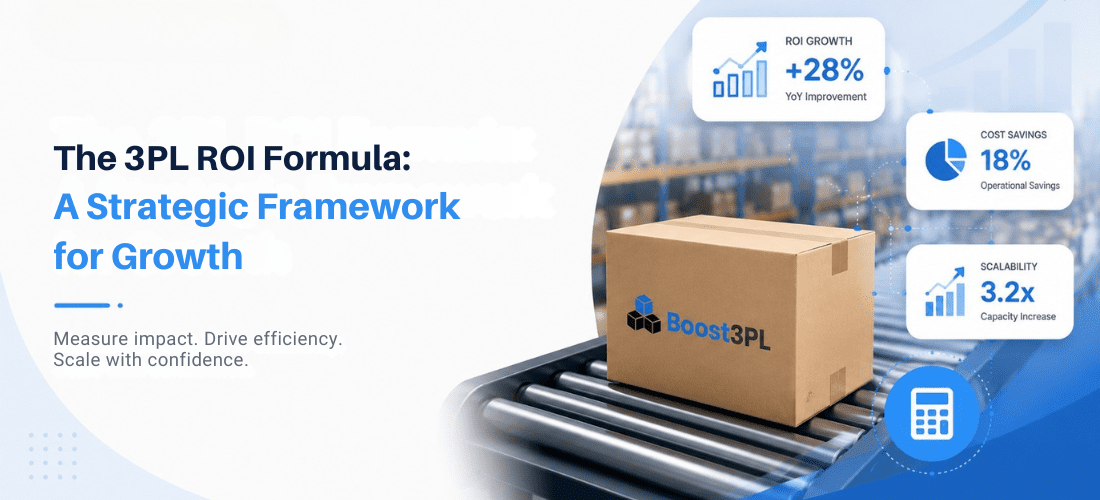
The 3PL ROI Formula: A Strategic Framework for Growth

Stop treating logistics like a guessing game. To see the real value of your operations, you need a structured approach to calculating the roi of a 3pl. Start by aggregating every dollar spent on your current in-house setup. This total must include rent, warehouse labor, technology subscriptions, and the cost of shipping errors. Next, compare these figures against 3PL quotes. High-performance partners often secure the best return on investment by slashing your base shipping costs through massive aggregate volume. Negotiated carrier rates can be 5% to 30% below retail prices, providing immediate margin relief.

The third step involves revenue recovery. You must calculate the money saved by eliminating mispicks and shipping delays. While competitors often focus only on the immediate cost of a mistake, you should consider the impact on your brand reputation and Customer Lifetime Value (CLV). Finally, add the scale multiplier. This represents your ability to handle a 500% spike in orders during peak season without the stress of hiring or training temporary staff. When calculating the roi of a 3pl, this flexibility is what transforms a warehouse into a strategic growth engine.

Hard Savings: Shipping Rates and Labor Efficiency

Soft Benefits: Conversion Lift and Customer Retention

Speed is a competitive advantage that directly impacts your bottom line. Quantify the impact of 2-day shipping on your cart abandonment rates. When customers trust your delivery speed, conversion rates climb. A perfect unboxing experience also drives repeat purchases and organic social shares. Maintaining this consistency across every platform is the core value of multichannel fulfillment services. If you’re ready to stop managing boxes and start scaling, it’s time to partner with a strategic ally that prioritizes your growth.

Maximizing Your Return with Boost3PL’s High-Performance Infrastructure

Your fulfillment partner should be a catalyst for expansion, not a bottleneck. When calculating the roi of a 3pl, the strength of their technology stack is often the deciding factor in long-term profitability. Boost3PL provides a frictionless integration that syncs your inventory across Shopify, TikTok Shop, and Amazon in real time. This technological sophistication prevents the nightmare of overselling, which is a critical risk for brands navigating the complex multichannel landscape of 2026. Professional frameworks for evaluating 3PL performance emphasize that a partner’s ability to integrate with your sales channels is a primary driver of efficiency gains.

Marketplace sellers face unique pressures that can quickly erode margins. Our strategic Amazon FBA prep services ensure your products meet strict compliance standards every time. This precision reduces the risk of costly marketplace penalties and stock-outs that damage your search rankings. By leveraging our national reach, you achieve lightning-fast delivery across the USA without the massive overhead of managing multiple regional warehouses yourself. You get the benefits of a nationwide network while maintaining a lean, agile business model.

Scaling Without the Friction

Boost3PL acts as a high-octane growth engine for your brand. We don’t just store boxes; we optimize your entire supply chain to handle sudden demand spikes with ease. Utilizing professional 3PL warehouse services allows you to maintain a 99.9% order accuracy rate even during your busiest seasons. This reliability protects your reputation and ensures that every customer receives a perfect unboxing experience.

The Bottom Line: Your Logistics Partner as a Profit Center

Shift your mindset away from simple cost-cutting. Stop asking "How much does it cost?" and start asking "How much growth does this partnership unlock?" Calculating the roi of a 3pl reveals that the right partner pays for itself by increasing conversion rates and improving customer retention. When you offload the chaos of daily operations, you gain the mental clarity needed to focus on creative strategy and brand building. In 2026, the most successful brands aren’t the ones with the biggest warehouses, but the ones with the most efficient partners.

Transform Your Logistics into a Strategic Growth Engine

Boost3PL is built for founders who demand excellence. We deliver 99.9% order accuracy and nationwide 2-day shipping coverage to keep you ahead of the competition. Our tech stack offers seamless integration with Shopify, TikTok Shop, and Amazon, ensuring your operations remain organized and fast. Stop drowning in pick-and-pack tasks and start focusing on your creative vision. Ready to accelerate your growth? Get a custom ROI analysis from Boost3PL today. We’re ready to help you build the future of your brand.

Frequently Asked Questions

How do I calculate the ROI of a 3PL for my ecommerce brand?

You calculate the ROI by subtracting your total outsourced fulfillment costs from the sum of your current in-house expenses and regained revenue. Your in-house math must include rent, labor, packing materials, and the cost of shipping errors. When calculating the roi of a 3pl, also factor in the value of your reclaimed time and the potential sales growth from faster shipping speeds.

Is a 3PL actually cheaper than fulfilling orders in-house?

A 3PL is generally more cost-effective because it converts high fixed costs into flexible variable costs. You stop paying for underutilized warehouse space and idle staff during slow seasons. By leveraging shared infrastructure and massive shipping volume, professional partners provide an efficiency level that solo brands can’t match. This model ensures you only pay for the fulfillment activity you actually use.

What are the most important KPIs to track when measuring 3PL performance?

Focus on order accuracy, shipping speed, and inventory precision. You should monitor the percentage of orders shipped within your promised window and the rate of mispicks. High-performance providers maintain a 99.9% order accuracy rate. Tracking these metrics helps you quantify the "soft" savings of a partnership, such as reduced customer service tickets and lower return processing costs.

How much can I save on shipping rates by using a 3PL?

Brands typically access negotiated carrier discounts that are 5% to 30% below retail shipping rates. These savings are a result of the 3PL’s ability to aggregate volume across their entire client base. When calculating the roi of a 3pl, these shipping discounts often offset a significant portion of the pick and pack fees. This immediate margin relief allows you to reinvest in customer acquisition.

What is the typical ‘break-even’ point for moving to a 3PL?

The break-even point often occurs when your order volume hits 500 to 1,000 shipments per month or when you need to lease dedicated warehouse space. It’s also the moment when the opportunity cost of your time becomes too high. If you’re spending more time taping boxes than growing your brand, the efficiency gains of outsourcing will immediately outweigh the service fees.

Does a 3PL help reduce customer acquisition costs (CAC)?

A 3PL indirectly lowers your CAC by increasing your Customer Lifetime Value and improving your conversion rates. Fast, reliable delivery leads to better reviews and higher repeat purchase rates, which makes your advertising spend more efficient. When your fulfillment is frictionless, you don’t have to spend as much to replace customers who were lost to poor shipping experiences.

The Business Case for Outsourcing Fulfillment in 2026: Scale Without Friction

How many hours of growth potential are you trading just to tape boxes and print labels? If you’re spending 20 hours a week on pick and pack tasks, you aren’t running a brand; you’re running a warehouse. With Amazon FBA fees increasing by an average of $0.08 per unit as of January 2026 and USPS Ground Advantage rates jumping 7.8 percent, the cost of doing it all yourself has never been higher. Understanding the benefits of using a US based 3pl is no longer just about convenience. It’s about protecting your margins and reclaiming your time to focus on what actually moves the needle.

You deserve a logistics strategy that scales as fast as your ambition. We’ll show you how to transform your shipping operations from a frustrating cost center into a high-octane growth engine. This guide breaks down how to secure discounted national shipping rates, maintain 2-day delivery standards across Shopify and Amazon, and build a strategic partnership that feels like a natural extension of your team. From navigating 2026 carrier hikes to mastering multichannel fulfillment, it’s time to trade operational friction for pure momentum.

Key Takeaways

  • Stop the “Founder’s Trap” and redirect your energy toward strategic brand building by automating your manual pick and pack workflows.
  • Unlock the competitive benefits of using a US based 3pl to secure deep carrier discounts and maintain 2-day delivery standards across every sales channel.
  • Protect your cash flow by converting rigid warehouse overhead into a scalable variable cost model that adapts to 2026 market volatility.
  • Master a frictionless transition framework that prioritizes deep tech integration and minimizes operational downtime during your inventory migration.

The Strategic Shift: Why In-House Fulfillment Becomes a Growth Bottleneck

Founder energy is a finite resource. If you’re losing 20 hours every week to pick and pack fulfillment, you’ve hit a growth ceiling. This "Founder’s Trap" turns visionaries into warehouse managers, stalling brand development and high-level strategy. It’s an expensive trade; your hourly rate as a CEO is far higher than the cost of professional logistics. Every box you tape is a missed opportunity to scale your marketing or refine your product line.

Fixed warehouse leases represent a massive infrastructure liability in the volatile 2026 market. Locked-in overhead drains cash flow when demand dips. Conversely, it caps your potential when orders spike. One of the primary benefits of using a US based 3pl is the ability to flip these fixed costs into variable ones. You pay for the space you use, not the empty square footage you’re stuck with during the off-season. This flexibility is the difference between surviving and thriving in a shifting economy.

Modern commerce demands extreme agility. Your logistics must pivot instantly between Shopify storefronts, viral TikTok Shop trends, and strict Amazon FBM requirements. Trying to manage these technical nuances in-house often leads to the "Agility Gap," where operational lag results in missed sales. To understand the broader scope of what is third-party logistics, you have to see it as a strategic shield against this operational chaos. Scaling without friction starts with recognizing the benefits of using a US based 3pl to bridge the gap between your current capacity and your revenue goals.

The Hidden Costs of Doing It Yourself

In-house operations carry invisible expenses that eat margins from the inside out. These include:

  • Escalating warehouse insurance premiums and liability coverage.

  • Excessive packaging waste from unoptimized box sizing and manual packing.

  • The administrative nightmare of seasonal labor management and training (similar to how growing restaurant groups explore Digital Onboarding & Training to simplify staff integration).

  • Compounding shipping errors that destroy customer lifetime value (CLV).

Fixed overhead prevents rapid scaling during peak 2026 shopping seasons because you cannot expand your physical walls or staff overnight. To dive deeper into optimizing your back-end, read our guide on Mastering 3PL Warehouse Services: A Strategic Guide for Growing Brands.

The Business

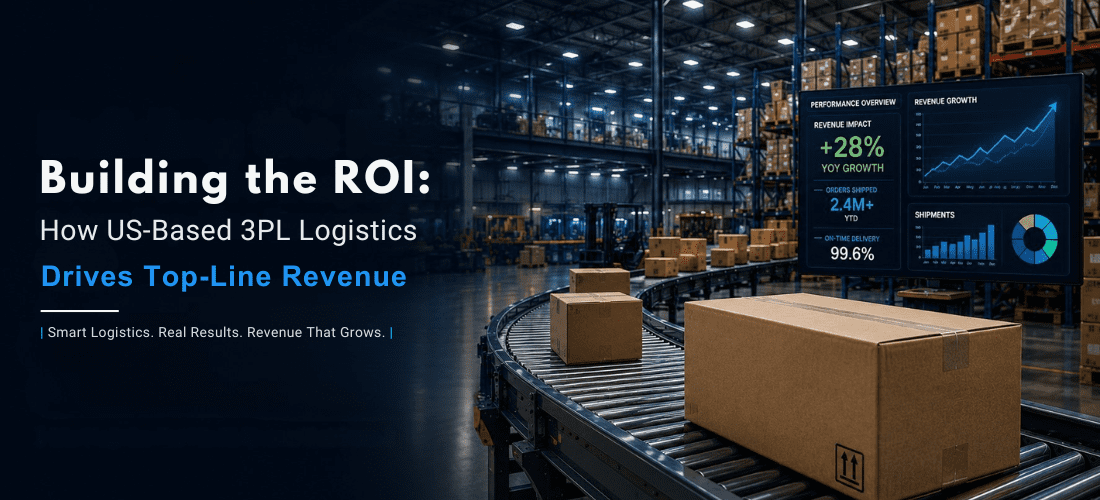
Building the ROI: How US-Based 3PL Logistics Drives Top-Line Revenue

Logistics isn’t a bill to be paid. It’s an investment in your brand’s scale. One of the most immediate benefits of using a US based 3pl is the shift from CAPEX to OPEX. Instead of sinking capital into warehouse equipment or long-term debt, you pay only for the fulfillment you use. This protects your cash flow. It allows you to redirect funds into aggressive marketing campaigns that drive customer acquisition while we handle the heavy lifting.

You gain access to the "Boost" effect. We leverage massive national shipping volumes to secure deep carrier discounts that individual brands simply can’t reach. These savings go straight back to your bottom line. Beyond shipping, marketplace dominance requires precision. Utilizing an Amazon FBA prep center ensures your inventory meets every strict requirement to win the Buy Box and maintain Prime eligibility. It’s about being where your customers are, without the operational headache.

Converting Logistics into a Sales Tool

Speed sells. Offering 2-day delivery capabilities directly increases checkout conversion rates. Customers don’t want to wait; they want their products now. When you meet that expectation, cart abandonment drops significantly. "Reliable multichannel fulfillment services act as your brand’s insurance policy, preventing stockouts and overselling across TikTok and Shopify." This consistency builds trust and repeat business.

Technology as a Growth Lever

Frictionless operation depends on data. Connecting your tech stack to a 3PL warehouse management system (WMS) provides real-time visibility into every order. This integration supports supply chain resilience and sustainability by reducing waste and optimizing transport routes. Use our logistics analytics to forecast demand and reduce expensive storage fees. Another of the benefits of using a US based 3pl is having a single source of truth for your inventory. You can explore our fulfillment center USA options to start turning your shipping operations into a competitive advantage today.

Executing the Transition: A Frictionless Framework for Scaling Your Brand

Switching to an external partner isn’t just a vendor change; it’s a strategic upgrade for your entire business model. Vetting for this partnership requires moving beyond a simple price-per-pick comparison. You need to evaluate technological compatibility and cultural alignment. One of the primary benefits of using a US based 3pl is the ability to communicate in real-time with a team that understands the nuances of the American consumer landscape. We don’t just move boxes. We act as a proactive ally that anticipates your needs before they become bottlenecks.

The onboarding process at Boost3PL is designed to be entirely frictionless. We know that every hour of operational downtime is an hour of lost revenue. Our team manages the inventory transfer with surgical precision, ensuring your Shopify and TikTok shops remain live and active. We take our role as the guardian of your brand seriously. Every package that leaves our facility reflects your reputation. We treat your customers with the same care your original founder team did, ensuring that high-quality presentation remains a constant as you scale.

Your 3PL Vetting Checklist

Before signing a contract, perform a strategic audit of your potential partner’s capabilities. Ask these critical questions to ensure they can handle your growth:

  • Do their 3PL warehouse services integrate directly with your current tech stack for real-time data?

  • Can they demonstrate specialized expertise in both Amazon FBA prep and FBM fulfillment to navigate marketplace complexity?

  • Do they offer the scalability to handle a 5x or 10x surge in order volume during peak 2026 shopping windows?

  • Are they equipped to manage multichannel returns without creating an administrative burden for your team?

The Future of Your Brand with Boost3PL

Imagine a business where your Monday mornings aren’t consumed by shipping labels and packing tape. When you leverage the benefits of using a US based 3pl, you reclaim the mental bandwidth needed for product innovation and aggressive marketing. This shift away from manual warehouse tasks also provides the opportunity to prioritize your health, and you can explore AI Fitness Coach to maintain your energy levels during long work weeks. You focus on the vision while we handle the operational chaos of the modern digital economy. It’s time to stop playing defense with your logistics and start using them as a weapon for expansion. Secure Your Amazon Growth: FBA Prep Without the Risk and experience the power of a high-performance fulfillment partnership.

Unlock Your Brand’s Full Velocity

Success in 2026 isn’t just about what you sell. It’s about how fast and reliably you deliver it. Moving beyond the "Founder’s Trap" of manual fulfillment allows you to reclaim your mental bandwidth and focus on high-level strategy. By leveraging the benefits of using a US based 3pl, you trade rigid infrastructure liabilities for a high-performance growth engine that adapts to your sales volume in real-time. This isn’t just an operational shift; it’s a strategic move to protect your margins and enhance your reputation across every digital storefront.

Boost3PL stands as your tech-savvy strategic ally. We bring specialized Amazon FBA Prep Center expertise and seamless integrations for Shopify and TikTok Shop to your back-end operations. Our team handles the inherent chaos of the supply chain so you can focus on building your empire with absolute confidence. It’s time to stop letting logistics hold you back and start using them as a catalyst for rapid expansion.

Ready to scale without the friction? Get your custom fulfillment quote from Boost3PL today.

Your growth is our primary metric of success. Let’s build something extraordinary together.

Frequently Asked Questions

Is outsourcing fulfillment more expensive than doing it in-house in 2026?

Outsourcing often reduces your total cost of ownership by eliminating fixed overhead like warehouse leases, equipment maintenance, and permanent labor. One of the primary benefits of using a US based 3pl is the ability to leverage massive shipping volumes for deep carrier discounts that individual brands can’t access alone. When you factor in the 20+ hours of founder time reclaimed each week, the ROI shifts heavily in favor of a professional partnership.

How does a US-based 3PL handle Amazon FBA prep and marketplace requirements?

A specialized Amazon FBA prep center manages the technical nuances of labeling, kitting, and boxing to meet strict marketplace standards. We act as a strategic ally to ensure your inventory arrives at Amazon facilities without rejection or costly penalties. This specialized support allows you to maintain Prime eligibility and win the Buy Box while offloading the complex manual labor required for multichannel fulfillment services.

Can I maintain my brand’s unique custom packaging when using a fulfillment center?

You can absolutely maintain your brand’s unique identity through custom packaging and branded inserts. We act as the guardian of your customer experience, ensuring that every box reflects your brand’s high standards and attention to detail. Our warehouse teams are trained to follow specific kitting and packing instructions, so your unboxing experience remains a powerful marketing tool for your digital-native brand.

What happens to my fulfillment costs if my sales volume fluctuates significantly month-to-month?

Your fulfillment costs scale directly with your order volume, turning rigid fixed expenses into a flexible variable model. This is one of the key benefits of using a US based 3pl during peak 2026 shopping seasons or slower months. You only pay for the storage space and labor you actually use, which protects your cash flow during transitions and allows for frictionless scaling when demand spikes.