

Schedule a Call

Tag: scaling a business

In-House vs. 3PL: 2026 Strategic Guide for Scaling Brands

Scaling isn’t about choosing between control and outsourcing; it’s about choosing between managing boxes and managing a brand. You started your business to innovate, not to spend fourteen hours a day taping cartons or fighting shipping rate hikes. We understand the daily pressure of warehouse fire-fighting. It’s frustrating to watch your marketing strategy stall because you’re drowning in manual order processing. This guide breaks down the critical debate of in-house fulfillment vs 3pl to help you reclaim your time and slash per-order costs. We’ll examine the 2026 regulatory shifts, including the suspended de minimis exemption and new Amazon AWD restrictions, to provide a clear roadmap for growth. Discover how to transform your logistics into a frictionless, high-performance engine that fuels your global expansion and protects your brand reputation.

Key Takeaways

  • Identify the critical tipping point where the hidden costs of managing a warehouse outweigh the benefits of in-house fulfillment vs 3pl.
  • Scale your operations instantly to handle viral growth and seasonal peaks without the distraction of warehouse fire-fighting or temporary hiring.
  • Reclaim your focus on brand strategy by replacing manual order processing with high-accuracy, tech-forward fulfillment services that protect your reputation.
  • Execute a frictionless transition to a professional fulfillment center by following a strategic inventory audit and a clean hand-off plan.

The Operational Reality: In-House vs. 3PL Fulfillment

Managing your own warehouse feels like the ultimate control. For early-stage brands, self-fulfillment provides a high-touch experience where you see every ribbon tied and every box taped. But as you scale, this control often turns into a bottleneck. The choice between in-house fulfillment vs 3pl isn’t just about cost; it’s about agility. In-house operations carry heavy fixed costs like warehouse equipment, long-term leases, and HR overhead. Transitioning to Third-party logistics (3PL) allows you to convert these capital expenses into variable operating expenses. You pay for what you use, when you use it. This shift liberates capital to fuel your next marketing campaign or product launch.

In 2026, omnichannel fulfillment is the standard. With 86% of brands now selling on two or more channels, managing TikTok Shop orders alongside Amazon FBM requires sophisticated warehousing and inventory management. If you’re spending your mornings resolving shipping errors instead of refining your strategy, you’re losing money. “Cheaper” in-house methods become incredibly expensive when they stifle your ability to scale at the speed of global commerce.

Identifying the Tipping Point for Your Brand

Recognize the signals that your backroom operation has reached its limit. Are you seeing frequent shipping errors or running out of physical storage space? If order volume spikes or viral social media moments leave you underwater, it’s time to move. Evaluating in-house fulfillment vs 3pl requires looking past the invoice and toward your growth potential. Calculate your “Founder Opportunity Cost.” Every hour you spend packing a box is an hour you aren’t spending on customer acquisition. High-performance brands prioritize expansion by offloading the chaos of logistics to experts who thrive on operational precision.

Strategic Comparison: Control, Scalability, and Customer Experience

Many founders hesitate to outsource because they fear losing control. They view their backroom as a safe haven, but in reality, it’s often a “black box” of manual errors and unrecorded stock movements. The debate of in-house fulfillment vs 3pl isn’t about physical proximity; it’s about data integrity. Modern logistics partners use advanced tech stacks that offer more visibility than a messy warehouse ever could. You gain a birds-eye view of every SKU without ever touching a packing slip.

Scalability is where the distinction becomes undeniable. When a TikTok video goes viral or Black Friday arrives, an in-house team often buckles under the weight of thousands of orders. You shouldn’t have to spend your peak season interviewing temporary staff or managing warehouse chaos. A high-performance partner scales instantly. This ensures your brand reputation remains intact during your biggest growth spurts. Customer experience depends on precision. By leveraging professional pick and pack fulfillment, you achieve 99.9% accuracy. This level of detail, combined with 3PL-negotiated carrier rates, allows you to offer faster, cheaper shipping that in-house brands simply can’t match.

How Technology Bridges the Gap in Outsourced Logistics

Tech-native partners act as an invisible extension of your team. Real-time data syncs effortlessly across Shopify, TikTok Shop, and Amazon, preventing stockouts and over-selling. Using a 3PL warehouse services partner provides deeper insights into SKU performance. This helps you optimize your inventory levels and predict future demand with surgical precision. This frictionless operation ensures you stay focused on creativity while your logistics engine runs on autopilot. If you’re ready to accelerate, consider how Boost3PL can transform your supply chain into a strategic advantage.

Making the Move: Transitioning to a High-Performance 3PL Partner

Transitioning from a local backroom to a professional fulfillment center is a milestone, not a hurdle. Success depends on a clean hand-off. Audit your current inventory to ensure every SKU is accurately labeled and accounted for before shipping it to a new warehouse. This precision prevents initial delays and sets the stage for a frictionless partnership. Next, connect your ecommerce platform directly to your partner’s Warehouse Management System (WMS). This integration ensures that orders from Shopify, TikTok Shop, or Amazon flow instantly to the pick-and-pack team. Choosing a partner that specializes in multichannel fulfillment services is vital for modern brands. This strategic move turns your logistics from a bottleneck into a powerful tool for national expansion.

Future-Proofing Your Brand for 2026 and Beyond

The logistics landscape is shifting rapidly. With new Amazon AWD weight restrictions and the suspension of de minimis exemptions, your business must remain agile to stay profitable. Utilizing a proactive partner for Amazon FBA prep and FBM fulfillment gives you a massive competitive advantage. You can pivot your marketing strategies instantly without worrying about warehouse constraints or staffing shortages. When comparing in-house fulfillment vs 3pl, the winner is the model that lets you focus on your creative vision. Boost3PL acts as the high-performance engine for digital-native founders. We handle the operational complexity so you can focus on the growth. It’s time to stop fighting warehouse fires and start building your empire with a strategic ally that values your reputation as much as you do.

Accelerate Your Brand Growth in 2026

Scaling is a choice between stagnation and acceleration. You’ve seen that the debate of in-house fulfillment vs 3pl is really about where you invest your energy. Modern founders don’t win by tape-gunning boxes; they win by building movements. By converting fixed overhead into a variable, tech-forward logistics engine, you gain the agility to dominate new channels instantly. Whether you’re navigating the 2026 suspension of de minimis exemptions or eyeing a viral TikTok moment, your infrastructure must be frictionless. We provide the 99.9% order accuracy and seamless Shopify, TikTok Shop, and expert Amazon FBA Prep services you need to remain organized and fast. Ready to scale? Let Boost3PL handle the heavy lifting while you grow your brand. You’ve built an incredible identity. Now, let’s give it the high-performance foundation it deserves to thrive in the global economy.

Frequently Asked Questions

Is in-house fulfillment cheaper than using a 3PL?

In-house fulfillment often looks cheaper on paper but carries heavy hidden burdens. You pay for fixed rent, equipment, and labor regardless of your sales volume. A 3PL converts these into variable costs that scale with your business. When comparing in-house fulfillment vs 3pl, consider the deep shipping discounts 3PLs secure through massive volume. These savings often offset the service fees entirely.

Will I lose control over my packaging and branding with a 3PL?

You maintain full authority over your brand’s unboxing experience. Professional partners execute your specific packaging requirements with surgical precision. Advanced warehouse management systems allow you to monitor every step of the process from your dashboard. You gain more visibility through real-time data than you would by personally watching over a chaotic or unorganized backroom operation.

What is the minimum order volume needed to switch to a 3PL?

Most brands find the strategic tipping point occurs between 100 and 200 orders per month. However, high-growth founders often make the move earlier to reclaim their time. If you spend more hours packing boxes than building your brand, you’ve reached your limit. Evaluating your in-house fulfillment vs 3pl strategy depends on your growth ambitions rather than just your current order count.

How long does it take to transition from in-house to 3PL fulfillment?

A standard transition typically takes between two and four weeks. This timeline includes auditing your inventory, shipping stock to the fulfillment center, and syncing your ecommerce platforms. Modern tech integrations with Shopify or TikTok Shop happen almost instantly. This ensures your operations remain frictionless while you hand off the heavy lifting to a strategic ally that values your reputation.
Third Party Fulfillment: The 2026 Strategic Guide to Scaling Your Brand

Your shipping speed is no longer just a perk; it’s the primary guardian of your brand’s reputation and your Amazon Buy Box status. In 2026, your third party fulfillment strategy is either the engine driving you to the top of the market or the anchor dragging you into the depths of one-star reviews. You’ve likely felt the sting of a viral moment turning into a customer service nightmare because of manual data errors or warehouse bottlenecks. It’s frustrating to fight for every sale only to see your hard-earned margins vanish into shipping delays and inventory discrepancies.

This strategic guide shows you how to leverage high-velocity logistics to transform your supply chain into a frictionless growth engine. You’ll discover how to navigate the 2026 cost landscape and secure carrier discounts of up to 30 percent through aggregated volume. We’ll answer the critical question of how to choose a partner that protects your inventory and your bottom line. We’re breaking down the roadmap to 100 percent order accuracy and same-day shipping as your ultimate competitive advantage.

Key Takeaways

  • Break through the “Fulfillment Wall” by identifying when in-house logistics stop serving your growth and start acting as a bottleneck.
  • Learn how third party fulfillment serves as the technological heartbeat of your brand; ensuring 100 percent order accuracy and rapid scaling.
  • Utilize our 2026 selection framework to find a strategic ally that offers deep API integration and transparent, real-time data dashboards.
  • Turn shipping into a competitive advantage by mastering the architecture of high-performance fulfillment services across all your sales channels.
  • Focus on total landed costs rather than base rates to protect your margins and build a sustainable, high-velocity ecommerce business.

What is Third Party Fulfillment and Why Does It Drive Growth?

Scaling a brand requires more than just a great product; it demands a logistics infrastructure that moves as fast as your marketing. Third-party logistics (3PL) is the strategic outsourcing of your end-to-end supply chain, covering everything from receiving raw inventory to final mile delivery. It’s the engine that powers your brand’s physical presence in the world. Third party fulfillment is a functional promise of business acceleration that shifts your focus from manual labor to market domination.

Most founders eventually hit the "Fulfillment Wall." This is the exact moment when managing in-house operations stops being a cost-saving measure and starts being a growth killer. When you’re spending your nights taping boxes and your mornings answering "where is my order" emails, you’ve lost your most valuable asset: your creative energy. Offloading the inherent chaos of supply chain management to a specialist allows you to reclaim your time and focus on high-level strategy. Your growth shouldn’t be limited by the number of orders you can personally pack in a day. As you transition from operational tasks to strategic leadership, you might also consider formalizing the expertise you’ve built in the field; for those looking to turn years of hands-on experience into recognized Australian qualifications, check out Right Pathway.

Fulfillment vs. Warehousing: Understanding the Difference

Don’t confuse simple storage with active order execution. Warehousing is static; it’s just boxes sitting on shelves. In contrast, a modern fulfillment warehouse is a high-velocity environment built for speed. It uses active inventory management to prevent stockouts and overstocking, ensuring your capital isn’t tied up in dead weight. You need a partner that treats your inventory as a moving asset rather than a stationary expense.

Signs Your Brand is Ready for a 3PL Partner

You’ll know it’s time to transition when order volume spikes trigger shipping anxiety instead of excitement. If manual data entry between Shopify and your storage space is leading to errors, your reputation is at risk. Calculate the true value of your time as a founder. If you’re performing twenty dollar an hour labor instead of thousand dollar an hour strategy, you’re losing money every day. You can learn more about the specifics of scaling in our guide on Mastering 3PL Warehouse Services. Transitioning to a professional partner ensures your logistics can handle the weight of your ambitions.

The Architecture of High-Performance Fulfillment Services

High-performance third party fulfillment isn’t a passive service; it’s an active architecture built on precision. At the core of this system is the pick and pack fulfillment process. It’s the moment your brand’s promise becomes a physical reality. Accuracy at this level protects your customer reviews and eliminates the nightmare of returns due to warehouse errors. Modern logistics relies on an integrated program of supply chain management that treats every unit as a data point. Real-time inventory visibility acts as the heartbeat of this frictionless operation, ensuring you never sell a product you don’t have.

You can also use custom kitting and assembly to drive higher revenue. Bundling products into gift sets or subscription boxes increases your average order value (AOV) without adding significant overhead. When you integrate these value-added tasks into your third party fulfillment workflow, you create a more professional unboxing experience. If you’re looking for a partner that prioritizes these high-growth tactics, explore how Boost3PL optimizes your operations.

Multichannel Mastery: Shopify, TikTok Shop, and Beyond

Your inventory needs a single source of truth. Syncing Shopify, TikTok Shop, and other marketplaces ensures your stock levels remain accurate across every digital storefront. TikTok Shop requires extreme speed. Viral trends can lead to thousands of orders in minutes, demanding a partner that can handle sudden surges without missing a beat. You can find more about these tactics in our guide to Multichannel Fulfillment Strategy.

Amazon FBA Prep and FBM Strategy

Marketplace success in 2026 requires a hybrid approach. Utilizing an Amazon FBA prep center is non-negotiable for maintaining compliance and avoiding costly Amazon penalties. A strong FBM (Fulfillment by Merchant) strategy allows you to maintain control over your margins and shipping speeds during peak seasons. Check out our FBA Prep Center Guide to master this balance.

Third Party Fulfillment The 2026 Strategic Guide To Scaling Your Brand

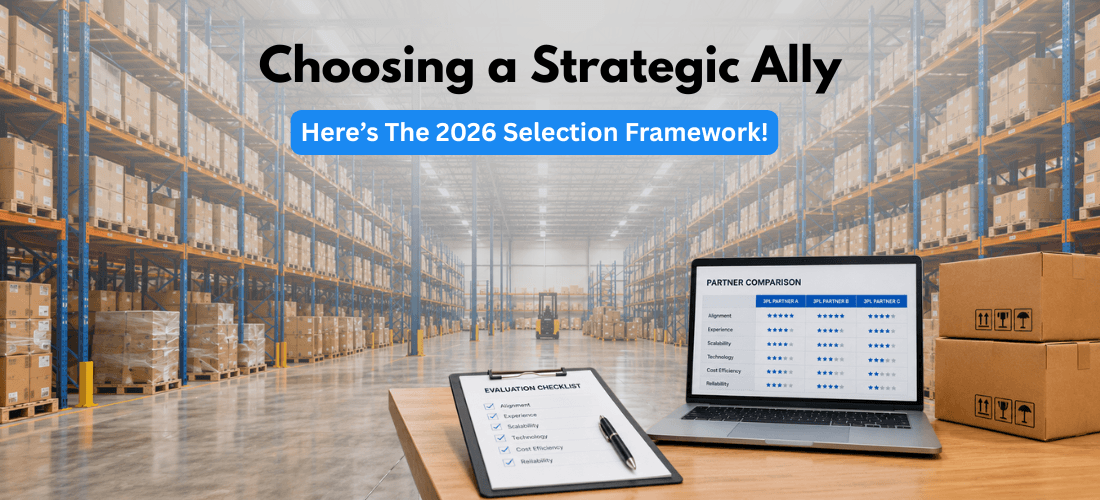
Choosing a Strategic Ally: The 2026 Selection Framework

Choosing a partner based solely on the lowest rate card is the most expensive mistake a founder can make. Hidden fees, inventory shrinkage, and missed shipping windows quickly erase any perceived savings. Your third party fulfillment provider is the guardian of your brand’s physical identity. They control the unboxing experience, which is your final opportunity to secure a lifelong customer. Evaluate potential allies based on their technological sophistication and their ability to handle a 10x surge in volume without breaking a sweat.

A tech-first requirement is non-negotiable in 2026. Demand deep API integration that provides total dashboard transparency. You need to see exactly what’s happening on the warehouse floor in real-time. If a provider relies on manual spreadsheets or delayed reporting, they aren’t a strategic ally; they’re a bottleneck. High-performance third party fulfillment requires a partner that thinks like a tech company and acts like a precision manufacturer.

The National Advantage: Strategic US Distribution

Achieving national reach shouldn’t require the overhead of multiple warehouse leases. A central or multi-node fulfillment center USA network is essential for competing with 2-day shipping expectations. By reducing transit times and shipping zones, you drastically lower your COGS. This strategic placement allows you to reach a nationwide customer base with high-velocity efficiency without the traditional capital risks.

Implementation: Moving to Frictionless Fulfillment

Transitioning to a new partner doesn’t have to be chaotic. A professional migration typically takes about 30 days. This period focuses on inventory transfer, data migration, and rigorous testing. Ensure your Shopify store communicates perfectly with the warehouse systems from day one. Success is measured by clear KPIs. Track your order accuracy, shipping speed, and return processing times to ensure your logistics engine is firing on all cylinders. Focus on these metrics to turn your supply chain into a high-octane growth tool.

Scale Your Vision Without Limits

Your logistics strategy is the definitive line between a struggling startup and a dominant market player. We’ve explored how high-performance infrastructure transforms your operations from a chaotic cost center into a high-octane growth engine. By prioritizing real-time inventory visibility and strategic US distribution, you ensure your brand meets the high-speed demands of 2026 consumers. Professional third party fulfillment isn’t just about shipping boxes; it’s about reclaiming your creative energy and protecting your reputation on every platform you touch. You’ve seen how the right architecture supports multichannel mastery and marketplace compliance, turning potential bottlenecks into competitive advantages.

Success in the modern economy requires an ally that moves at the speed of social commerce. Ready to accelerate? Let Boost3PL handle your fulfillment so you can focus on growth. We provide a specialized Amazon FBA Prep Center, seamless multichannel sync for Shopify and TikTok Shop, and frictionless tech-first logistics designed for digital-native brands. The ceiling on your growth has officially been removed. It’s time to stop managing chaos and start building the frictionless future your brand deserves. Your next level of scale starts today.

Frequently Asked Questions

What is the difference between a 3PL and a fulfillment center?

A 3PL is the strategic organization providing an integrated suite of supply chain services; while a fulfillment center is the physical facility where your products are stored and processed. Think of the 3PL as your high-performance partner that manages the technology, carrier relationships, and strategy. The fulfillment center is the operational hub where the actual pick and pack work happens. Most top-tier providers operate multiple centers to reduce shipping zones and transit times.

How much does third party fulfillment typically cost for ecommerce?

Pricing is usually structured around your specific volume and the complexity of your requirements. Most brands evaluate their investment through the lens of total landed cost; which includes receiving fees, monthly storage, and transactional pick and pack charges. High-growth brands often find that the carrier discounts and operational efficiencies provided by a partner outweigh the cost of managing a warehouse in-house. Your total spend will scale alongside your success, ensuring you only pay for the capacity you actually use.

Can a 3PL handle Amazon FBA prep and direct-to-consumer orders simultaneously?

A sophisticated third party fulfillment ally can manage your entire multichannel strategy from a single inventory pool. They act as a central command center, prepping shipments for Amazon’s network while simultaneously shipping Shopify or TikTok Shop orders directly to your customers. This hybrid approach maximizes your stock efficiency and prevents your capital from being tied up in redundant inventory across different warehouses. It’s the most effective way to maintain high availability across every sales channel.

What happens if a third party fulfillment center makes a mistake on an order?

Reliable partners operate under strict Service Level Agreements (SLAs) that guarantee high levels of accuracy. If a mistake occurs, such as a wrong item being shipped, the provider typically takes immediate responsibility by covering the re-shipment costs and correcting the error. This accountability protects your brand reputation and ensures your customers remain satisfied even when hiccups happen. You should always choose a partner that prioritizes transparency and proactive problem-solving to maintain a frictionless customer experience.