

Schedule a Call

Tag: shipping

Third Party Fulfillment: The 2026 Strategic Guide to Scaling Your Brand

Your shipping speed is no longer just a perk; it’s the primary guardian of your brand’s reputation and your Amazon Buy Box status. In 2026, your third party fulfillment strategy is either the engine driving you to the top of the market or the anchor dragging you into the depths of one-star reviews. You’ve likely felt the sting of a viral moment turning into a customer service nightmare because of manual data errors or warehouse bottlenecks. It’s frustrating to fight for every sale only to see your hard-earned margins vanish into shipping delays and inventory discrepancies.

This strategic guide shows you how to leverage high-velocity logistics to transform your supply chain into a frictionless growth engine. You’ll discover how to navigate the 2026 cost landscape and secure carrier discounts of up to 30 percent through aggregated volume. We’ll answer the critical question of how to choose a partner that protects your inventory and your bottom line. We’re breaking down the roadmap to 100 percent order accuracy and same-day shipping as your ultimate competitive advantage.

Key Takeaways

  • Break through the “Fulfillment Wall” by identifying when in-house logistics stop serving your growth and start acting as a bottleneck.
  • Learn how third party fulfillment serves as the technological heartbeat of your brand; ensuring 100 percent order accuracy and rapid scaling.
  • Utilize our 2026 selection framework to find a strategic ally that offers deep API integration and transparent, real-time data dashboards.
  • Turn shipping into a competitive advantage by mastering the architecture of high-performance fulfillment services across all your sales channels.
  • Focus on total landed costs rather than base rates to protect your margins and build a sustainable, high-velocity ecommerce business.

What is Third Party Fulfillment and Why Does It Drive Growth?

Scaling a brand requires more than just a great product; it demands a logistics infrastructure that moves as fast as your marketing. Third-party logistics (3PL) is the strategic outsourcing of your end-to-end supply chain, covering everything from receiving raw inventory to final mile delivery. It’s the engine that powers your brand’s physical presence in the world. Third party fulfillment is a functional promise of business acceleration that shifts your focus from manual labor to market domination.

Most founders eventually hit the "Fulfillment Wall." This is the exact moment when managing in-house operations stops being a cost-saving measure and starts being a growth killer. When you’re spending your nights taping boxes and your mornings answering "where is my order" emails, you’ve lost your most valuable asset: your creative energy. Offloading the inherent chaos of supply chain management to a specialist allows you to reclaim your time and focus on high-level strategy. Your growth shouldn’t be limited by the number of orders you can personally pack in a day. As you transition from operational tasks to strategic leadership, you might also consider formalizing the expertise you’ve built in the field; for those looking to turn years of hands-on experience into recognized Australian qualifications, check out Right Pathway.

Fulfillment vs. Warehousing: Understanding the Difference

Don’t confuse simple storage with active order execution. Warehousing is static; it’s just boxes sitting on shelves. In contrast, a modern fulfillment warehouse is a high-velocity environment built for speed. It uses active inventory management to prevent stockouts and overstocking, ensuring your capital isn’t tied up in dead weight. You need a partner that treats your inventory as a moving asset rather than a stationary expense.

Signs Your Brand is Ready for a 3PL Partner

You’ll know it’s time to transition when order volume spikes trigger shipping anxiety instead of excitement. If manual data entry between Shopify and your storage space is leading to errors, your reputation is at risk. Calculate the true value of your time as a founder. If you’re performing twenty dollar an hour labor instead of thousand dollar an hour strategy, you’re losing money every day. You can learn more about the specifics of scaling in our guide on Mastering 3PL Warehouse Services. Transitioning to a professional partner ensures your logistics can handle the weight of your ambitions.

The Architecture of High-Performance Fulfillment Services

High-performance third party fulfillment isn’t a passive service; it’s an active architecture built on precision. At the core of this system is the pick and pack fulfillment process. It’s the moment your brand’s promise becomes a physical reality. Accuracy at this level protects your customer reviews and eliminates the nightmare of returns due to warehouse errors. Modern logistics relies on an integrated program of supply chain management that treats every unit as a data point. Real-time inventory visibility acts as the heartbeat of this frictionless operation, ensuring you never sell a product you don’t have.

You can also use custom kitting and assembly to drive higher revenue. Bundling products into gift sets or subscription boxes increases your average order value (AOV) without adding significant overhead. When you integrate these value-added tasks into your third party fulfillment workflow, you create a more professional unboxing experience. If you’re looking for a partner that prioritizes these high-growth tactics, explore how Boost3PL optimizes your operations.

Multichannel Mastery: Shopify, TikTok Shop, and Beyond

Your inventory needs a single source of truth. Syncing Shopify, TikTok Shop, and other marketplaces ensures your stock levels remain accurate across every digital storefront. TikTok Shop requires extreme speed. Viral trends can lead to thousands of orders in minutes, demanding a partner that can handle sudden surges without missing a beat. You can find more about these tactics in our guide to Multichannel Fulfillment Strategy.

Amazon FBA Prep and FBM Strategy

Marketplace success in 2026 requires a hybrid approach. Utilizing an Amazon FBA prep center is non-negotiable for maintaining compliance and avoiding costly Amazon penalties. A strong FBM (Fulfillment by Merchant) strategy allows you to maintain control over your margins and shipping speeds during peak seasons. Check out our FBA Prep Center Guide to master this balance.
Third Party Fulfillment The 2026 Strategic Guide To Scaling Your Brand

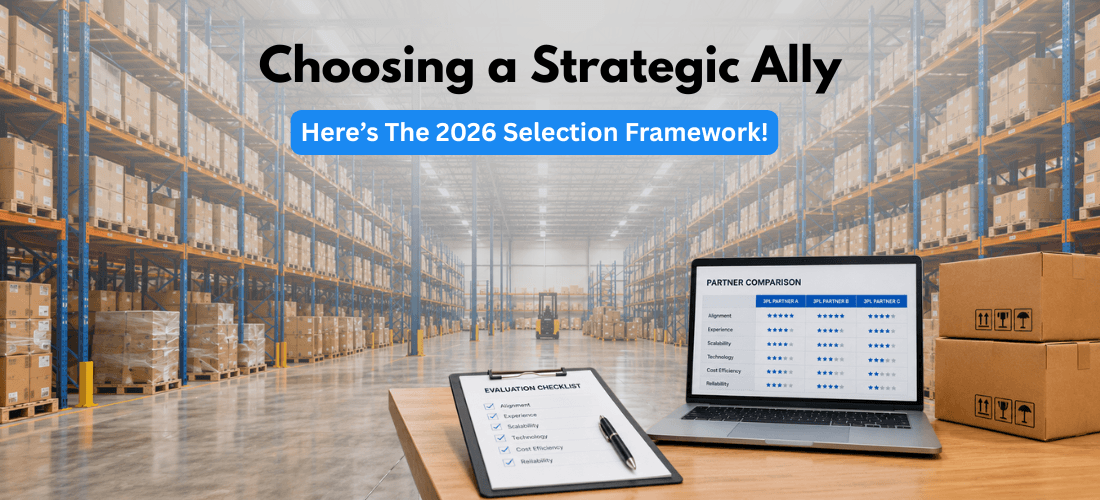
Choosing a Strategic Ally: The 2026 Selection Framework

Choosing a partner based solely on the lowest rate card is the most expensive mistake a founder can make. Hidden fees, inventory shrinkage, and missed shipping windows quickly erase any perceived savings. Your third party fulfillment provider is the guardian of your brand’s physical identity. They control the unboxing experience, which is your final opportunity to secure a lifelong customer. Evaluate potential allies based on their technological sophistication and their ability to handle a 10x surge in volume without breaking a sweat.

A tech-first requirement is non-negotiable in 2026. Demand deep API integration that provides total dashboard transparency. You need to see exactly what’s happening on the warehouse floor in real-time. If a provider relies on manual spreadsheets or delayed reporting, they aren’t a strategic ally; they’re a bottleneck. High-performance third party fulfillment requires a partner that thinks like a tech company and acts like a precision manufacturer.

The National Advantage: Strategic US Distribution

Achieving national reach shouldn’t require the overhead of multiple warehouse leases. A central or multi-node fulfillment center USA network is essential for competing with 2-day shipping expectations. By reducing transit times and shipping zones, you drastically lower your COGS. This strategic placement allows you to reach a nationwide customer base with high-velocity efficiency without the traditional capital risks.

Implementation: Moving to Frictionless Fulfillment

Transitioning to a new partner doesn’t have to be chaotic. A professional migration typically takes about 30 days. This period focuses on inventory transfer, data migration, and rigorous testing. Ensure your Shopify store communicates perfectly with the warehouse systems from day one. Success is measured by clear KPIs. Track your order accuracy, shipping speed, and return processing times to ensure your logistics engine is firing on all cylinders. Focus on these metrics to turn your supply chain into a high-octane growth tool.

Scale Your Vision Without Limits

Your logistics strategy is the definitive line between a struggling startup and a dominant market player. We’ve explored how high-performance infrastructure transforms your operations from a chaotic cost center into a high-octane growth engine. By prioritizing real-time inventory visibility and strategic US distribution, you ensure your brand meets the high-speed demands of 2026 consumers. Professional third party fulfillment isn’t just about shipping boxes; it’s about reclaiming your creative energy and protecting your reputation on every platform you touch. You’ve seen how the right architecture supports multichannel mastery and marketplace compliance, turning potential bottlenecks into competitive advantages.

Success in the modern economy requires an ally that moves at the speed of social commerce. Ready to accelerate? Let Boost3PL handle your fulfillment so you can focus on growth. We provide a specialized Amazon FBA Prep Center, seamless multichannel sync for Shopify and TikTok Shop, and frictionless tech-first logistics designed for digital-native brands. The ceiling on your growth has officially been removed. It’s time to stop managing chaos and start building the frictionless future your brand deserves. Your next level of scale starts today.

Frequently Asked Questions

What is the difference between a 3PL and a fulfillment center?

A 3PL is the strategic organization providing an integrated suite of supply chain services; while a fulfillment center is the physical facility where your products are stored and processed. Think of the 3PL as your high-performance partner that manages the technology, carrier relationships, and strategy. The fulfillment center is the operational hub where the actual pick and pack work happens. Most top-tier providers operate multiple centers to reduce shipping zones and transit times.

How much does third party fulfillment typically cost for ecommerce?

Pricing is usually structured around your specific volume and the complexity of your requirements. Most brands evaluate their investment through the lens of total landed cost; which includes receiving fees, monthly storage, and transactional pick and pack charges. High-growth brands often find that the carrier discounts and operational efficiencies provided by a partner outweigh the cost of managing a warehouse in-house. Your total spend will scale alongside your success, ensuring you only pay for the capacity you actually use.

Can a 3PL handle Amazon FBA prep and direct-to-consumer orders simultaneously?

A sophisticated third party fulfillment ally can manage your entire multichannel strategy from a single inventory pool. They act as a central command center, prepping shipments for Amazon’s network while simultaneously shipping Shopify or TikTok Shop orders directly to your customers. This hybrid approach maximizes your stock efficiency and prevents your capital from being tied up in redundant inventory across different warehouses. It’s the most effective way to maintain high availability across every sales channel.

What happens if a third party fulfillment center makes a mistake on an order?

Reliable partners operate under strict Service Level Agreements (SLAs) that guarantee high levels of accuracy. If a mistake occurs, such as a wrong item being shipped, the provider typically takes immediate responsibility by covering the re-shipment costs and correcting the error. This accountability protects your brand reputation and ensures your customers remain satisfied even when hiccups happen. You should always choose a partner that prioritizes transparency and proactive problem-solving to maintain a frictionless customer experience.

Average Pick and Pack Fees 2026: The Ecommerce Founder’s Pricing Guide

Your fulfillment provider is either your greatest growth engine or your biggest margin killer in 2026. With warehouse labor costs climbing 12% over the last 18 months, every cent added to your per-order cost directly erodes your profitability. Mastering the average pick and pack fees 2026 is no longer optional for founders who want to scale without the friction of legacy pricing models. It’s time to stop guessing and start optimizing your spend with real data.

We agree that managing the complexity of multichannel fees across Shopify and TikTok Shop feels like a moving target. It’s frustrating to see your hard-earned revenue vanish into opaque line items and hidden surcharges from traditional providers. This guide promises to hand you the blueprint for your 2026 logistics budget, featuring a detailed breakdown of costs and the specific strategies you need to protect your margins. We’ll provide a clear benchmark to evaluate any 3PL quote and ensure your logistics remain seamless as you boost your brand to the next level.

Key Takeaways

  • Master the evolving fulfillment landscape by benchmarking your current costs against the projected average pick and pack fees 2026.
  • Decode complex pricing structures by distinguishing between “first item” and “add-on” fees to protect your per-order margins.
  • Compare independent 3PL rates against Amazon FBA to uncover hidden storage and prep fees that could be draining your profits.
  • Audit your total fulfillment spend by identifying “invisible” costs like packaging materials, dunnage, and SKU complexity surcharges.
  • Learn why transparent, flat-fee models are the 2026 standard for high-growth brands looking for a seamless strategic partnership.

Understanding the 2026 Pick and Pack Fee Landscape

Pick and pack services represent the core labor engine of your ecommerce operation. This process involves retrieving specific items from warehouse shelves and prepping them for shipment. In 2026, the average pick and pack fees 2026 reflect a market transformed by high-speed automation and shifting labor demographics. You aren’t just paying for a pair of hands; you’re investing in a seamless fulfillment ecosystem that protects your brand’s reputation.

Pricing in 2026 typically fluctuates between $2.50 and $8.00 per order. This wide gap exists because “average” is no longer a static number. It depends on your SKU complexity, order volume, and the level of technology your 3PL utilizes. Modern brands now track the Fulfillment Efficiency Ratio to measure success. This metric divides your total fulfillment spend by your total revenue. If your ratio exceeds 15%, your current fee structure is likely dragging down your ability to scale.

What is included in a standard 2026 pick and pack fee?

The “Pick” phase has evolved beyond paper lists. In 2026, 3PLs use advanced warehouse management systems (WMS) and AI-driven heat maps to locate SKUs in seconds. This precision reduces errors and keeps your inventory moving at light speed. The “Pack” phase involves selecting the most cost-effective, sustainable packaging and securing items with precision-cut dunnage. Every step is part of the broader order fulfillment process, which concludes with labeling and staging for carrier pickup. We ensure every package is optimized for transit to avoid dimensional weight surcharges that eat your margins.

Why 2026 pricing looks different than 2024

The logistics world shifted significantly over the last 24 months. Wage inflation in major logistics hubs hit a 6.2% year-over-year increase by January 2026, forcing manual warehouses to hike their rates. Conversely, tech-forward 3PLs stabilized their costs by integrating Autonomous Mobile Robots (AMRs) that handle the heavy lifting. These robots don’t take breaks or require overtime pay. This technological gap creates the price variance you see in the market today. While legacy providers struggle with labor shortages, automated partners offer more predictable, scalable pricing models. For a standard single-item order in 2026, the average pick and pack fee typically settles between $3.15 and $3.85 depending on your monthly volume. Boost your margins by choosing a partner that uses technology to offset rising labor costs.

Breaking Down the Pick and Pack Cost Components

Understanding the math behind your fulfillment invoice is the first step to scaling your brand. In 2026, the average pick and pack fees 2026 reflect a major shift toward high-tech automation and rapid turnaround times. Logistics costs remain a massive pillar of the global economy. A recent report on Logistics Costs and U.S. Gross Domestic Product highlights how these expenses drive modern business strategy. You aren’t just paying for a hand in a box; you’re investing in a seamless customer experience that protects your reputation.

The “First Item” vs. “Additional Item” model

Most 3PL providers utilize a tiered pricing structure to reward high-volume orders. The first item in an order is your base cost. In 2026, expect to pay between $2.50 and $5.00 for that initial pick. This fee covers the labor of traveling to the bin, verifying the SKU, and bringing it to the packing station. Because the picker is already at the location, additional items usually cost 40% to 60% less than the first. Smart brands use kitting and bundling to turn three separate picks into one single unit, slashing their average pick and pack fees 2026 instantly. This strategy maximizes your margins while keeping your fulfillment velocity high.

Multichannel surcharges: Shopify, TikTok Shop, and Amazon

Selling across multiple platforms adds layers of complexity to your logistics. TikTok Shop now mandates strict 24-hour shipping windows, which often requires priority routing and specialized handling surcharges. Integration fees have also become standard. These fees fund the technology stack that keeps your Shopify store synced with your 3PL in real-time. You can simplify this by using multichannel fulfillment services to consolidate your inventory into one pool. This eliminates the need for fragmented stock and reduces the risk of overselling across different marketplaces.

SKU complexity and fragile handling also dictate your base rate. A standard t-shirt is simple to process, but a glass vase requires bubble wrap, custom inserts, and specialized care. These fragile surcharges can add $1.00 to $3.00 per order depending on the materials used. Modern tech fees for API maintenance and real-time dashboard access are now standard in most contracts. To keep these costs from spiraling, focus on organization. Efficient warehousing and inventory management is your best defense against pick errors and wasted movement. When your inventory is organized and your data is clean, your fulfillment becomes a competitive advantage. Boost your operational efficiency by optimizing your pick and pack strategy today.

3PL Pick and Pack vs. Amazon FBA: Which Wins in 2026?

Choosing between Amazon FBA and a dedicated 3PL isn’t a simple coin flip. By 2026, the logistical landscape has shifted. You need to know exactly where your capital is working for you. The average pick and pack fees 2026 reflect a market where Amazon prioritizes high-velocity automation, while independent partners prioritize brand experience. Boost your bottom line by understanding which model protects your margins and which one drains your cash flow.

When Amazon FBA makes financial sense

Amazon remains the king of speed for small, lightweight items with massive turnover. If your product weighs under 12 ounces and moves 1,000 units weekly, FBA is a powerhouse. The Prime badge still triggers a conversion lift of up to 25% for most categories. However, Amazon’s 2026 fee updates are aggressive. They now include higher inbound placement fees and stricter low-inventory level surcharges. Small-margin brands must be precise. Using a third party logistics company to prep inventory ensures you meet Amazon’s rigid standards without the 40% surcharges for non-compliance.

When a 3PL partner provides better ROI

A 3PL partner wins when you want to own the customer experience. Amazon won’t use your custom-branded boxes or include personalized inserts. If you sell oversized goods, heavy items, or multi-SKU bundles, FBA fees often skyrocket. Personalized pick and pack fulfillment is essential for fragile or luxury goods that require a human touch. When calculating true warehousing costs, founders often find that 3PLs offer 15% to 20% lower total costs for non-standard inventory. You get total control over your packaging and a partner that treats your Brand like their own.

The most profitable path for founders in 2026 is the Hybrid Model. Don’t put all your eggs in one basket. Keep your top-selling SKUs in FBA to capture Prime traffic. Move your slower-moving inventory, oversized items, and multi-channel orders to a 3PL. This approach lowers the average pick and pack fees 2026 across your entire catalog. It creates a Seamless operation that scales across Shopify, TikTok Shop, and retail partners without the “hidden” FBA storage penalties that drain your bank account. Take action now to diversify your fulfillment and protect your growth.

How to Calculate and Reduce Your Total Fulfillment Spend

Stop guessing and start measuring. You can’t scale a high-growth brand on “vibes” alone. You need hard data to control your average pick and pack fees 2026. If you don’t understand where every cent goes, you’re leaving your margins to chance. Follow these four steps to take control of your bottom line.

  • Step 1: Audit your current average items per order (AIPO). If your AIPO is 1.2, you’re paying for a second pick on 20% of your orders. Increasing this number through bundles or upsells can slash your per-unit fulfillment costs by 15% to 22%.
  • Step 2: Factor in hidden costs. Tape, dunnage, and boxes aren’t free. In 2026, packaging materials are expected to account for 6% to 9% of your total fulfillment invoice. Track these as line items, not afterthoughts.
  • Step 3: Negotiate based on 2026 volume projections. Logistics partners value growth. Don’t negotiate using last year’s numbers. Present a clear roadmap showing your projected 35% growth to lock in tiered pricing that rewards your success.
  • Step 4: Optimize packaging to avoid dimensional weight (DIM) surcharges. Carriers penalize air. If your shipping box is 25% larger than the product inside, you’re paying for empty space. Use custom-fit mailers to keep your DIM factor low.

The Total Cost of Fulfillment (TCF) formula

Many founders make the mistake of focusing only on the pick fee. This is a trap. A low pick fee is meaningless if the provider pads their margins with high storage rates or marked-up shipping labels. You must look at the TCF to see the full picture. For a standard 1lb package, the TCF formula is the combined total of the monthly storage cost per unit, the individual pick and pack labor fee, and the final outbound shipping rate. This holistic view prevents hidden “service fees” from eroding your profits.

Practical tips to lower your 2026 fees

Efficiency is the enemy of high fees. Start by reducing your SKU count. Trimming the bottom 12% of slow-moving inventory simplifies the warehouse layout and speeds up the picking process. Next, standardize your box sizes. Using three core sizes instead of a dozen reduces material waste and helps you avoid the $2.50 custom handling surcharges that many carriers will implement by 2026. Finally, leverage Amazon FBA prep center services to ensure your inventory meets marketplace requirements before it hits the dock. This prevents costly non-compliance penalties and keeps your average pick and pack fees 2026 predictable.

Ready to stop overpaying and start growing? Get a transparent quote from Boost3PL and see how we optimize your spend.

Boost Your Margins: Why Transparent Fulfillment is the 2026 Standard

Legacy 3PL providers often hide costs in fuel surcharges, peak season premiums, or administrative fees. In 2026, high-growth brands demand total clarity. Recent industry data shows that 72% of fast-growing DTC brands migrated to flat-fee models by the end of 2025 to protect their bottom line. Understanding the average pick and pack fees 2026 requires looking past the base rate to find all-in transparency. Complex quotes stifle your momentum; simple, predictable pricing lets you forecast margins with 100% accuracy.

Your fulfillment partner should act as a strategic ally, not just a vendor. This means providing a cost structure that scales with you without “gotcha” moments. By choosing transparency, you reclaim time to focus on product development and customer acquisition. We believe your logistics should be an invisible engine that powers your growth without draining your resources. When you remove the friction of unpredictable billing, you empower your team to make bolder marketing decisions and inventory investments.

The Boost3PL Advantage: Seamless and Scalable

We built our infrastructure specifically for the 2026 ecommerce landscape. Our technology-first approach eliminates manual errors, ensuring your average pick and pack fees 2026 stay competitive even as your order volume doubles. We Boost your brand reputation by maintaining a 99.9% order accuracy rate, which is critical for long-term customer retention. Fast shipping isn’t enough; every unboxing experience must be perfect to drive repeat business in a crowded market.

Our pick and pack order fulfillment services integrate directly with Shopify, Amazon, and TikTok Shop. This seamless connectivity ensures real-time inventory sync across every channel you sell on. You focus on the creative strategy while we handle the logistical heavy lifting. Our systems are designed to scale instantly, whether you’re shipping 500 or 50,000 orders per month. We provide the automated workflows that modern digital-native brands require to stay agile.

Ready to Elevate Your Logistics?

Partnering with a dedicated ecommerce expert means your logistics become a competitive advantage rather than a bottleneck. Ambitious founders need a strategic ally that treats every package like a brand promise. Don’t let hidden fees or slow processing stall your momentum. We provide the speed, tech, and reliability you need to dominate your niche. Our team understands the unique pressures of scaling a business and offers a calm, controlled, and highly efficient solution to the chaos of shipping.

We offer the organized, fast, and deeply invested support your brand deserves. Get a clear view of your operational costs and start scaling today. Our team is ready to help you optimize every aspect of your supply chain, from the first click to the final delivery. Let’s build a fulfillment strategy that actually supports your vision for 2026.

Master Your Logistics and Own Your Growth

Navigating the shifting landscape of average pick and pack fees 2026 requires more than just a calculator; it demands a strategic ally. You’ve seen how transparent pricing and optimized workflows can reduce fulfillment overhead by 15% compared to outdated models. By leveraging a tech-forward 3PL instead of the rigid fee structures of Amazon FBA, you reclaim your margins and protect your customer experience. Success in 2026 belongs to the founders who prioritize data-driven logistics and seamless scalability.

Boost3PL is built for this exact moment. We don’t just move boxes; we accelerate your vision. Our 99.9% Order Accuracy Rate ensures your brand’s reputation stays flawless while our seamless integrations with Shopify, TikTok, and Amazon keep your operations running at light speed. With dedicated account management for scaling brands, you get the expert support needed to dominate the market. Don’t let shipping bottlenecks slow you down. It’s time to elevate your operations and win.

Boost your brand with seamless pick and pack fulfillment today!

Frequently Asked Questions

What is the average pick and pack fee for a standard ecommerce order in 2026?

Expect to pay between $2.50 and $5.50 for a standard single-item order in 2026. This range represents the average pick and pack fees 2026 based on current labor market trends and warehouse technology investments. Smaller, lightweight items sit at the lower end of this spectrum. Heavier or fragile goods often push costs toward the $5.50 mark. Boost your margins by auditing these rates against your specific product dimensions.

Do pick and pack fees include the cost of the shipping box?

No, most 3PL providers separate pick and pack labor from the physical packaging material costs. You’ll typically pay an additional $0.45 to $1.35 per box depending on the size and custom branding requirements. About 82% of 2026 logistics contracts list dunnage, tape, and boxes as distinct line items. Always confirm if your quote includes these essentials to avoid unexpected budget spikes.

How much extra does it cost to add a second item to an order?

Adding a second item typically costs between $0.55 and $1.15 per additional pick. This fee is lower than the base rate because the packer is already at the station with the order open. High-volume brands often negotiate this down to $0.40 for simple, small additions. Using smart kitting strategies can reduce these incremental costs by 18% when you bundle popular items before the peak season hits.

Are there extra pick and pack fees for TikTok Shop orders?

Yes, many 3PLs apply a $0.50 to $1.00 surcharge for TikTok Shop orders to handle specific labeling and strict 24-hour shipping requirements. TikTok’s rigorous fulfillment SLAs require specialized workflows to prevent account penalties. Boost3PL utilizes seamless API integrations to process these orders instantly. This speed helps you maintain a 99% on-time delivery rate even during viral sales events.

Is it cheaper to use a 3PL or Amazon FBA for pick and pack in 2026?

A 3PL is generally 20% to 30% more cost-effective than Amazon FBA for multi-channel fulfillment in 2026. While FBA is efficient for on-platform sales, their Multi-Channel Fulfillment fees have risen to over $7.50 for standard items. Utilizing a 3PL allows you to consolidate your inventory into one pool for your website and social shops. This approach eliminates the 4% “split-inventory” tax that drains your capital.

What are hidden fees I should look for in a 3PL pick and pack quote?

Watch for “account management” fees and “box brand” surcharges that can add $450 to your monthly invoice. Look closely at receiving fees, which often cost $18 per pallet or $2.50 per individual carton. Some providers also hide costs in “software access” fees ranging from $150 to $400. Demand a transparent, flat-rate structure to keep your scaling efforts predictable and profitable.

How does automation affect pick and pack pricing in 2026?

Automation has stabilized the average pick and pack fees 2026 by cutting manual labor requirements by 35%. Facilities that use autonomous mobile robots (AMRs) offer 12% lower per-pick rates than traditional manual warehouses. These tech-forward hubs also deliver a 99.9% order accuracy rate. You’ll experience faster turnaround times and fewer expensive return shipments when you partner with an automated fulfillment center.

Can I negotiate my pick and pack fees as my brand scales?

You can typically negotiate a 7% to 15% discount once your volume consistently exceeds 3,000 orders per month. 3PLs value density and predictable volume, so use your growth data during quarterly business reviews to secure better rates. Request “volume tiers” that trigger automatic discounts as your brand hits new milestones. Scaling shouldn’t mean overpaying; it’s your best opportunity to optimize your logistics contract.